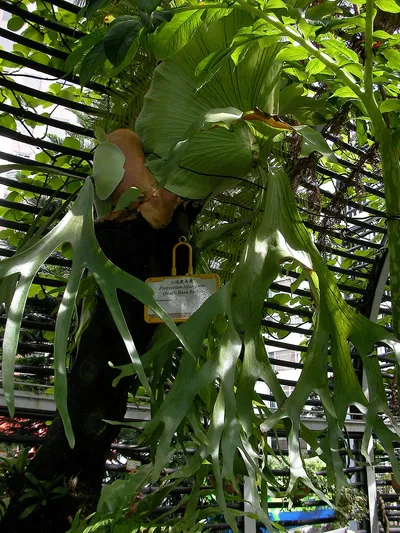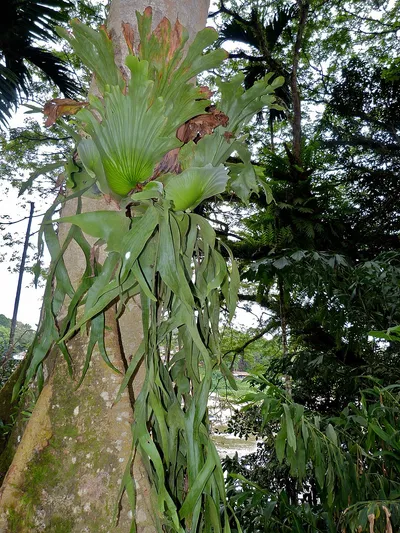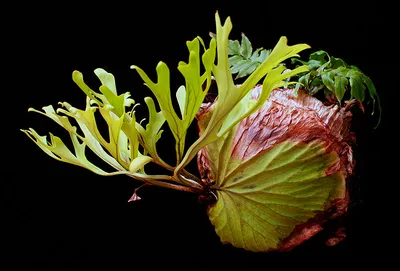
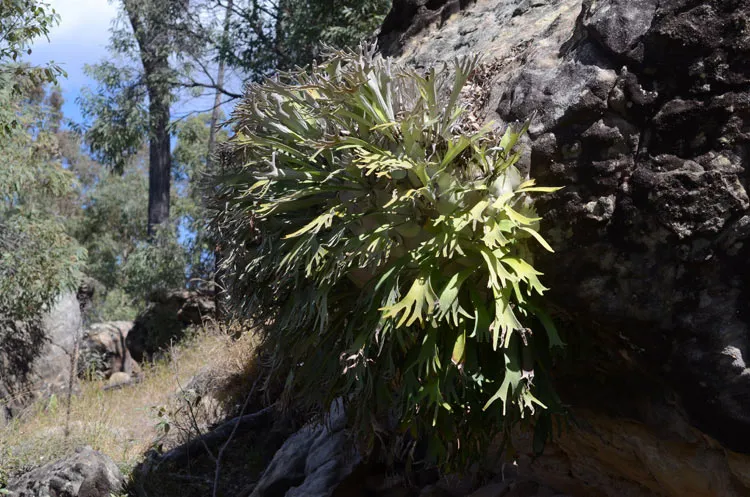
Light is more than just visibility for staghorn ferns — it is their primary source of energy and a critical architect of their form. In the wild, these epiphytes live in the dappled sunlight of forest canopies, where shifting patterns of shade and filtered sun create a dynamic light environment. Recreating this balance indoors is the key to a thriving plant.
This guide covers everything from basic positioning to advanced PAR measurements, grow light selection, and species-specific requirements. Whether you’re placing your first P. bifurcatum near a window or dialing in supplemental lighting for a prized P. ridleyi, you’ll find the information you need here. For a broader care overview, see our complete staghorn fern care guide.
Why Light Matters More Than Anything Else
Among the environmental factors that influence staghorn fern health, light ranks first:
Light > Water > Substrate > Fertilizer
A staghorn fern in excellent light with mediocre watering will outperform one in poor light with perfect watering every time. Light drives photosynthesis, which produces the energy for every process in the plant — root growth, new frond development, trichome production, and disease resistance. When light is insufficient, everything downstream suffers.
This is especially true for indoor growers, where natural light levels are a fraction of what the plant receives in its native habitat. Understanding how to measure, position, and supplement light is the single most impactful skill you can develop as a staghorn fern keeper.
The Spectrum of Needs: Light Level Categories
Different species have evolved to handle varying levels of luminosity. Understanding where your fern sits on this spectrum is vital:
- High Light (1,500–3,000+ foot-candles / 16,000–32,000 lux): Species like P. veitchii and P. ridleyi crave intensity. They develop thick, rigid, upright fertile fronds with heavy white trichome coverage to reflect excess radiation. These species naturally grow in exposed or semi-exposed positions in the wild — on the upper reaches of trees or on rock faces where light penetration is high.
- Medium Light (500–1,500 foot-candles / 5,400–16,000 lux): The majority of common species, including P. bifurcatum, P. superbum, and P. willinckii, thrive here. This is bright, filtered light — think of a spot where a hand held 12 inches above a surface casts a soft, blurry shadow.
- Low Light (200–500 foot-candles / 2,200–5,400 lux): More shade-adapted species like P. ellisii and P. stemaria prefer softer conditions. While they can tolerate lower light, their growth will slow significantly. Direct sun will scorch their thin fronds almost instantly.
The important takeaway: there is no single “correct” light level for all staghorn ferns. Species selection and light availability must match. If your home has limited natural light, choose a shade-tolerant species or invest in supplemental grow lights.
Species-Specific Light Requirements
Here is a detailed reference for the most commonly cultivated Platycerium species. Use this table to match your available light to the right species — or to determine whether your current setup needs adjustment.
| Species | Light Level | Foot-Candles | Lux (approx.) | Trichome Density | Notes |
|---|---|---|---|---|---|
| P. veitchii | High | 1,500–3,000+ | 16,000–32,000+ | Very heavy | Australian species; thrives in strong light; trichomes increase with intensity |
| P. ridleyi | High | 1,500–2,500 | 16,000–27,000 | Moderate–Heavy | Needs high light for compact form; stretches dramatically in shade |
| P. coronarium | Medium–High | 1,000–2,000 | 11,000–22,000 | Light | Large species; benefits from strong filtered light for crown development |
| P. wandae | Medium–High | 1,000–2,000 | 11,000–22,000 | Light | Equatorial species; consistent light year-round; no winter dormancy |
| P. willinckii | Medium | 800–1,500 | 8,600–16,000 | Heavy | Develops best trichome “fur” in bright indirect light |
| P. superbum | Medium | 600–1,200 | 6,500–13,000 | Moderate | Large shield fronds need even light distribution |
| P. bifurcatum | Medium | 500–1,500 | 5,400–16,000 | Light–Moderate | The most adaptable species; tolerates a wide range |
| P. hillii | Medium | 500–1,200 | 5,400–13,000 | Light | Compact; good for moderate indoor light |
| P. elephantotis | Medium–Low | 400–1,000 | 4,300–11,000 | None | Unique round fronds; prefers warmth over intense light |
| P. stemaria | Low–Medium | 200–800 | 2,200–8,600 | Light | African species; shade-tolerant; thin fronds burn easily |
| P. ellisii | Low–Medium | 200–600 | 2,200–6,500 | Very light | Madagascar species; prefers consistent, gentle light |
| P. madagascariense | Low–Medium | 200–600 | 2,200–6,500 | Very light | Extremely shade-tolerant; rare in cultivation |
For a complete overview of all 18 recognized species, browse our species index.
How to Measure Light
Guessing at light levels is how most growers end up with etiolated or sunburned ferns. Fortunately, measuring light is straightforward and inexpensive.
Smartphone Lux Meter Apps
The fastest way to get a baseline reading. Apps like “Lux Light Meter” (iOS) or “Light Meter” (Android) use your phone’s ambient light sensor to measure illuminance in lux.
How to use one:
- Open the app and hold your phone at the plant’s location, with the sensor facing the light source (usually the window)
- Take readings at multiple times of day — morning, midday, and late afternoon
- Average the readings to get a realistic daily picture
Accuracy note: Phone sensors are calibrated for the visible spectrum (they measure lux, not PAR), and accuracy varies by device. They tend to underread by 10–30% compared to a dedicated meter. Still, they are useful for relative comparisons — “is spot A brighter than spot B?” — and for confirming you are in the right ballpark.
Dedicated Lux Meters
A handheld lux meter (available for $15–$30) provides more accurate and consistent readings than a phone. If you grow multiple staghorn ferns in different locations, this is a worthwhile investment. Look for models that read up to 100,000 lux and have a detachable sensor on a cable, which makes it easier to take readings at awkward mounting heights.
PAR Meters (For Serious Growers)
Lux measures brightness as perceived by the human eye — it is weighted toward yellow-green light at 555 nm. Plants, however, use Photosynthetically Active Radiation (PAR) in the 400–700 nm range, where red and blue wavelengths are most effective for photosynthesis.
A PAR meter measures PPFD (Photosynthetic Photon Flux Density) in micromoles per square meter per second (umol/m2/s). This is the gold standard for plant lighting. Professional PAR meters like the Apogee MQ-500 cost $400+, but the Photone app provides reasonable PAR estimates using your phone camera for around $10.
Conversion Reference
If you are using a lux meter but want to estimate PAR values, use these approximate conversions:
| Light Source | Conversion Factor |
|---|---|
| Full-spectrum white LED | 1 lux ≈ 0.018 umol/m2/s |
| Cool white fluorescent | 1 lux ≈ 0.013 umol/m2/s |
| Noon sunlight | 100,000 lux ≈ 2,000 umol/m2/s |
| Overcast sky | 10,000 lux ≈ 180 umol/m2/s |
Daily Light Integral (DLI)
Beyond instantaneous intensity, DLI (Daily Light Integral) captures the total photosynthetic light a plant receives over a full day, measured in mol/m2/day. DLI accounts for both intensity and duration — a plant receiving moderate light for 14 hours may accumulate the same DLI as one receiving bright light for 8 hours.
DLI = Average PPFD x Photoperiod (seconds) x 10^-6
The ideal DLI for most Platycerium species is 6–12 mol/m2/day. High-light species like P. veitchii can benefit from up to 15 mol/m2/day, while shade-tolerant species do well at 4–8 mol/m2/day.
Optimal Positioning Indoors
Eastern Exposure — The Golden Zone
Gentle morning sun provides energy without the intense heat of the afternoon. This is the single best default recommendation for most staghorn fern species. An east-facing window delivers approximately 500–2,000 foot-candles during peak morning hours, which falls right in the sweet spot for the majority of cultivated Platycerium.
Southern Exposure (Northern Hemisphere)
Best for high-light species, but the plant should be set back 3–5 feet from the window or protected by a sheer curtain to prevent mid-day burn. An unobstructed south-facing window can deliver 3,000–8,000 foot-candles at the glass — well above the comfort zone for most species. Distance from the glass is your primary control: light intensity drops by roughly 50% for every meter of distance from the window.
Western Exposure
Western windows receive the most intense afternoon sun, which combines high light with high heat. This is the riskiest window orientation for staghorn ferns. If it is your only option, use a sheer curtain or position the plant at least 2 meters from the glass. Watch carefully for signs of heat stress during summer months.
Northern Exposure (Northern Hemisphere)
Generally too weak for most Platycerium unless the window is very large and unobstructed. Northern windows typically deliver 100–400 foot-candles — enough for shade-tolerant species like P. bifurcatum in summer, but likely insufficient in winter. If a north-facing window is your only option, supplement with an LED grow light. See our indoor care guide for more placement strategies.
The Shadow Test
A quick field test if you don’t have a meter: hold your hand 12 inches above a white surface at the intended mounting location.
- Sharp, well-defined shadow = direct light, likely 2,000+ foot-candles. Too intense for most species without filtration.
- Soft, blurry shadow with clear outline = bright indirect light, approximately 500–1,500 foot-candles. Ideal for most species.
- Faint shadow, barely visible = low light, under 500 foot-candles. Only suitable for shade-tolerant species.
- No visible shadow = insufficient light for any staghorn fern. Supplement or relocate.
Best Grow Lights for Staghorn Ferns
When natural light is insufficient — whether due to window orientation, building obstructions, or winter darkness — supplemental grow lights fill the gap. This is especially important during winter months when daylight hours shrink and sun angle weakens.
LED vs. Fluorescent vs. Incandescent
| Feature | Full-Spectrum LED | T5 Fluorescent | Incandescent |
|---|---|---|---|
| Efficiency | Excellent | Good | Poor |
| Heat output | Low | Moderate | High (dangerous) |
| Spectrum | Full PAR range | Adequate | Red-heavy, insufficient blue |
| Lifespan | 30,000–50,000 hrs | 10,000–20,000 hrs | 1,000 hrs |
| Cost to run | Low | Moderate | High |
| Recommendation | Best choice | Acceptable backup | Not recommended |
LED is the clear winner for staghorn ferns. Modern full-spectrum LED grow lights deliver the right wavelengths (heavy on red and blue, with enough green for canopy penetration) while producing minimal heat. This matters because staghorn ferns are typically mounted on walls or hung from ceilings, placing them close to the light source where heat buildup can be a problem.
Recommended LED Grow Light Specs
For a single mounted staghorn fern:
- Wattage: 20–40 watts actual draw (not “equivalent” wattage)
- Color temperature: 5000–6500K (full daylight spectrum)
- Target PPFD at plant surface: 150–300 umol/m2/s for medium-light species; up to 400 umol/m2/s for high-light species
- Photoperiod: 10–14 hours daily on a timer
- Distance from plant: 30–60 cm (12–24 inches), adjusted based on intensity readings
For a shelf or wall with multiple plants:
- Panel light or LED bar: 100–200 watts total, positioned to cover the full growing area
- Uniform coverage matters — avoid hotspots by raising the light higher and centering it over the plants
Distance and Intensity Relationship
Light intensity follows the inverse square law: doubling the distance from the light source reduces intensity to one-quarter. This means small adjustments in distance have a large impact.
| Distance from LED | Approximate PPFD (40W full-spectrum) |
|---|---|
| 15 cm (6 in) | 500–600 umol/m2/s — too intense for most species |
| 30 cm (12 in) | 250–350 umol/m2/s — ideal for high-light species |
| 45 cm (18 in) | 150–200 umol/m2/s — ideal for medium-light species |
| 60 cm (24 in) | 80–120 umol/m2/s — maintenance level for low-light species |
| 90 cm (36 in) | 40–60 umol/m2/s — insufficient for healthy growth |
If you don’t own a PAR meter, start at 45 cm distance and observe the plant for 2–3 weeks. If new fronds are compact and firm, the distance is correct. If they are stretching, move the light closer. If you see bleaching or curling, move it farther away.
Timer and Schedule
Use a mechanical or digital outlet timer to automate your lighting schedule. Consistency matters more than duration — running a light for 12 hours every day is better than 16 hours some days and 6 hours on others.
Recommended photoperiods:
- Spring/Summer: 10–12 hours (supplementing natural light)
- Fall/Winter: 12–14 hours (compensating for reduced daylight)
- Year-round artificial light only: 12–14 hours with 10–12 hours of darkness. Staghorn ferns need a dark period for CAM metabolism in their shield fronds.
Seasonal Light Changes and How to Adapt
Light is not constant. In temperate climates, the difference between summer and winter light can be dramatic — a spot that delivers 1,500 foot-candles in June might drop to 300 foot-candles in December. Managing these seasonal shifts is critical for year-round health.
Summer (June–August in Northern Hemisphere)
- Sun angle is high and intensity peaks. South-facing windows can become dangerously bright.
- Action: Move plants back from south- and west-facing windows or add sheer curtains. If your fern is mounted on a board, this is the easiest time to relocate it.
- Watch for heat stress when temperatures near the window exceed 35°C (95°F). Light stress and heat stress compound — a plant that tolerates 1,500 foot-candles at 25°C may burn at the same intensity at 35°C because photorespiration increases.
Autumn (September–November)
- Daylight hours and intensity decline. The sun’s angle drops, which can actually increase the depth of direct sun penetration through south-facing windows.
- Action: Begin moving plants closer to windows. This is also the time to clean your windows — dust and grime on glass can reduce light transmission by 20–40%.
Winter (December–February)
- The critical danger season. Daylight may drop to 8–9 hours with dramatically reduced intensity. For many indoor growers, natural light alone is insufficient.
- Action: Activate supplemental grow lights. Extend the photoperiod to 12–14 hours. If you only own one grow light, prioritize high-light species that suffer the most from reduced winter illumination. For a full breakdown of winter-specific adjustments, see our winter care guide.
Spring (March–May)
- Light returns and intensity climbs rapidly. Plants that were comfortable near a south window in February can suddenly receive too much light by April.
- Action: Monitor closely for early signs of light stress as the sun angle increases. Gradually move plants back to their summer positions. Spring is also the ideal time to resume fertilizing, as increased light drives increased metabolic demand.
Tracking Light Year-Round
If you are serious about optimizing your setup, take lux readings at each plant location once per month and log them in a simple spreadsheet. Over 12 months you will build a “light map” of your growing space that makes seasonal adjustments intuitive rather than reactive.
Signs of Light Stress
Learning to read your plant is the most reliable light meter you own. Staghorn ferns show clear physical symptoms when light levels are wrong.
Too Little Light (Etiolation)
When a staghorn fern does not receive enough light, it redirects energy toward reaching a brighter source at the expense of structural integrity.
Symptoms:
- Fertile fronds become elongated, thin, and floppy — they stretch toward the nearest light source
- Fronds turn deep dark green as the plant produces extra chlorophyll to compensate for low photon density
- New shield fronds are undersized or fail to develop
- The medium stays wet for too long because reduced transpiration means slower drying — this increases the risk of root rot
- Growth slows overall; the plant may produce only 1–2 new fronds per year instead of 4–6
- Sporangia (spore patches) fail to develop on fertile fronds
What to do: Move the plant to a brighter location or add supplemental lighting. Recovery is typically visible within 4–6 weeks as new fronds emerge with better structure. Old, etiolated fronds will not “fix” themselves, but they will eventually be replaced by healthier growth.
Too Much Light (Photoinhibition and Burn)
Excessive light overwhelms the photosynthetic machinery, generating reactive oxygen species that damage cell membranes and chlorophyll.
Symptoms:
- Bleaching — fronds lose green pigment and turn pale yellow, especially on the portions facing the light source
- Distinct brown, crispy patches in the center of fronds (not to be confused with the dry tips caused by low humidity; see our brown tips guide)
- White or silver “scald” marks that appear within 24–48 hours of excessive exposure
- Trichomes on species like P. veitchii and P. willinckii may appear scorched or flattened
- Shield fronds may curl or dry prematurely
What to do: Move the plant to filtered light immediately. Damaged tissue will not recover, but new fronds will grow normally once light levels are corrected. If the plant was burned by direct sun through glass, the glass acts as a lens concentrating heat — even species labeled “high light” can burn behind south-facing glass in summer.
The Feedback Loop: Light Affects Everything
Insufficient light weakens the plant’s defenses against every other stressor. A light-starved staghorn fern is more vulnerable to:
- Overwatering and rot — because transpiration slows and the medium stays wet
- Fungal infection — because the plant lacks the energy to mount an immune response
- Pest infestation — because weakened tissue is easier for scale, mealybugs, and mites to exploit
- Fertilizer burn — because the plant cannot metabolize applied nutrients without adequate photosynthetic energy
If you are troubleshooting any of these problems, check light levels first. Often, fixing light resolves the downstream issue without any other intervention.
Can Staghorn Ferns Grow in Low Light?
This is one of the most common questions from apartment dwellers and office growers. The honest answer: they can survive, but they will not thrive.
A staghorn fern in a low-light environment (under 500 foot-candles) will exhibit some or all of the following:
- Very slow growth — you may wait months for a single new frond
- Elongated, droopy fronds that lack the characteristic upright form
- Reduced trichome production (the fronds look “bald” compared to a well-lit specimen)
- Increased susceptibility to rot from slow-drying substrate
- No spore production (the plant never reaches reproductive maturity)
Making Low Light Work
If low light is all you have, here are strategies to get the best outcome:
- Choose the right species. P. bifurcatum is the most shade-tolerant common species. It will tolerate 300–400 foot-candles better than any other readily available Platycerium.
- Add a grow light. Even a modest 15–20 watt LED desk lamp with a full-spectrum bulb can make the difference between decline and stability. Run it for 12–14 hours daily.
- Reduce watering. Low-light plants use less water. Overwatering in dim conditions is a recipe for rot. Wait until the medium is genuinely dry before soaking.
- Skip fertilizer. A plant without sufficient light cannot use fertilizer effectively. Feeding it anyway just risks salt buildup.
- Keep it warm. Higher temperatures (within the species’ comfort range) partially offset low light by maintaining metabolic activity.
- Rotate the plant. If light comes from a single direction, rotate the mount 90 degrees every 2–4 weeks to promote even growth and prevent one-sided stretching.
Rooms to Avoid
- Windowless offices and basements — no amount of ambient room lighting from ceiling fixtures compensates for a lack of natural light or dedicated grow lights. Standard office fluorescent tubes deliver 50–150 foot-candles at desk level, which is well below the minimum for any staghorn fern.
- Hallways and stairwells — these transitional spaces almost never have adequate light, even if they feel “bright” to your eyes. Human eyes adapt to low light far better than plants can.
Light and Trichomes: The Adaptive Shield
One of the most visually striking adaptations of staghorn ferns is their trichome coverage — the silvery-white hairs that coat the fronds of species like P. veitchii, P. willinckii, and P. ridleyi. Trichomes serve multiple functions, all related to light management:
- UV protection: Trichomes reflect ultraviolet radiation, protecting the chlorophyll layer beneath from photodamage.
- Light reflection: In full sun, trichomes bounce back excess visible light, reducing the photon load on the leaf surface. This is why high-light species have the densest trichome coverage.
- Humidity retention: The fine hair layer traps a thin boundary layer of humid air next to the leaf surface, slowing transpiration in dry, bright conditions.
- Visual indicator: Trichome density increases in response to higher light levels. If your P. veitchii is developing thick, silvery-white trichomes, it is receiving good light. If the trichomes are sparse and the fronds look green and “naked,” light is probably insufficient.
Important: Never wipe trichomes off staghorn fern fronds. They do not grow back on existing tissue. Handle the plant by the root ball or shield fronds, never by the fertile fronds.
Putting It All Together: A Lighting Action Plan
Step 1: Identify Your Species
Check the species-specific table above or browse our species index to determine your plant’s light category (high, medium, or low).
Step 2: Measure Your Available Light
Use a lux meter app on your phone or a dedicated meter. Take readings at the intended mounting location at three times: 9 AM, noon, and 3 PM. Average the three values.
Step 3: Match or Supplement
- If your average reading meets the species’ requirement, you are set — mount the plant and monitor for signs of stress over the first month.
- If your reading is below the requirement, calculate the gap and select a grow light to bridge it. Position and test according to the distance/intensity table above.
Step 4: Adjust Seasonally
Revisit your light readings every 3 months. Shift plant positions or adjust grow light duration as daylight changes through the year.
Step 5: Read the Plant
Numbers are guides, not gospel. The plant’s physical response is the ultimate indicator. Firm, upright fronds with species-appropriate trichome coverage and consistent new growth mean the light is right — regardless of what the meter says.
Quick Reference Chart
| Question | Answer |
|---|---|
| Best window orientation | East-facing |
| Ideal foot-candle range (most species) | 500–1,500 |
| Ideal lux range (most species) | 5,400–16,000 |
| Best grow light type | Full-spectrum LED, 5000–6500K |
| Grow light distance | 30–60 cm from plant |
| Grow light duration | 10–14 hours on a timer |
| Target PPFD (medium-light species) | 150–300 umol/m2/s |
| Ideal DLI | 6–12 mol/m2/day |
| Most shade-tolerant species | P. bifurcatum |
| Most light-hungry species | P. veitchii, P. ridleyi |
Frequently Asked Questions
How much light does a staghorn fern need? Most species need bright, indirect light in the range of 500–1,500 foot-candles. High-light species like P. veitchii and P. ridleyi handle 1,500–3,000+ foot-candles, while shade-tolerant species like P. ellisii prefer 200–500 foot-candles. An east-facing window is the best default placement for most species.
Can staghorn ferns grow in low light? They can survive, but growth will be slow, fronds will stretch, and the plant becomes more vulnerable to overwatering and rot. If low light is unavoidable, choose P. bifurcatum, add a small LED grow light, and reduce watering frequency. See the dedicated low-light section above for a full strategy.
What grow light is best for staghorn ferns? A full-spectrum LED panel or bulb rated at 20–40 watts actual draw, with a color temperature of 5000–6500K. Position it 30–60 cm from the plant and run it 10–14 hours daily on a timer. LED produces less heat than fluorescent or incandescent alternatives, which matters when the light is close to the plant.
Do staghorn ferns need direct sunlight? No. They evolved under forest canopies and prefer filtered or indirect light. Brief morning sun from an east-facing window is beneficial, but direct midday or afternoon sun — especially through south- or west-facing glass — can cause burn damage within hours.
How do I know if my staghorn fern is getting the right amount of light? Observe the fronds. Healthy staghorn ferns produce firm, upright fertile fronds with consistent green coloring and visible trichome coverage. Etiolation (stretching, floppiness, dark green color) indicates too little light. Bleaching, yellowing, or crispy brown patches indicate too much. Adjust positioning or grow light distance based on these visual cues.