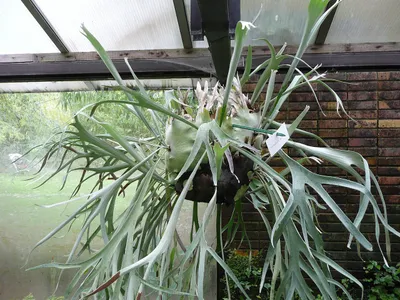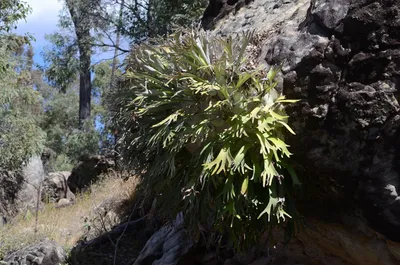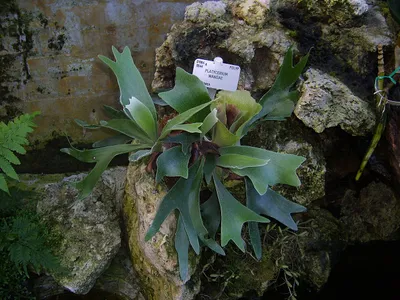
Staghorn Ferns are generally resilient, but their unique anatomy — specifically the overlapping shield fronds and the delicate fertile fronds — can provide perfect hiding spots for pests. Dealing with pests on Platycerium requires a gentle touch, as they are highly sensitive to many common oil-based insecticides. If your fern looks unhealthy and you’re unsure whether pests are the cause, start with our staghorn fern troubleshooting guide to rule out cultural issues first.
This guide covers every pest you’re likely to encounter, how to inspect your fern properly, treatment options from organic to systemic, and a prevention calendar so you can stay ahead of trouble.
How to Inspect a Staghorn Fern for Pests (Step-by-Step)
Before you can treat a pest problem, you need to find it. Staghorn ferns are notoriously good at hiding infestations because of their layered anatomy. Follow this routine every 1—2 weeks:
Step 1: Check the Fertile Fronds (Top and Bottom)
Hold each antler-shaped fertile frond up and examine the underside in good light. Look for:
- Tiny brown bumps along the midrib and veins (scale insects)
- Cottony white clusters in crevices and along stems (mealybugs)
- Fine webbing between frond lobes or near the tips (spider mites)
- Tiny black or white elongated insects that scatter when disturbed (thrips)
Do not confuse the velvety brown spore patches (sporangia) on the underside of mature fronds with pests. Spores cover large, symmetrical areas and cannot be scraped off easily. For more on staghorn fern anatomy, see our anatomy and growth pattern guide.
Step 2: Inspect the Shield Fronds and Rhizome Junction
Gently lift the edges of the shield (basal) fronds where they overlap the mounting surface. This dark, moist gap is prime territory for mealybugs and scale. Use a flashlight. If your shield fronds are brown and papery, peel them back gently without tearing live tissue.
Step 3: Examine the Growing Point (Bud)
The fuzzy central bud where new fronds emerge is the most vulnerable part of the plant. Look for aphids and mealybugs clustered around emerging fronds.
Step 4: Check the Mounting Medium
If your fern is mounted on a board with sphagnum moss, inspect the surface of the moss for tiny flying insects (fungus gnats) or white soil mites. Tap the moss — fungus gnats will fly up when disturbed.
Step 5: Look for Secondary Symptoms
Even if you don’t see pests directly, watch for these warning signs:
- Sticky, shiny residue on fronds or surfaces below (honeydew from scale or mealybugs)
- Yellowing or stippled fronds with no cultural explanation
- Tiny black dots on fronds (thrips frass)
- Fronds that look washed out or silvery (thrips or spider mite damage)
- Sudden wilting or brown tips despite proper watering
Common Staghorn Fern Pests: Identification and Treatment
1. Scale Insects
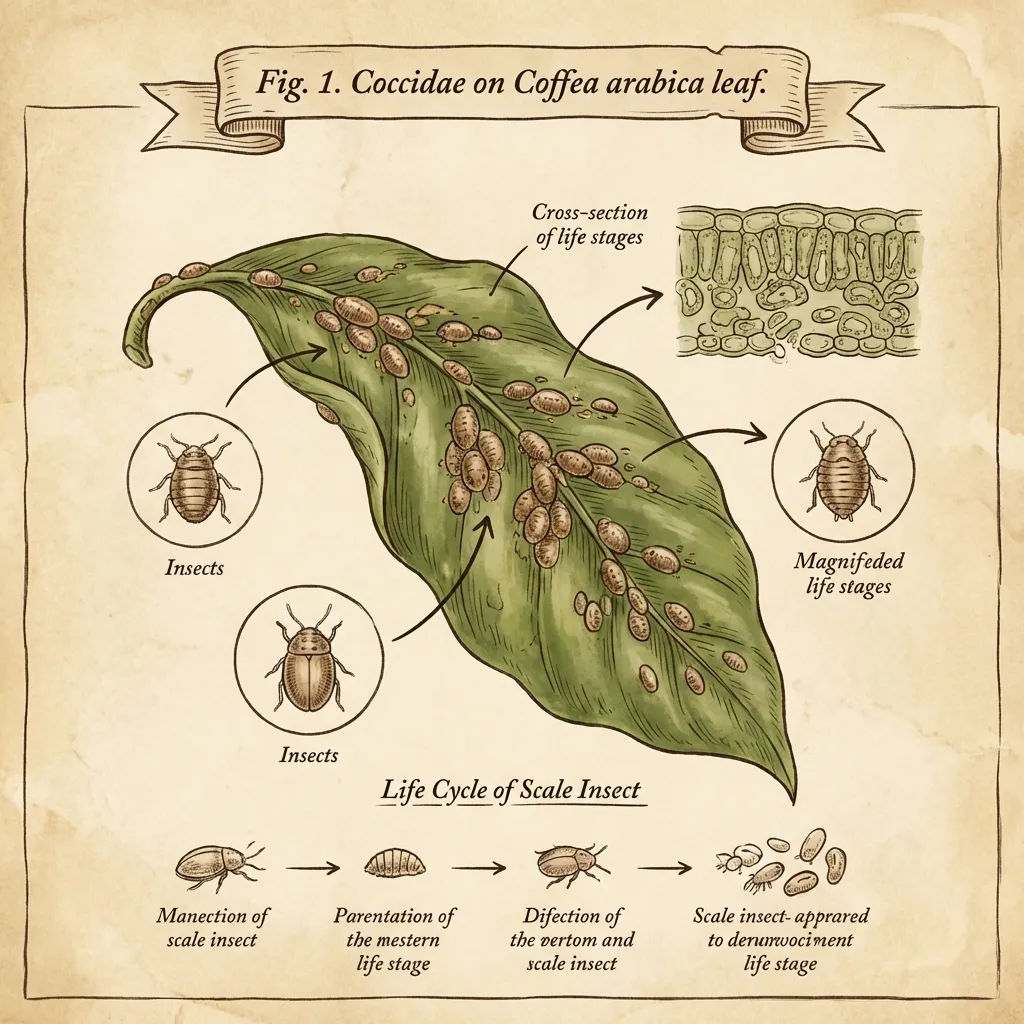
Scale insects are the most frequent attackers of staghorn ferns. They appear as small, stationary brown or tan bumps on the undersides of fronds or near the center of the shield. They are often mistaken for spores, but unlike spores, they can be scraped off with a fingernail — and they suck the life-giving sap from the plant.
How to tell scale from spores: Spores (sporangia) form large, uniform velvety patches on the undersides of mature fertile fronds. Scale insects are individual raised bumps, irregularly placed, and often found along the midrib, on frond stems, and even on shield fronds. If you can flick it off with a toothpick, it’s scale.
Lifecycle: Female scale insects attach to a feeding site, secrete a protective waxy shell, and lay eggs beneath it. Eggs hatch into tiny “crawlers” that disperse to new locations before settling down. This crawler stage is the most vulnerable point in their lifecycle and the best time to treat.
Treatment options:
- Light infestation (fewer than 20 visible): Use a toothpick or soft toothbrush to manually scrape them off. Dab each removal site with a cotton swab of 70% isopropyl alcohol to kill any remaining crawlers.
- Moderate infestation: Apply dilute insecticidal soap (see DIY recipe below) to affected areas, repeating every 5—7 days for three applications to catch emerging crawlers.
- Severe infestation: A systemic insecticide containing Imidacloprid applied to the roots/moss (not sprayed on fronds) is the most effective long-term solution. See the systemic insecticide section below.
Scale infestations weaken the plant significantly over time. If your fern is declining and you’ve confirmed scale, also review our complete care guide to make sure the plant has the best possible growing conditions to support its recovery.
2. Mealybugs
Recognizable by their white, cottony appearance, mealybugs love to hide in the tight crevices where the fronds meet the rhizome. They also congregate on the undersides of fronds along the midrib. A severe mealybug infestation produces visible honeydew — a sticky residue that can attract sooty mold.
Lifecycle: Females lay eggs in cottony egg sacs, each containing 200—600 eggs. Nymphs hatch in 1—2 weeks and begin feeding immediately. A complete generation takes about 30 days in warm conditions, which means populations can explode rapidly indoors during winter when heating dries the air.
Treatment options:
- Spot treatment: Use a cotton swab dipped in 70% isopropyl alcohol to dab each insect directly. Be precise to minimize alcohol contact with the plant tissue. The alcohol dissolves their waxy coating on contact.
- Hidden infestations: Mealybugs behind shield fronds or deep in the rhizome junction are impossible to reach with contact methods. Use a systemic insecticide for these.
- Biological control: For greenhouse growers, the ladybug Cryptolaemus montrouzieri (the “mealybug destroyer”) is a highly effective predator.
3. Spider Mites
Spider mites thrive in hot, dry environments — making them a particular threat to indoor staghorn ferns during winter when heating drops humidity. They are nearly invisible to the naked eye (0.5 mm), but their damage is unmistakable: fronds develop a stippled, washed-out appearance, and fine webbing appears between frond lobes.
Identification: Hold a white piece of paper under a frond and tap it sharply. If tiny dots move across the paper, you have spider mites.
Lifecycle: Spider mites reproduce explosively in low humidity — a single female can produce millions of descendants in a month under ideal (for them) conditions. This is why early detection matters enormously.
Treatment options:
- Humidity increase: The single most effective deterrent. Spider mites cannot thrive above 60% humidity. Use a humidifier, group plants together, or move the fern to a bathroom. See our indoor care guide for humidity management strategies.
- Water spray: A forceful spray of lukewarm water dislodges mites and disrupts their webbing. Repeat every 2—3 days for two weeks.
- Insecticidal soap: Effective as a contact killer. Apply to the underside of fronds where mites feed. See the DIY recipe below.
- Predatory mites: Phytoseiulus persimilis is a voracious predator of spider mites and safe for use on staghorn ferns.
4. Aphids
Small, soft-bodied insects (1—3 mm) that cluster on new growth, particularly emerging fertile fronds. They can be green, black, brown, or even pink. Aphids excrete honeydew and can transmit plant viruses.
Treatment options:
- Water spray: A gentle but steady stream of water knocks aphids off new growth. Most won’t find their way back.
- Insecticidal soap: Very effective against aphids. One or two applications usually resolves an infestation.
- Ladybugs: A single ladybug can eat 50+ aphids per day. Release them near the fern in an enclosed space (greenhouse or grow tent).
5. Fungus Gnats
If your staghorn fern is mounted with sphagnum moss or potted in a moisture-retentive medium, fungus gnats are almost inevitable. These tiny (2—4 mm) black flies hover around the growing medium and are especially active when you water.
Why they love staghorn ferns: Sphagnum moss that stays consistently moist is an ideal breeding ground for fungus gnat larvae. The larvae feed on decaying organic matter in the moss and — in large numbers — can damage fine roots and the base of shield fronds.
Lifecycle: Adults live about one week and lay up to 200 eggs in moist organic matter. Eggs hatch in 4—6 days, and larvae feed in the medium for 12—14 days before pupating. The entire lifecycle is about 3—4 weeks, meaning overlapping generations build up quickly.
Identification:
- Adults: Tiny black flies that hover near the moss surface and are attracted to light. They don’t bite.
- Larvae: Translucent, worm-like, 5—6 mm long with a shiny black head capsule. Found in the top layer of moss.
Treatment options:
- Yellow sticky traps: Place near the fern to catch adults and break the breeding cycle. This alone can control light infestations.
- Allow moss to dry between waterings: Fungus gnat larvae cannot survive in dry medium. Let the top layer of sphagnum dry out between waterings — the fern itself prefers this cycle anyway.
- Mosquito dunks (BTI): Dissolve a piece of Bacillus thuringiensis israelensis (BTI) mosquito dunk in your watering water. BTI is a naturally occurring bacterium that kills fungus gnat larvae but is completely safe for plants, pets, and people. This is the single most effective organic treatment.
- Hydrogen peroxide drench: Mix 1 part 3% hydrogen peroxide with 4 parts water. Pour through the moss to kill larvae on contact. It breaks down into water and oxygen and won’t harm roots.
- Top dressing with sand or pumice: A 1 cm layer of coarse sand or pumice over the moss surface prevents adults from laying eggs.
6. Thrips
Thrips are tiny (1—2 mm), slender insects that are increasingly common on indoor plants. They feed by rasping the surface cells of fronds and sucking out the contents, leaving characteristic silvery streaks and tiny black dots (frass) on the foliage.
Identification: Thrips are difficult to see without a magnifying glass. They are elongated, cigar-shaped, and can be pale yellow, brown, or black. They tend to hide inside emerging fronds and along the midrib. Tap a suspect frond over white paper — thrips are fast-moving and will scurry across the surface.
Damage pattern: Silvery or bronze streaks on the frond surface, distorted new growth, and tiny black specks of frass. Severe infestations cause fronds to become papery and brown — which can be confused with other causes of brown tips and damage.
Lifecycle: Thrips lay eggs inside plant tissue (making them hard to kill with contact sprays). Larvae feed on the frond surface, then drop to the growing medium to pupate. Adults emerge and fly to new growth. A complete lifecycle takes 2—3 weeks.
Treatment options:
- Blue sticky traps: Thrips are attracted to blue more than yellow. Place blue sticky traps near the fern.
- Insecticidal soap: Effective against nymphs and adults on contact. Apply every 5 days for at least three applications to catch all life stages.
- Spinosad: An organic insecticide derived from soil bacteria. Highly effective against thrips. Spray in the evening (spinosad degrades in UV light) and apply to both sides of fronds.
- Systemic treatment: For persistent thrips, a systemic insecticide is the most reliable solution because it kills thrips that feed inside curled new growth where sprays can’t reach.
Treatment Precautions
[!WARNING] Avoid Neem Oil and Heavy Oils: While neem oil is an organic favorite for many plants, the trichomes (white fuzz) on Staghorn Ferns can trap the oil, leading to “clogged” leaves that can’t breathe or, worse, solar-induced burning.
Why Neem Oil Is Risky on Staghorn Ferns
Neem oil is one of the most popular organic pest treatments in the houseplant world, so many growers reach for it instinctively. On staghorn ferns, however, neem oil creates serious problems:
-
Trichome trapping: The silvery-white trichomes (stellate hairs) covering Platycerium fronds — especially prominent on species like P. bifurcatum and P. elephantotis — act like tiny sponges. They absorb and hold oil against the leaf surface instead of allowing it to dry or wash off.
-
Gas exchange disruption: Staghorn fern stomata (breathing pores) are located on the undersides of fronds, right where trichomes are densest. Oil film blocks these pores, reducing the plant’s ability to exchange gases and transpire moisture.
-
Phytotoxic burn: Oil on the frond surface magnifies sunlight, causing localized burn spots. This is especially dangerous if you apply neem oil and then place the fern back in its growing position under bright indirect light. The damage appears 24—72 hours after application as irregular brown patches.
-
Residue buildup: Unlike smooth-leaved plants where neem oil washes off in rain or watering, the trichome layer on staghorn ferns traps residue permanently. Repeated applications create an increasingly thick film.
What to use instead: Dilute insecticidal soap (see recipe below), systemic insecticides for sap-sucking pests, or biological controls. If you absolutely must use neem, dilute it to one-quarter the recommended strength, apply only at night, and rinse the fronds with plain water the next morning.
The Trichome Rule
Never wipe off the white, felt-like fuzz on your fern. This is a natural protective layer (stellate trichomes) that helps the plant regulate moisture and filter intense light. If you wipe it off, you leave the plant vulnerable to pests, sunburn, and moisture loss. All pest treatment methods should preserve the trichome layer. Learn more about trichome function in our care guide.
DIY Insecticidal Soap Safe for Staghorn Ferns
Commercial insecticidal soaps work, but many contain additives (fragrances, degreasers, or neem oil) that damage staghorn fern trichomes. Here is a tested recipe that is effective against soft-bodied pests while being safe for Platycerium:
Recipe
| Ingredient | Amount | Notes |
|---|---|---|
| Distilled water | 1 liter (1 quart) | Tap water minerals can leave deposits on trichomes |
| Pure liquid Castile soap (unscented) | 5 ml (1 teaspoon) | Dr. Bronner’s unscented is a reliable choice |
| 70% isopropyl alcohol (optional) | 5 ml (1 teaspoon) | Increases effectiveness against scale crawlers |
Instructions
- Mix distilled water and Castile soap in a clean spray bottle. Shake gently to combine without creating excessive foam.
- Add isopropyl alcohol if targeting scale crawlers or mealybug nymphs.
- Always test first: Spray a small area on one frond and wait 48 hours. If no browning or spotting occurs, proceed with full application.
- Spray the undersides of affected fronds, targeting visible pests. Avoid drenching the entire plant.
- Let the soap sit for 2 hours, then rinse the fronds gently with plain distilled water to remove residue.
- Repeat every 5—7 days for three applications to catch hatching eggs and crawlers.
Critical Rules
- Never use dish soap (Dawn, Fairy, etc.). These contain degreasers and surfactants that strip trichomes and damage waxy cuticles.
- Never spray in direct sunlight. Apply in the evening or on an overcast day.
- Always rinse. Soap residue left on fronds will eventually damage tissue.
- Concentration matters. More soap is not better. Exceeding 1% concentration (10 ml per liter) risks phytotoxicity on staghorn ferns.
Organic vs. Chemical Treatment Comparison
Choosing between organic and chemical treatments depends on the severity of infestation, your growing environment, and your comfort level. Here is a practical comparison:
| Factor | Organic Treatments | Chemical / Systemic Treatments |
|---|---|---|
| Examples | Insecticidal soap, BTI, rubbing alcohol, predatory insects, spinosad | Imidacloprid, Acetamiprid, Dinotefuran |
| Speed of action | Slow (requires multiple applications over 2—4 weeks) | Fast (systemic protection within 3—7 days) |
| Residual protection | None — kills only on contact | 8—12 weeks of systemic protection |
| Reach | Surface only — cannot reach pests hidden behind shield fronds | Absorbed by roots, distributed through sap to all plant tissue |
| Safety for trichomes | Safe when diluted properly and rinsed off | Safe — applied to root zone, not fronds |
| Environmental impact | Minimal | Neonicotinoids (Imidacloprid) are toxic to bees and aquatic invertebrates |
| Pet / child safety | Generally safe (soap, alcohol, BTI) | Keep treated plants away from pets and children for 48 hours minimum |
| Cost | Very low (DIY soap costs pennies) | Moderate ($10—20 per treatment) |
| Best for | Light infestations, prevention, outdoor/greenhouse ferns | Severe infestations, hidden pests, mounted ferns that are hard to spray |
Recommendation for most growers: Start with organic methods. If the infestation persists after three rounds of treatment (3—4 weeks), move to systemic treatment. For severe scale or mealybug infestations on valuable specimens, go directly to systemic — the plant will suffer less from one systemic application than from weeks of ineffective organic treatment.
Systemic Insecticide Guide
Systemic insecticides are the most effective option for severe pest infestations on staghorn ferns, particularly for sap-sucking insects (scale, mealybugs, aphids, thrips) that hide in inaccessible locations behind shield fronds.
How Systemics Work
The insecticide is absorbed through the roots and transported via the plant’s vascular system into the sap of every frond. When a pest feeds on the sap, it ingests the insecticide and dies. This means you don’t need to find and contact every individual pest — the plant itself becomes the delivery mechanism.
Recommended Active Ingredients
| Active Ingredient | Brand Examples | Target Pests | Duration | Notes |
|---|---|---|---|---|
| Imidacloprid | Bonide Systemic, Bayer Advanced | Scale, mealybugs, aphids, whiteflies | 8—12 weeks | Most widely available; toxic to pollinators |
| Dinotefuran | Safari 20SG, Valent | Scale, mealybugs, aphids, thrips | 6—8 weeks | Faster uptake than Imidacloprid; effective on thrips |
| Acetamiprid | Ortho Rose & Flower | Aphids, whiteflies, thrips | 4—6 weeks | Lower bee toxicity than Imidacloprid |
How to Apply Systemics to Mounted Staghorn Ferns
Mounted ferns present a unique challenge because there is no pot to drench. Here’s how to apply systemic insecticide to a board-mounted fern:
- Prepare the solution: Mix the systemic granules or liquid according to the label directions for drench application (not foliar spray).
- Soak method: If the fern can be taken down, submerge the entire moss ball and root zone in the solution for 15—20 minutes. The sphagnum moss will absorb the treated water, and the roots will take it up over the following days.
- Wrap method: If the fern cannot be easily removed, saturate the sphagnum moss by slowly pouring the solution over the root zone. Place a tray underneath to catch runoff. You can wrap the moss ball in plastic wrap for 30 minutes to keep the solution in contact with the roots.
- Timing: Apply in the evening. Water the fern normally with plain water for the next watering cycle — the systemic is already in the plant’s system.
- Repeat if needed: One application provides 8—12 weeks of protection. For severe infestations, a second application 8 weeks after the first provides continuous coverage.
When NOT to Use Systemics
- On ferns grown outdoors where pollinators visit (neonicotinoids are toxic to bees)
- If you plan to propagate by pups within the next 3 months — the insecticide will be present in the pup tissue
- During active fertilization periods — apply the systemic at least 2 weeks before or after fertilizing to avoid chemical interactions
- On ferns showing signs of root rot — damaged roots cannot absorb the systemic effectively; address the rot first
Prevention Strategies
The best pest control is prevention. These habits will dramatically reduce your chances of dealing with an infestation:
Quarantine All New Plants
Every new plant you bring home — from a nursery, a swap, or online — should spend a minimum of 3 weeks isolated from your existing collection. Place the new arrival in a separate room if possible. During this quarantine:
- Inspect thoroughly on day 1 (follow the inspection steps above)
- Check again at day 7 and day 14
- Treat proactively with a single application of dilute insecticidal soap at day 3
- Only introduce to your collection after three clean inspections
This single habit prevents the vast majority of pest introductions. It is especially important for rare species that may have traveled through multiple growers’ collections.
Regular Inspection Schedule
Build pest inspection into your watering routine. Every time you water:
- Glance at the undersides of 2—3 fronds
- Check the shield frond edges
- Look for honeydew (sticky residue) on surfaces below the fern
- Note any changes in frond color or texture
A full detailed inspection (all five steps above) should happen at least monthly.
Environmental Controls
Many pests thrive in specific conditions. Adjusting your growing environment makes it inhospitable to them:
- Humidity above 50% deters spider mites (they thrive in dry air)
- Good air circulation reduces fungus gnat populations and prevents the stagnant conditions that favor mealybug colonies
- Allowing moss to dry slightly between waterings disrupts fungus gnat larvae
- Proper lighting keeps the plant vigorous and better able to resist and recover from pest damage
- Avoid overcrowding plants — pests spread rapidly when foliage touches
Tool Hygiene
If you’re working with multiple ferns (pruning, mounting, dividing for propagation), sterilize your tools between plants with 70% isopropyl alcohol or a 10% bleach solution. Pests and their eggs can hitchhike on pruning shears, wire, and gloves.
Seasonal Pest Calendar
Pest pressure varies throughout the year. Knowing when each pest is most active helps you focus your prevention efforts:
| Season | Most Active Pests | Why | What to Do |
|---|---|---|---|
| Spring (Mar—May) | Aphids, scale crawlers | Rising temperatures trigger egg hatching and crawler dispersal | Inspect weekly; this is the best time for systemic treatment as active growth improves uptake |
| Summer (Jun—Aug) | Thrips, spider mites (in dry climates), scale | Warm temperatures accelerate reproduction; thrips populations peak | Maintain humidity above 50%; use sticky traps; inspect biweekly |
| Autumn (Sep—Nov) | Fungus gnats, mealybugs | Plants brought indoors for winter often harbor pests from outdoor exposure; moisture management changes | Quarantine and inspect any ferns brought indoors; let moss dry more between waterings |
| Winter (Dec—Feb) | Spider mites, mealybugs, fungus gnats | Low indoor humidity favors spider mites; heating and reduced airflow favor mealybugs; overwatering in reduced light feeds fungus gnat larvae | Run a humidifier; reduce watering frequency; increase inspection frequency to weekly |
Year-Round Best Practices
- Maintain a weekly visual scan during watering
- Keep yellow sticky traps near your fern collection at all times — they serve as an early warning system
- Act at the first sign of any pest. A small problem on Monday becomes a severe infestation by the end of the month
Summary Table: Pest vs. Treatment Quick Reference
| Pest | Appearance | Damage | Primary Treatment | Organic Option | Goes Systemic? |
|---|---|---|---|---|---|
| Scale | Brown bumps on fronds | Yellowing, sticky honeydew | Manual scraping + systemic | Isopropyl alcohol dab | Yes |
| Mealybugs | Cottony white clusters | Yellowing, honeydew, sooty mold | Alcohol dab + systemic | Isopropyl alcohol, ladybugs | Yes |
| Spider Mites | Fine webbing, stippled fronds | Silvery/washed-out fronds | Increase humidity + soap spray | Predatory mites, water spray | No (not sap-suckers in the traditional sense) |
| Aphids | Small green/black clusters on new growth | Distorted growth, honeydew | Water spray + insecticidal soap | Ladybugs, soap | Yes |
| Fungus Gnats | Tiny black flies near moss | Larval root damage (severe cases) | BTI drench + dry-down cycle | Yellow sticky traps, hydrogen peroxide | No |
| Thrips | Silvery streaks, black frass dots | Silvery scarring, distorted growth | Spinosad spray + systemic | Blue sticky traps, soap | Yes |
When to Consider Discarding a Plant
In rare cases, a pest infestation may be so severe that treatment is impractical — particularly if the growing point (central bud) has been damaged, if the root system is compromised, or if the infestation threatens your broader collection. If a common species like P. bifurcatum has a severe, persistent infestation despite two rounds of systemic treatment, it may be more practical to replace it than to risk spreading pests to rarer specimens.
For rare species or sentimental plants, exhaust every option before giving up. Isolate the plant completely, apply systemic treatment, and give it 3 months to recover. Many staghorn ferns have survived surprisingly severe pest damage when given proper care afterward — review our recovery guide for support.