
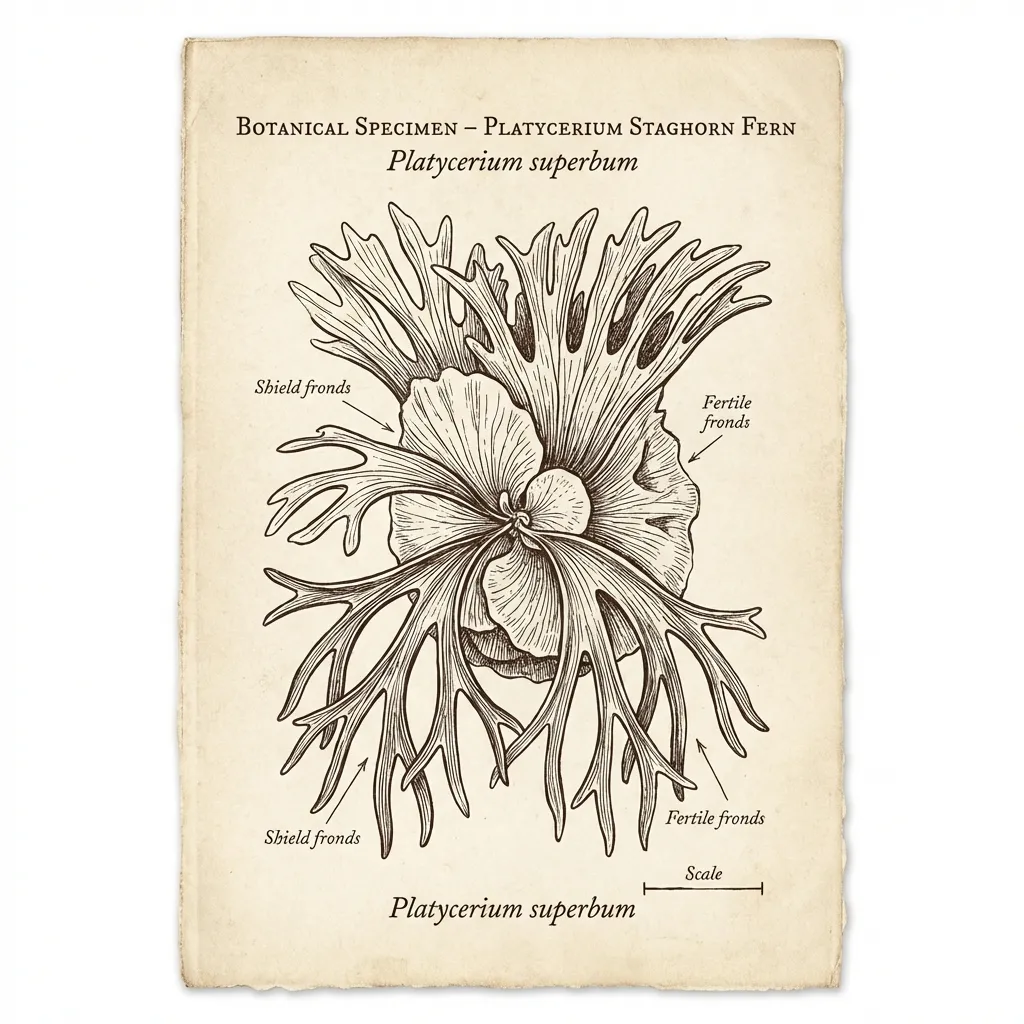
The most common question we receive is “How often should I water?” The truth is, a rigid calendar is the fastest way to kill a Staghorn Fern. Watering frequency must adapt to your specific environment: temperature, humidity, airflow, and the size of the plant all play a role.
The Weight Test (The Golden Rule)
The most reliable way to tell if your fern needs water is by physical weight.
- Lifting: Periodically lift or push up on the bottom of the mount.
- Comparison: A freshly watered mount will feel heavy and “full.” A thirsty mount will feel unexpectedly light, almost like hollow wood.
- Decision: If it’s light, water it. If there’s still heft, wait 2–3 more days.
Diagnostic Signs: Thirsty vs. Drowning
- Underwatering (Thirsty): The fertile fronds (the “antlers”) will lose their turgor pressure, appearing droopy, limp, or slightly duller in color. The tips may eventually turn brown and crispy.
- Overwatering (Drowning): This is far more dangerous. You will notice a soft, mushy blackness spreading from the center of the shield fronds (the base). This is rhizome rot, and if it reaches the growth point, the plant may not recover.
The “Soak and Dry” Method
For mounted ferns, simple misting is rarely enough to reach the core. Use this method every 7–10 days (more often in summer, less in winter):
- Submerge: Place the entire root ball and mounting material in a sink, tub, or large basin of room-temperature water.
- Saturate: Leave it for 15–30 minutes. You may see air bubbles rising from the moss—wait until they stop.
- Drain: This is the most important step. Hang the mount in a spot with good airflow (like over a sink or outdoors) for 2 hours until it stops dripping. Never rehanging a soaking wet mount in a stagnant corner.
- Mist (Optional): Between soakings, a light daily misting can help boost local humidity, especially in dry apartments.
[!CAUTION]
Water Quality: If your tap water is heavily chlorinated or contains high mineral content, consider using rainwater or distilled water, as ferns can be sensitive to chemical buildup.