Overview
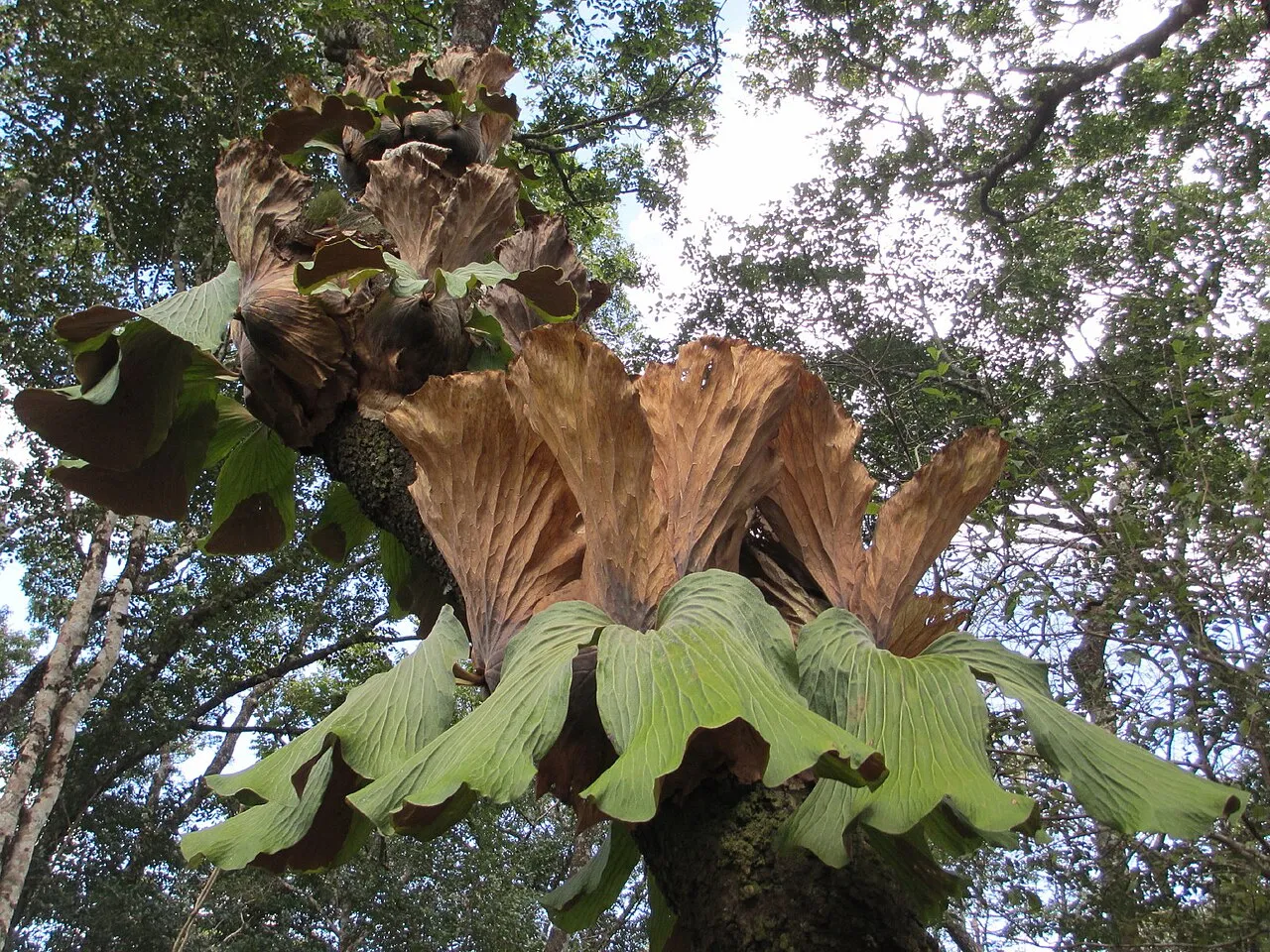
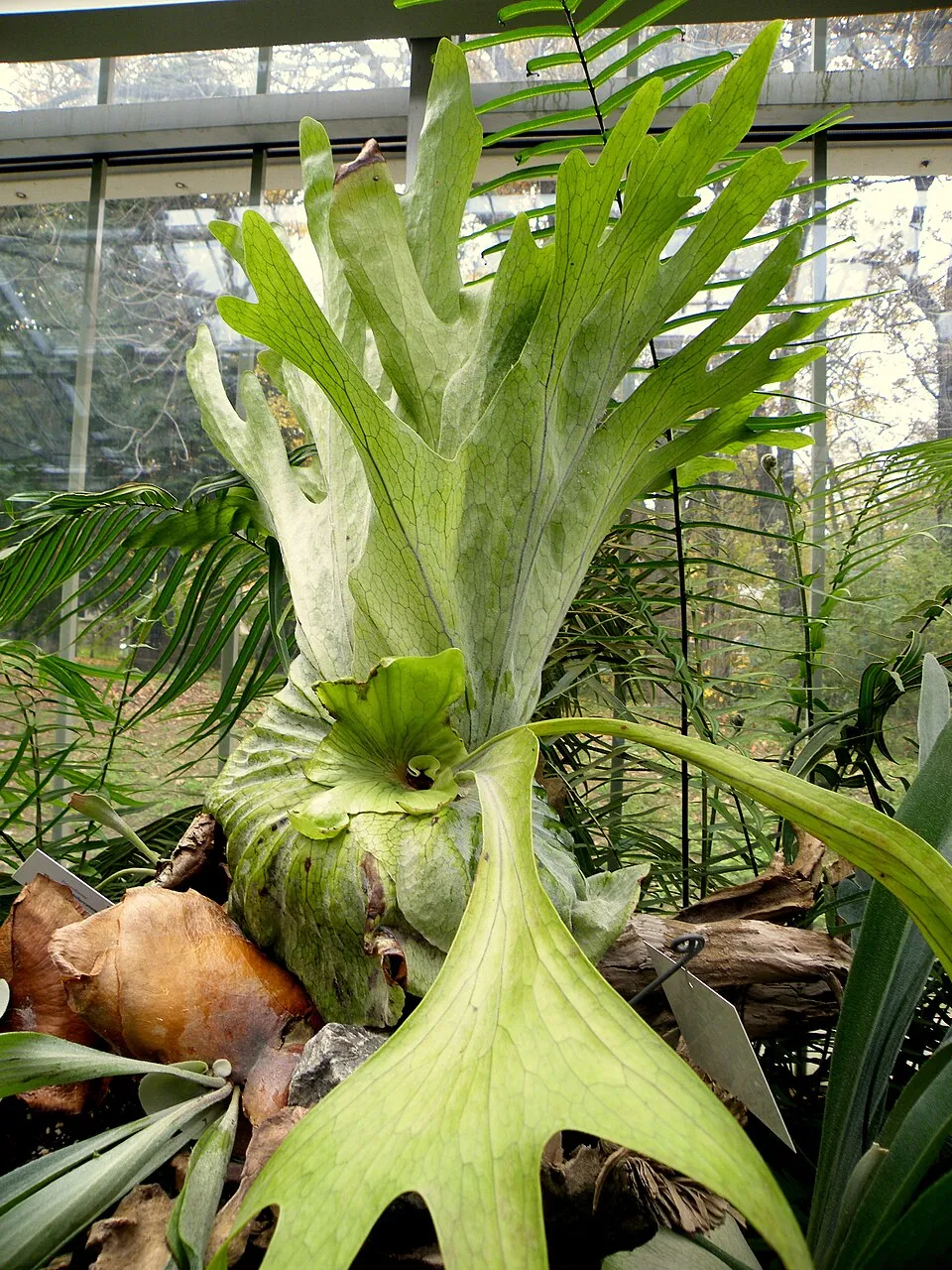
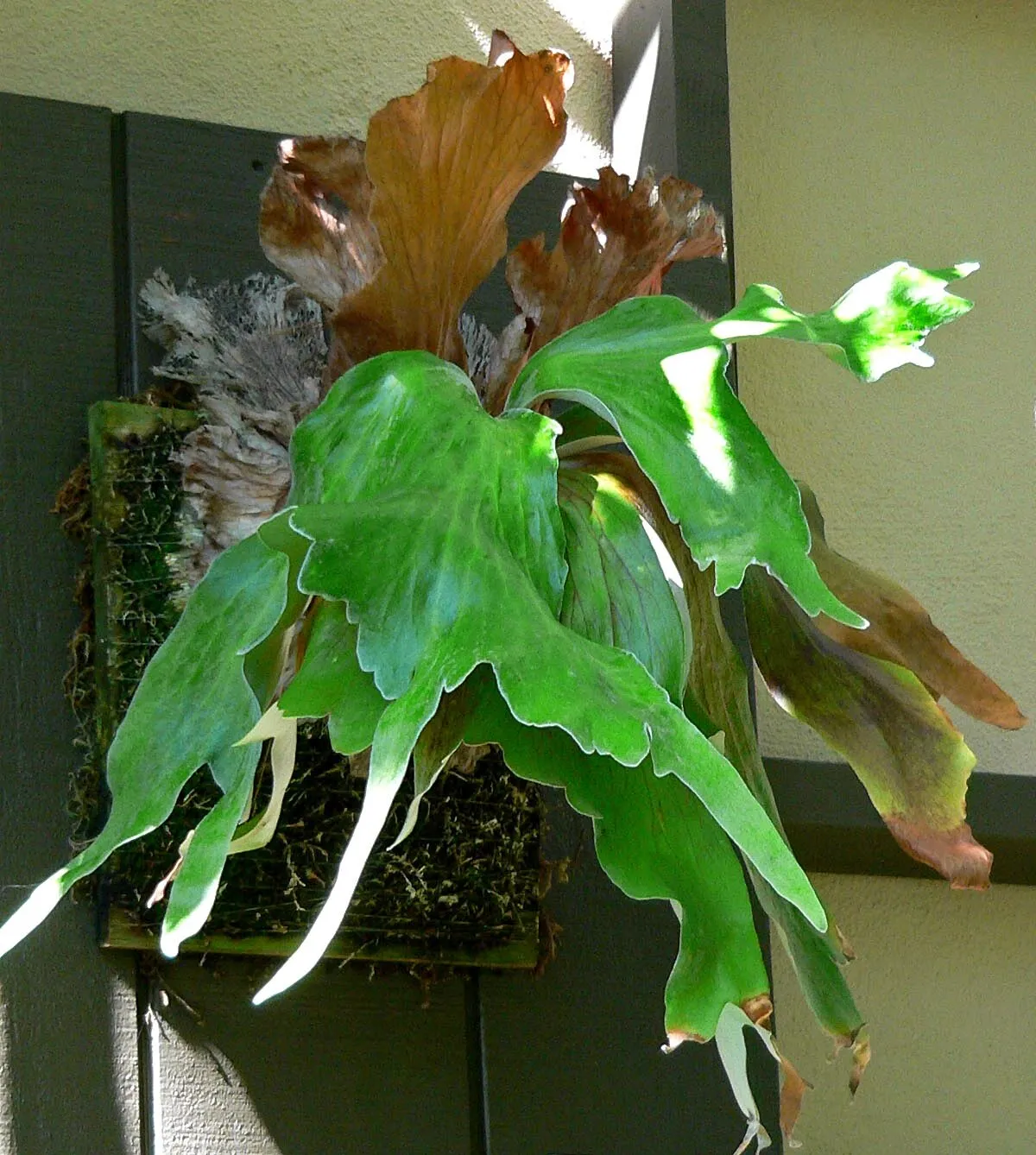
A compact species specialized for the coastal mangrove habitat of western Madagascar. Belongs to Clade A (Africa–Madagascar).
Bud type: Single-bud.
Key traits: Uniquely adapted to mangrove tidal zones with long-term exposure to salt spray. Fertile fronds have dense trichomes on both surfaces and no forking — these adaptations prevent salt accumulation and protect the tissue from saline conditions. Shield fronds lack a crown (crownless form), similar to P. alcicorne. Its compact size makes it suitable for smaller growing spaces, but it demands consistent high humidity reflecting its coastal habitat.
Range: Western Madagascar — mangrove tidal zones. High humidity, salt-spray tolerant.
Care Tips for P. ellisii
P. ellisii is a compact, manageable species for growers who can provide the high humidity its mangrove habitat demands. Its small size makes it one of the few Platycerium species genuinely suited to terrariums and display cases.
Light: Shade to filtered light. In the wild, P. ellisii grows in mangrove canopies with dappled, diffused light. Avoid direct sun — the unforked fertile fronds are thin and scorch easily. Low to moderate indirect light is ideal.
Watering: Keep consistently moist. As a mangrove species, P. ellisii is adapted to near-constant moisture availability and does not tolerate drought. Water every 3–5 days or whenever the medium begins to feel less moist on the surface. Good drainage remains important — wet, not waterlogged. See our watering guide.
Temperature: 18–30°C. Consistent warmth is essential. P. ellisii is a tropical species with no cold tolerance — temperatures below 15°C cause damage, and frost is fatal. Avoid cold drafts.
Humidity: 60%+ is critical. This is the single most important factor for P. ellisii. Its mangrove habitat has near-saturated air, and the plant expects similar conditions. A terrarium, humidity tent, or greenhouse is strongly recommended. Regular misting alone is insufficient.
Mounting: Due to its compact size, P. ellisii works well on small boards, cork bark slabs, or in small baskets. It is also one of the best Platycerium species for terrarium growing, where humidity is naturally maintained. As a single-bud species, it stays small. See our mounting guide.
Frequently Asked Questions
Why don’t P. ellisii fronds fork? The unforked (entire) fertile fronds are an adaptation to salt-spray environments. Forked fronds would have more edges exposed to salt accumulation, which can damage tissue. The smooth, unforked shape combined with dense trichomes on both surfaces creates a self-cleaning surface that sheds salt and water.
How does P. ellisii compare to P. elephantotis? Both species have unforked fertile fronds, but for different evolutionary reasons. P. elephantotis has broad, flat fronds adapted for maximum light capture in African savanna, while P. ellisii has smaller, trichome-covered fronds adapted for salt resistance in mangrove zones. Their care also differs — P. elephantotis needs a dry rest period, while P. ellisii prefers constant moisture.
Can P. ellisii tolerate salt in water? While P. ellisii is adapted to salt spray in the wild, this does not mean you should water with salty water in cultivation. The plant tolerates incidental salt exposure, but concentrated salt in irrigation water will cause damage over time. Use clean, filtered water.
Is P. ellisii good for terrariums? Excellent choice. Its compact size, shade tolerance, and high humidity requirements make P. ellisii one of the best Platycerium species for enclosed growing environments. Ensure some air circulation inside the terrarium to prevent fungal issues.
Need specialized care for this specimen? Check our cultivation guides for mounting, watering, and pest control techniques.