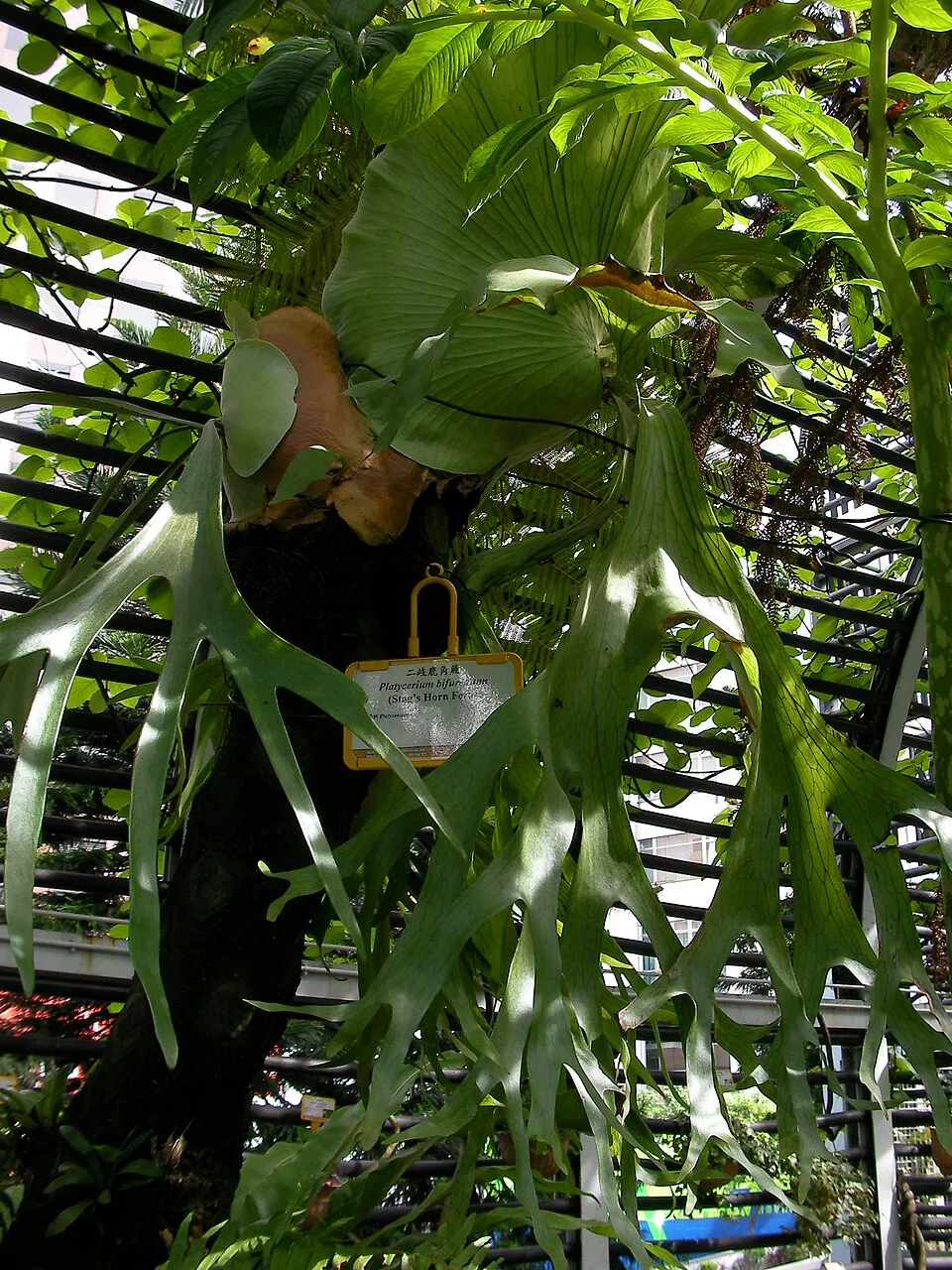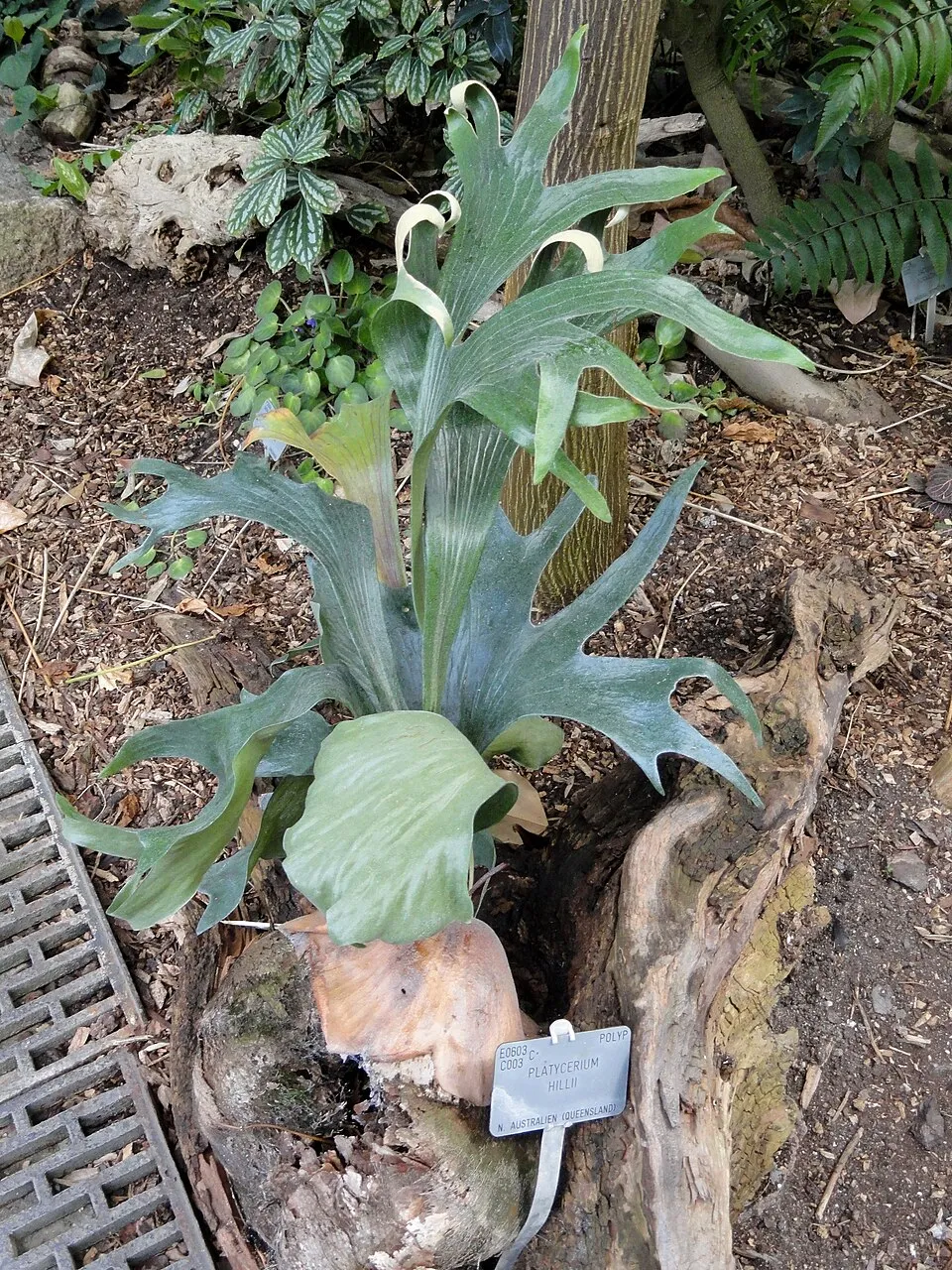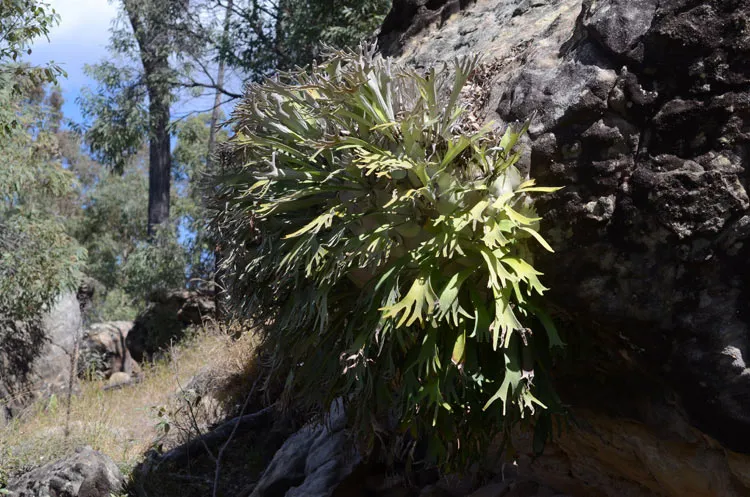
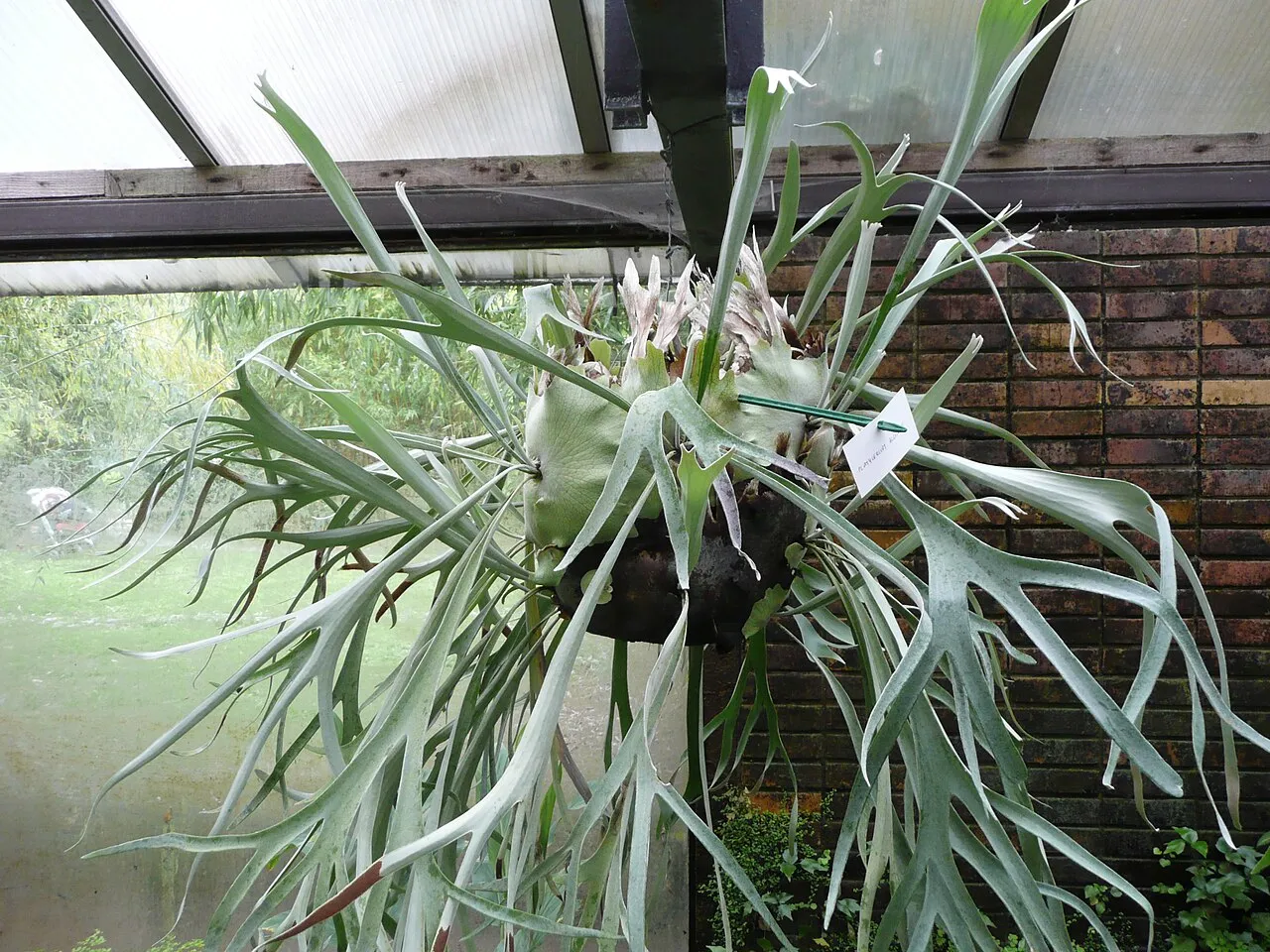
Overview
A species with two distinct populations — one on the East African mainland and one in southern Madagascar. Belongs to Clade A (Africa–Madagascar), a sister group to the Madagascar endemics.
Bud type: Multi-bud.
Key traits: The two populations display markedly different adaptations. The African form has a waxy cuticle with no stellate hairs, while the Madagascar form has dense, highly branched trichomes for wind resistance and moisture retention. Fertile fronds have a strong sponge-like tissue structure. Enters dormancy in the dry season and develops shallow-lobed crowns for better water storage. Wavy-edged fertile fronds catch air currents to aid spore dispersal. One of the easier African species to cultivate, tolerating a wider range of conditions than most Clade A species.
Range: Dual populations — East African mainland and southern Madagascar. Dry/wet seasonal climate with dormancy adaptation.
Care Tips for P. alcicorne
P. alcicorne is one of the most forgiving African Platycerium species, making it an accessible entry point for growers interested in Clade A species beyond the common Australian types.
Light: Bright indirect light. P. alcicorne tolerates a wider range of light conditions than most African species, from partial shade to bright filtered light. Avoid prolonged direct afternoon sun, which can dry out the fronds too quickly.
Watering: Moderate watering with a seasonal rhythm. During the warm growing season (spring through fall), water when the medium is nearly dry — typically every 7–10 days. During the cool/dry season (winter), reduce watering significantly to allow a natural dormancy period. P. alcicorne stores water in its sponge-like fertile frond tissue and shallow-lobed shield fronds, giving it more drought tolerance than other African species. See our watering guide.
Temperature: Tolerant range of 10–35°C, which is broader than most Clade A species. The African form can handle occasional cool nights down to 10°C if kept dry, though sustained cold is not recommended. Ideal growing range is 18–30°C.
Humidity: 40–60% is sufficient — unusually moderate for an African species. P. alcicorne adapts to average household humidity better than its tropical African relatives like P. stemaria or P. elephantotis. Higher humidity is beneficial during the growing season but not strictly required.
Mounting: Board or basket mounting both work well. The wavy-edged fertile fronds create an attractive display when allowed to hang freely. As a multi-bud species, P. alcicorne produces offsets over time — allow room for gradual expansion. See our mounting guide.
The Two Forms: African vs Madagascar
P. alcicorne is unusual in having two geographically separate populations with distinct physical traits:
- African form: Waxy cuticle, no stellate hairs. Adapted to drier East African conditions. Smoother frond texture.
- Madagascar form: Dense, highly branched trichomes for wind resistance and moisture retention. Adapted to Madagascar’s variable conditions.
Both forms are cultivated, and understanding which form you have helps tailor care. The Madagascar form benefits from slightly higher humidity and wind protection.
Frequently Asked Questions
Is P. alcicorne the same as P. vassei? P. vassei was formerly considered a separate species but is now generally treated as a synonym of P. alcicorne (specifically the Madagascar form). You may still see the name P. vassei used by some growers and older references.
Is P. alcicorne good for beginners? Yes — it is one of the easiest African species and comparable in difficulty to P. bifurcatum and P. hillii. Its tolerance for moderate humidity and a range of temperatures makes it forgiving. The main consideration is providing the seasonal dry rest period.
Does P. alcicorne produce pups? Yes — it is multi-bud and produces offsets. Pups can be separated once they have their own shield fronds and root system established. See our propagation guide.
How can I tell P. alcicorne apart from P. bifurcatum? P. alcicorne has wavy-edged fertile fronds with a sponge-like tissue structure, while P. bifurcatum has smoother, more deeply forked fronds. P. alcicorne shield fronds form shallow-lobed crowns for water storage, whereas P. bifurcatum shield fronds are more rounded and layered.
Need specialized care for this specimen? Check our cultivation guides for mounting, watering, and pest control techniques.