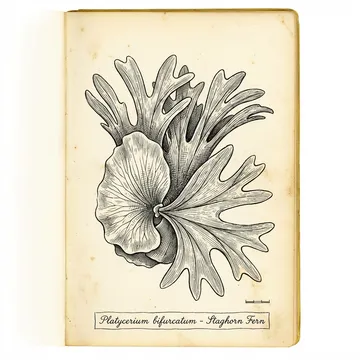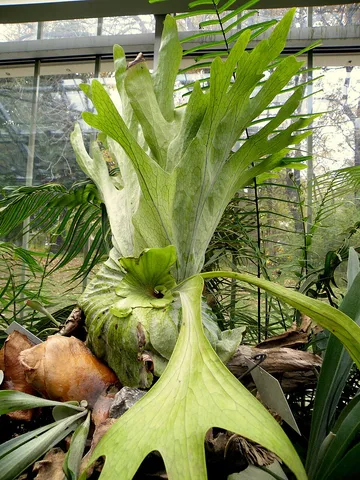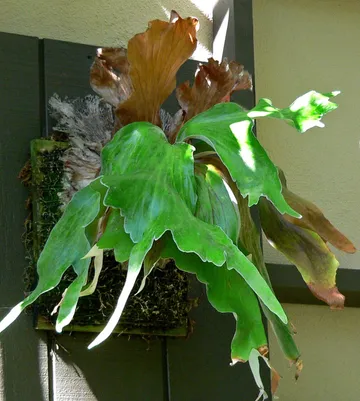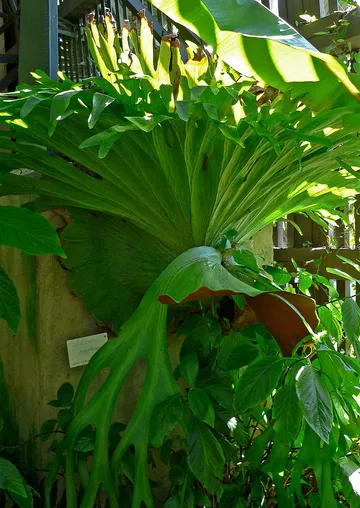
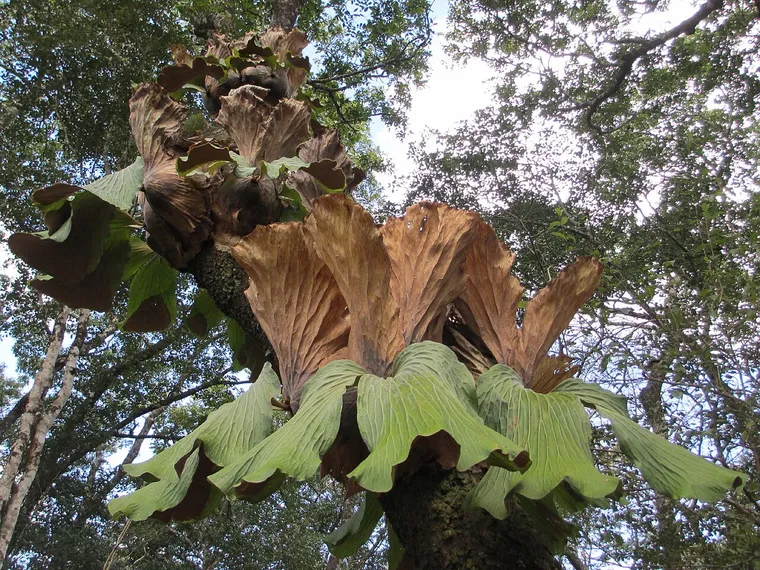
A distinctive species from the Congo River basin, first discovered in Angola. Belongs to Clade A (Africa–Madagascar) in the tropical African branch.
Bud type: Multi-bud.
Key traits: Broad, undivided fertile fronds that resemble elephant ears — completely unique among Platycerium, which typically have forked “antler-like” fronds. Has an intense dormancy mechanism: the plant can fully desiccate during the dry winter season and regenerate in spring, similar to resurrection plants. Low water needs in the cool/dry season; adapts to abundant moisture when warm. The subtropical savanna climate of its native habitat has distinct wet/dry seasons that must be replicated in cultivation. Notable hybrids include “An Xiang” (elephantotis × andinum) and “Xiang Zhua” (elephantotis × willinckii).
Range: Congo River basin, first discovered in Angola — subtropical savanna with distinct wet/dry seasons.
Care Tips for P. elephantotis
The most important aspect of P. elephantotis care is respecting its seasonal rhythm. This species needs a clear wet season and dry season to thrive.
Light: Filtered to bright indirect light. Avoid direct sun, which can scorch the broad, thin fronds.
Watering: Seasonal approach is critical. During the warm growing season (spring and summer), keep the medium consistently moist. During the cool dormant season (fall and winter), reduce watering dramatically — allow the plant to dry out almost completely. See our watering guide for seasonal schedules.
Temperature: 15–35°C. Tolerates a wider range than most tropical Platycerium due to its savanna origin. The cool/dry period can go as low as 12°C if kept dry.
Humidity: 50–70% during the growing season; lower during dormancy is fine.
Mounting: Board or basket mounting both work. Ensure the mount allows the broad fronds to hang freely — they can reach 60–90 cm in length. See our mounting guide.
Frequently Asked Questions
Why are the fronds not forked like other staghorn ferns? P. elephantotis is unique in having broad, undivided fertile fronds. This is an adaptation to its savanna habitat — the large, flat surface area maximizes light capture during the growing season. It is the most morphologically distinct Platycerium species.
My P. elephantotis looks dead — is it? Possibly not. During its dry dormancy, P. elephantotis can look completely desiccated — brown, curled, and lifeless. This is normal. Resume watering when temperatures warm up, and new growth should emerge within a few weeks. If the root ball is firm and the bud point is not mushy, the plant is likely alive.
Is P. elephantotis good for beginners? It is medium-difficulty. The main challenge is providing the seasonal wet/dry cycle. Growers accustomed to consistent year-round watering may overwater during dormancy, causing rot.