Overview
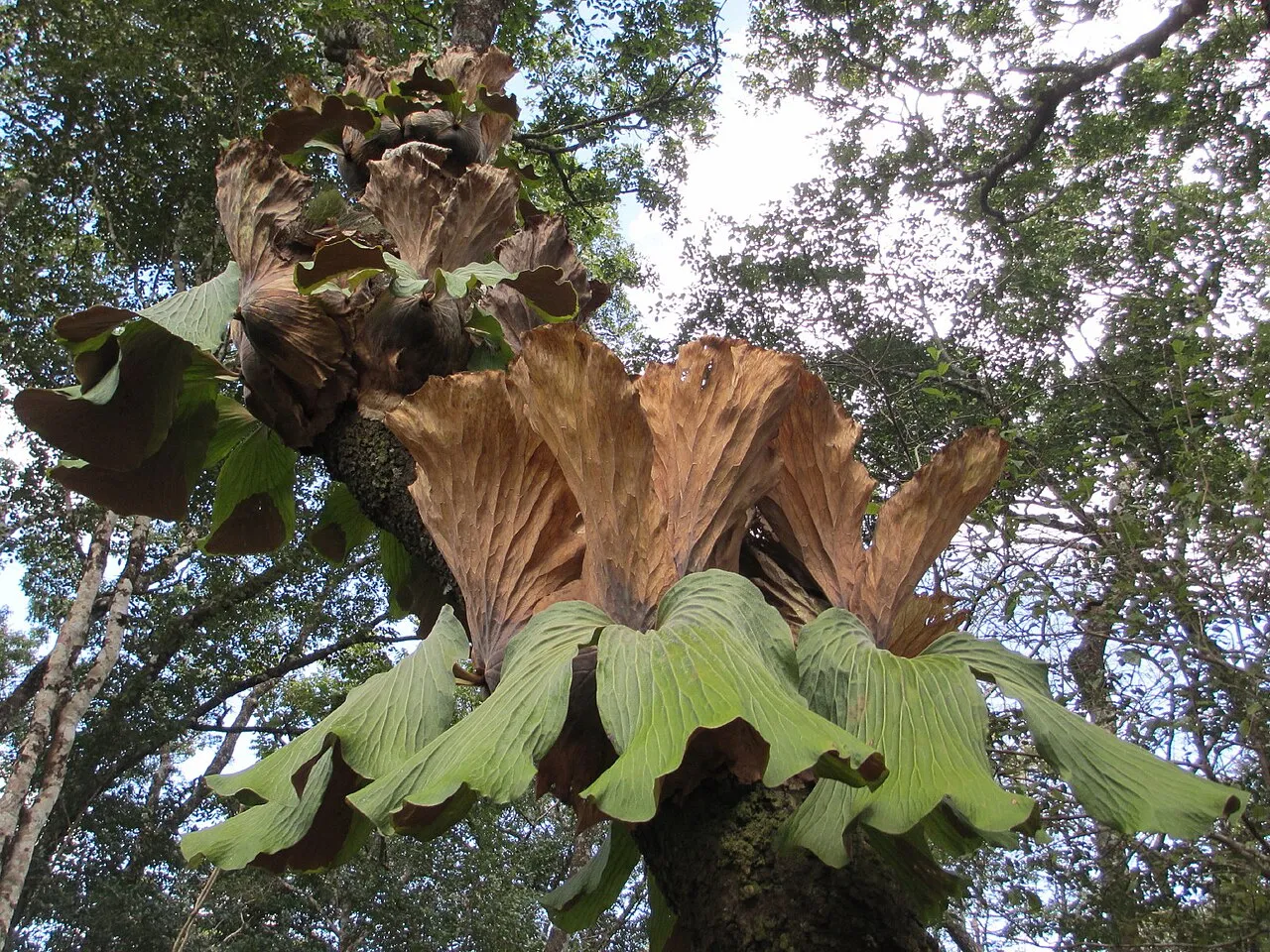
A rainforest species from west-central Africa, found in the Congo River basin near the Atlantic coast. Belongs to Clade A (Africa–Madagascar) in the tropical African branch.
Bud type: Multi-bud.
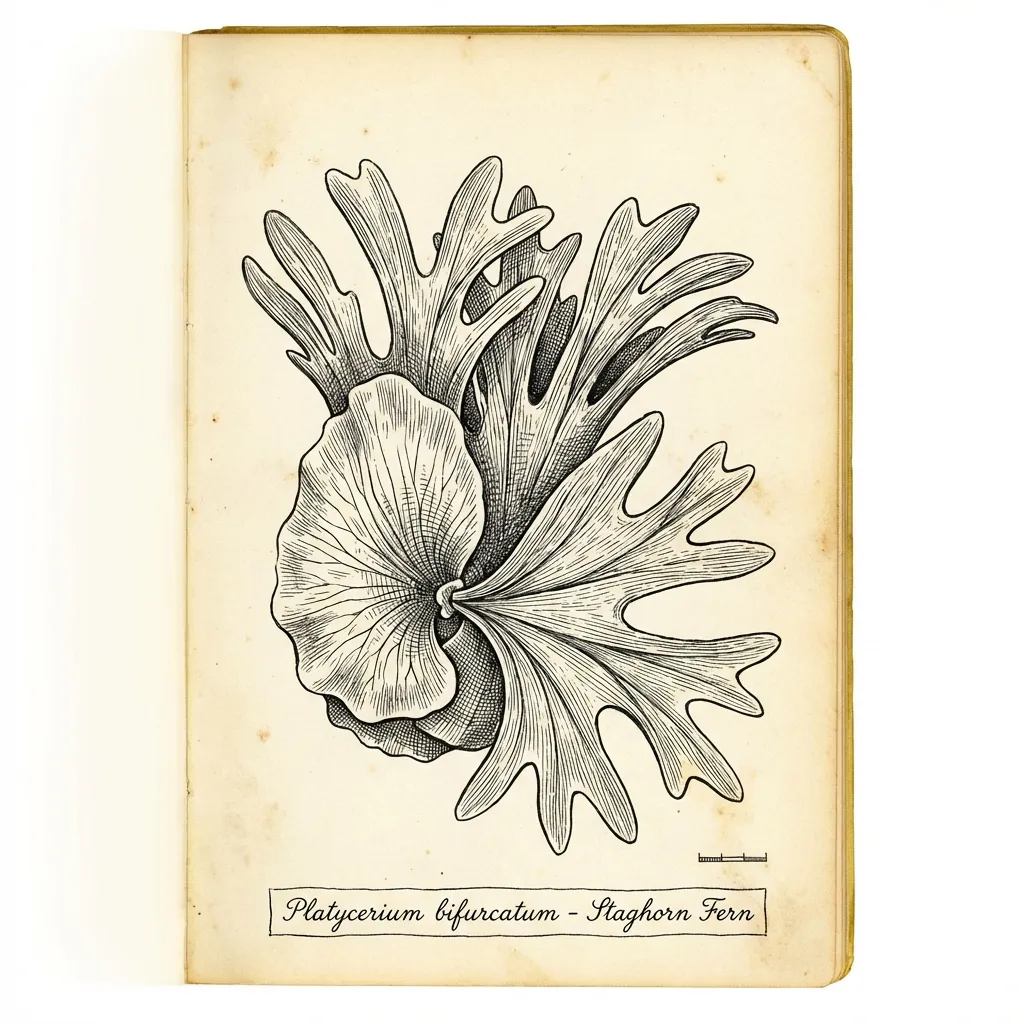
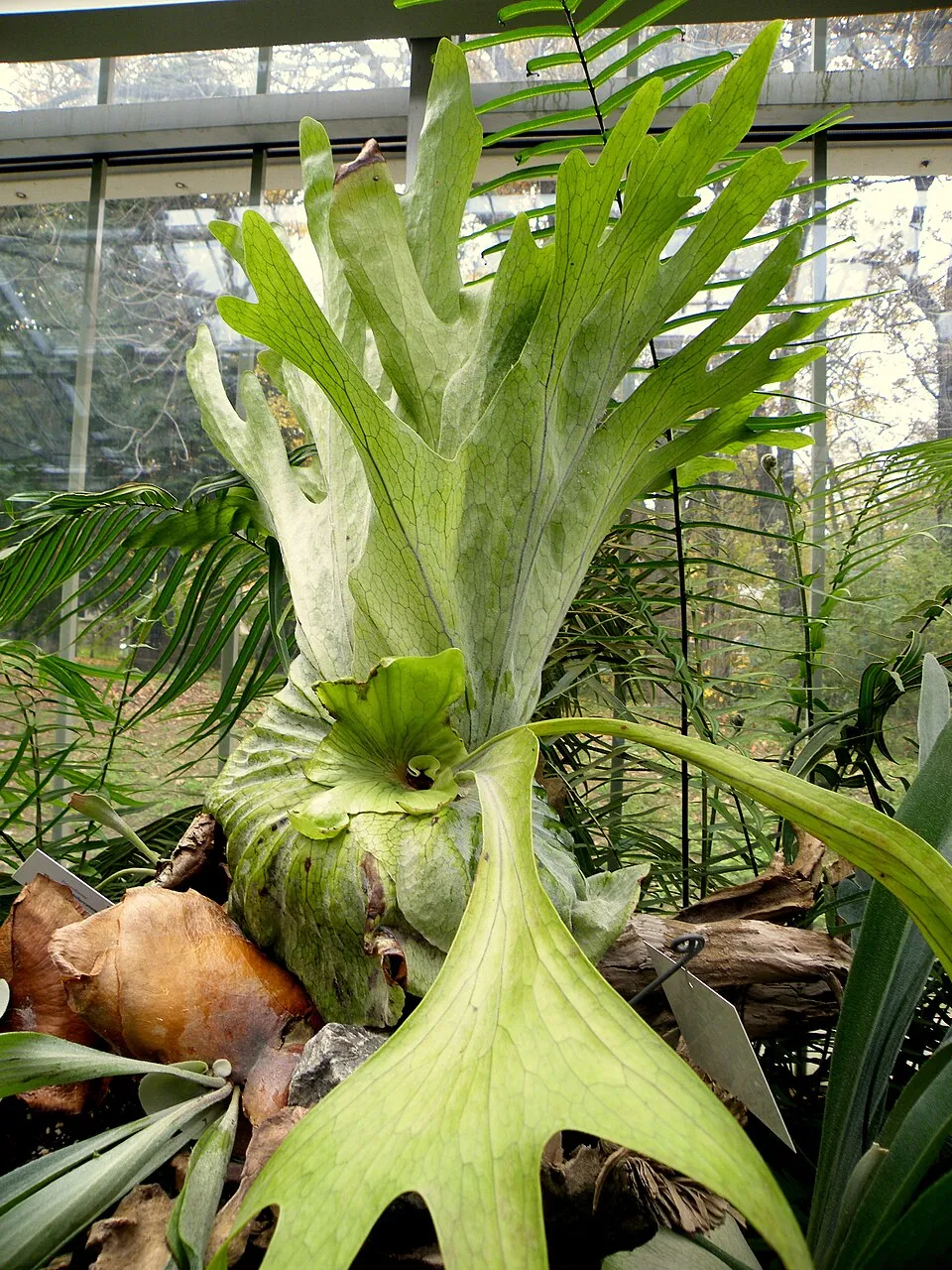
Key traits: Features broad, V-shaped (triangular) fertile fronds that give this species its common name. Has a split crown form — the shield fronds divide into distinct lobes. Epiphytic in tall-canopy rainforest, it is adapted to consistently high humidity and heavy shade. Moderate light tolerance but prefers the low-light conditions of its native understory. Requires warmer temperatures and higher humidity than most species outside the tropical group.
Range: West-central Africa — Congo River basin, tropical rainforest near the Atlantic. High humidity, high temperature environment.
Care Tips for P. stemaria
P. stemaria is a rewarding tropical species for growers who can provide consistent warmth and humidity. Its distinctive triangular fronds make it an eye-catching addition to any collection.
Light: Shade to filtered light. P. stemaria is one of the more shade-tolerant Platycerium species, adapted to the deep understory of African tropical rainforest. Bright indirect light works, but avoid direct sun — even brief exposure can scorch the broad, thin fertile fronds. A north-facing window or a sheltered spot away from windows is ideal.
Watering: Keep consistently moist. Unlike drought-tolerant Australian species, P. stemaria does not appreciate drying out between waterings. Water when the top of the medium begins to feel slightly less moist, typically every 4–5 days in warm conditions. Good drainage is still essential — moist, not waterlogged. See our watering guide.
Temperature: 18–32°C. As a tropical species from the Congo basin, P. stemaria needs consistent warmth. It does not tolerate cold — temperatures below 15°C cause stress, and frost is fatal. Keep away from cold drafts and unheated rooms in winter.
Humidity: 60%+ is strongly recommended. P. stemaria comes from one of the most humid environments on Earth (the Congo rainforest) and expects similar conditions. A greenhouse, humidity tent, or bathroom with good light can work. Regular misting helps but is not a substitute for ambient humidity.
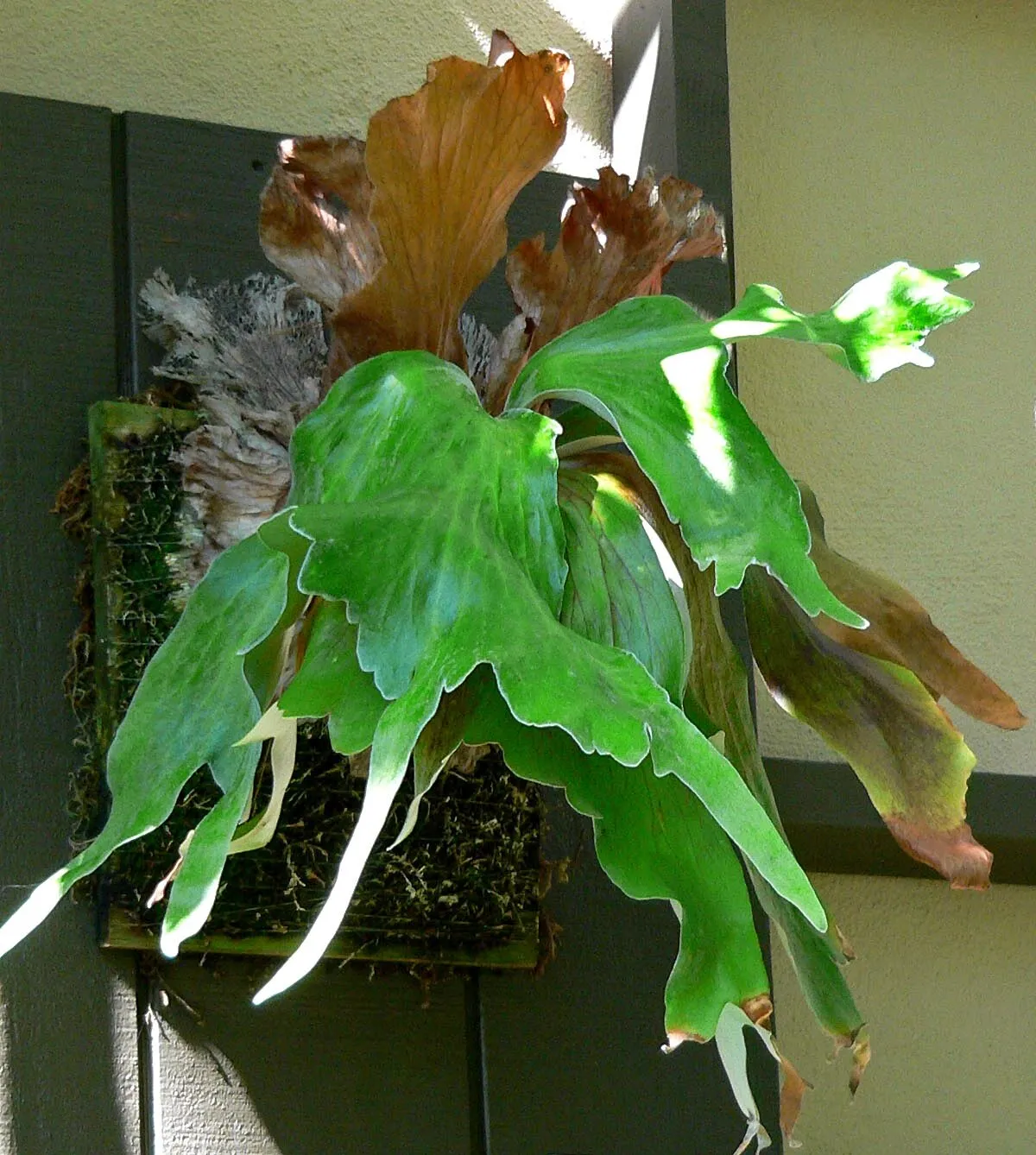
Mounting: Board or basket mounting. The broad, triangular fertile fronds need space to hang freely — they can reach 40–60 cm in length. As a multi-bud species, P. stemaria will eventually produce offsets, so allow room for expansion. See our mounting guide.
Frequently Asked Questions
Why are the fronds triangular? The broad, V-shaped fertile fronds are an adaptation to P. stemaria’s deep-shade habitat. The wide surface area maximizes light capture in the dark understory of the Congo rainforest. This triangular shape is distinctive and immediately identifies this species.
Is P. stemaria related to P. elephantotis? Both are African species in Clade A, but they come from different habitats. P. elephantotis is from savanna environments with distinct wet/dry seasons, while P. stemaria is from consistently humid rainforest. Their care requirements differ accordingly — P. elephantotis needs a dry rest period, while P. stemaria prefers constant moisture.
Does P. stemaria produce pups? Yes — it is a multi-bud species and produces offsets over time. Pups can be separated once they have 2–3 fronds of their own. Wait until the offset has established its own root system before dividing. See our propagation guide.
Is P. stemaria good for beginners? It is medium difficulty. If you can provide consistent warmth and humidity, it is not overly demanding. The main challenge for most growers is maintaining high enough humidity — dry household air is the most common cause of failure with this species.
Need specialized care for this specimen? Check our cultivation guides for mounting, watering, and pest control techniques.