Overview
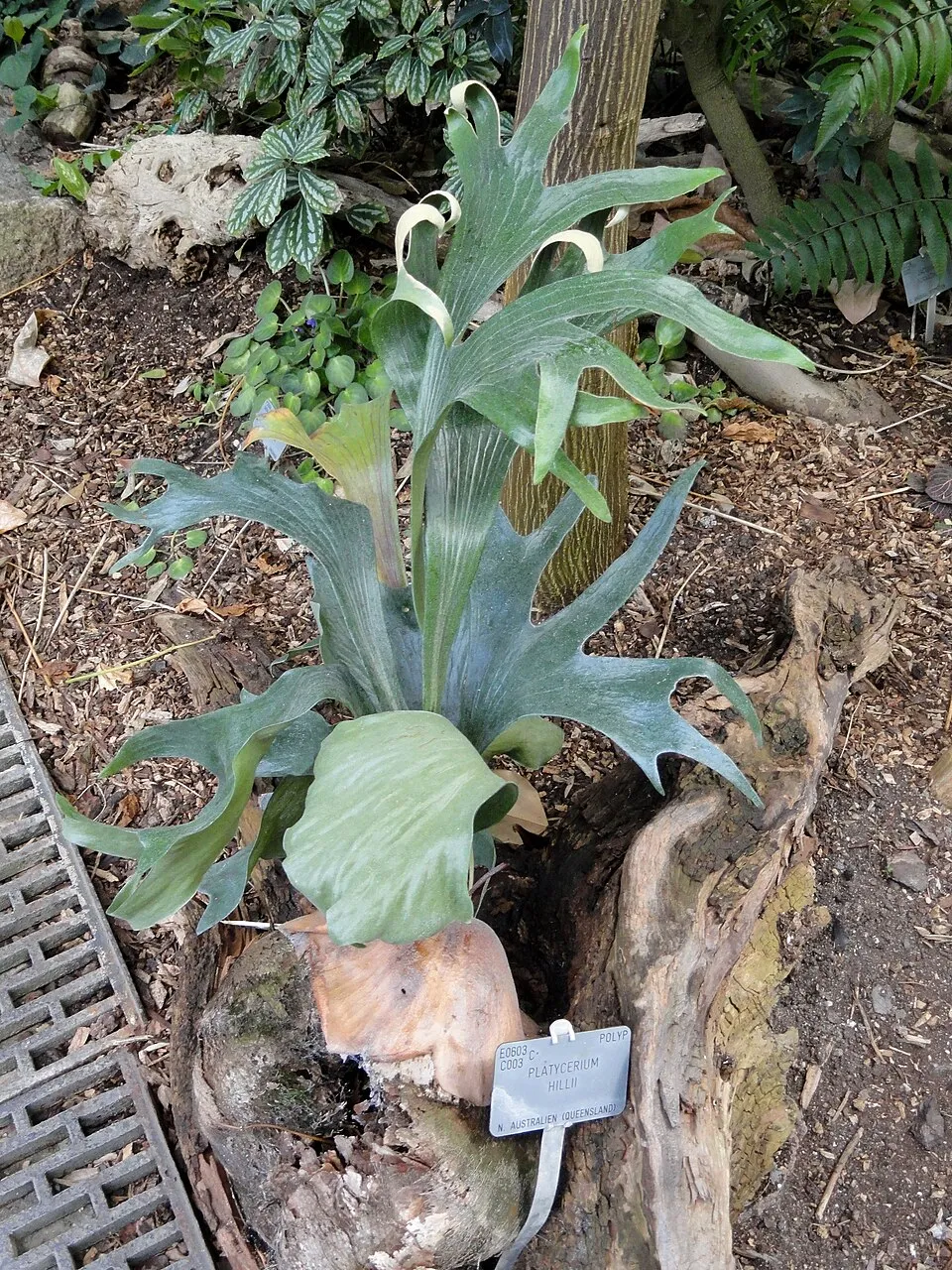
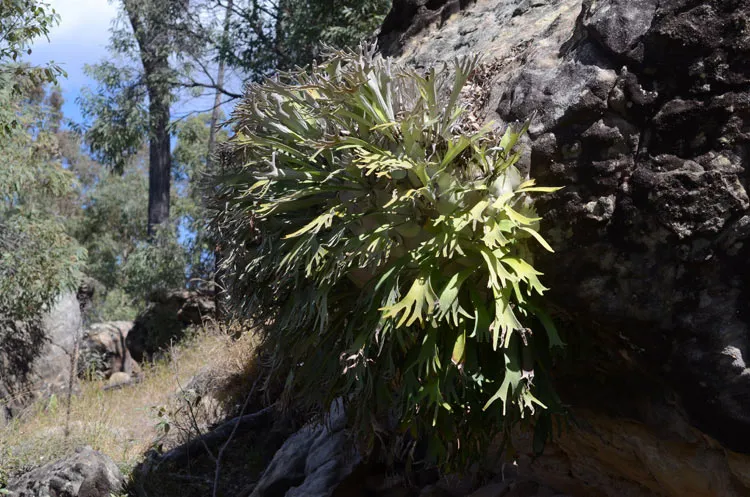
A lithophytic and epiphytic species from Queensland, Australia, adapted to semi-arid subtropical conditions. Belongs to Clade B (Asia–Australia) within the P. bifurcatum complex, closely related to P. hillii.
Bud type: Multi-bud.
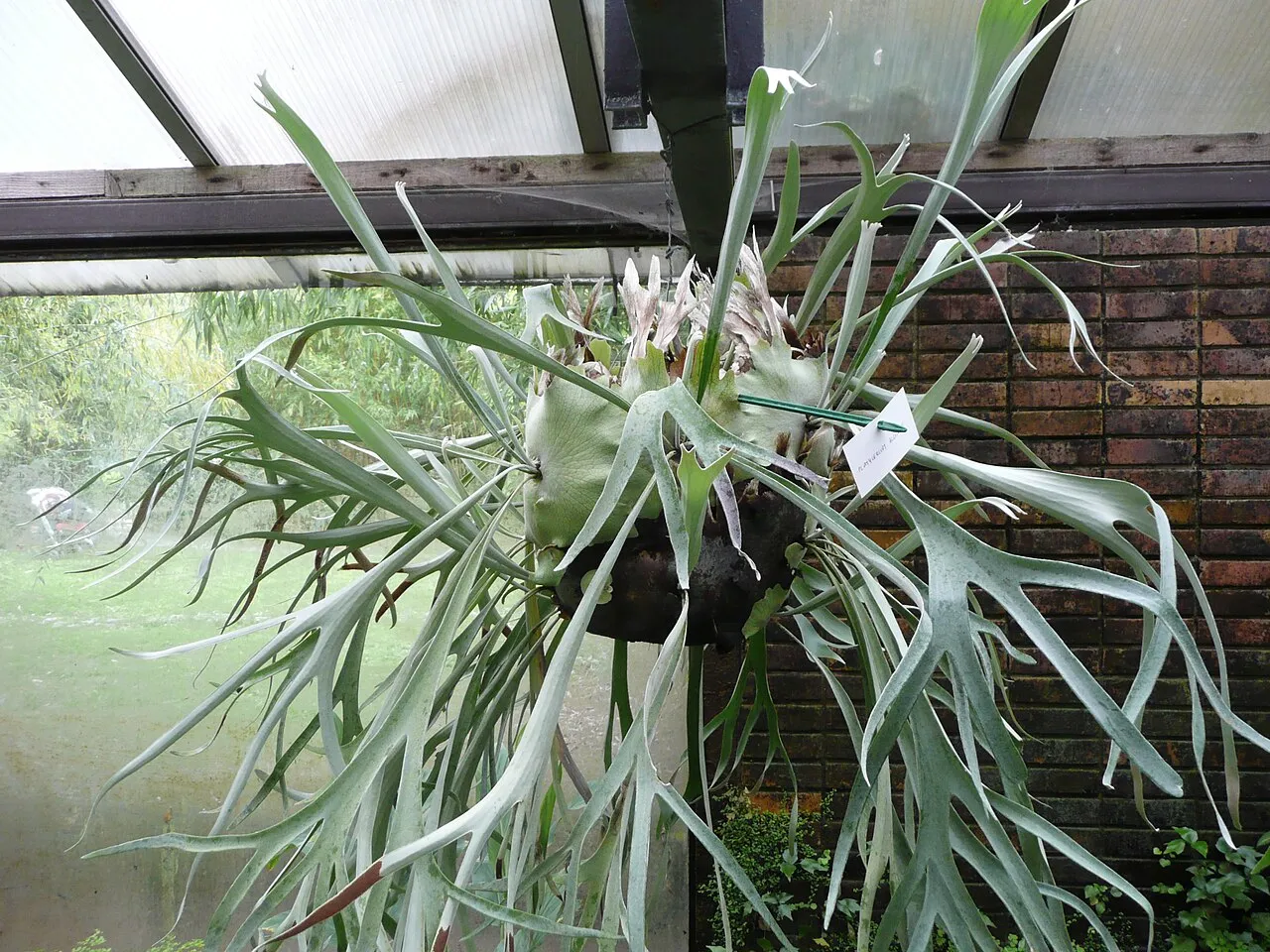
Key traits: Grows on rocks (lithophytically) as well as on trees. Native habitat receives only ~700 mm annual rainfall — far less than most Platycerium. Dense white stellate trichomes cover the fronds, collecting atmospheric moisture to compensate for low rainfall and providing UV protection. With no tall tree canopy overhead in its rocky habitat, it tolerates and even prefers intense direct light. An important parent in hybridization — wild Australian P. veitchii forms are used in the Mt. Lewis F1 crosses (Veitchii wild AUS group), contributing silver trichomes, cold hardiness, and compact upright form. The hybrid P. APE (wild veitchii × madagascariense) is a notable cross.
Range: Queensland, Australia — rocky outcrops and sparse tree branches in semi-arid subtropical zones (~700 mm/year rainfall).
Care Tips for P. veitchii
P. veitchii is one of the easiest species to grow, and one of the few staghorn ferns that actively prefers bright light and dry conditions.
Light: High light to full sun. Unlike most Platycerium, P. veitchii thrives in direct sunlight — its dense trichomes provide natural UV protection. South-facing windows, bright patios, and full-sun positions on trees are all suitable.
Watering: This is the most drought-tolerant Platycerium species. Allow the medium to dry completely between waterings. In summer, every 7–14 days; in winter, every 2–4 weeks. Overwatering is a greater risk than underwatering. Use the weight test.
Temperature: Extremely hardy — tolerates frost and temperatures down to -5°C when dry. Also handles heat well up to 40°C. One of the best outdoor Platycerium for USDA zones 9–11.
Humidity: Unusually low humidity tolerance for a staghorn fern. Handles arid conditions (below 30% RH) that would kill most species. The trichomes collect atmospheric moisture to supplement root uptake.
Mounting: Board mounting or rock mounting both work well. In its natural habitat, P. veitchii grows on rocks as often as trees. Cedar boards, cork bark, or even large stones make excellent mounts. See our mounting guide.
Frequently Asked Questions
Can P. veitchii handle direct sunlight? Yes — it is one of the only Platycerium species that prefers direct sun. Its dense white trichomes protect the fronds from UV damage. If transitioning from indoor to outdoor, acclimate gradually over 1–2 weeks.
Is P. veitchii frost-hardy? Yes, mature specimens tolerate brief frosts to -5°C when the root ball is dry. Keep it dry during cold spells — wet roots combined with freezing temperatures are lethal.
Why are the fronds so silvery-white? The silver color comes from dense stellate trichomes — star-shaped hairs that cover the frond surface. They serve multiple functions: UV protection, moisture collection from dew and humidity, and temperature regulation.
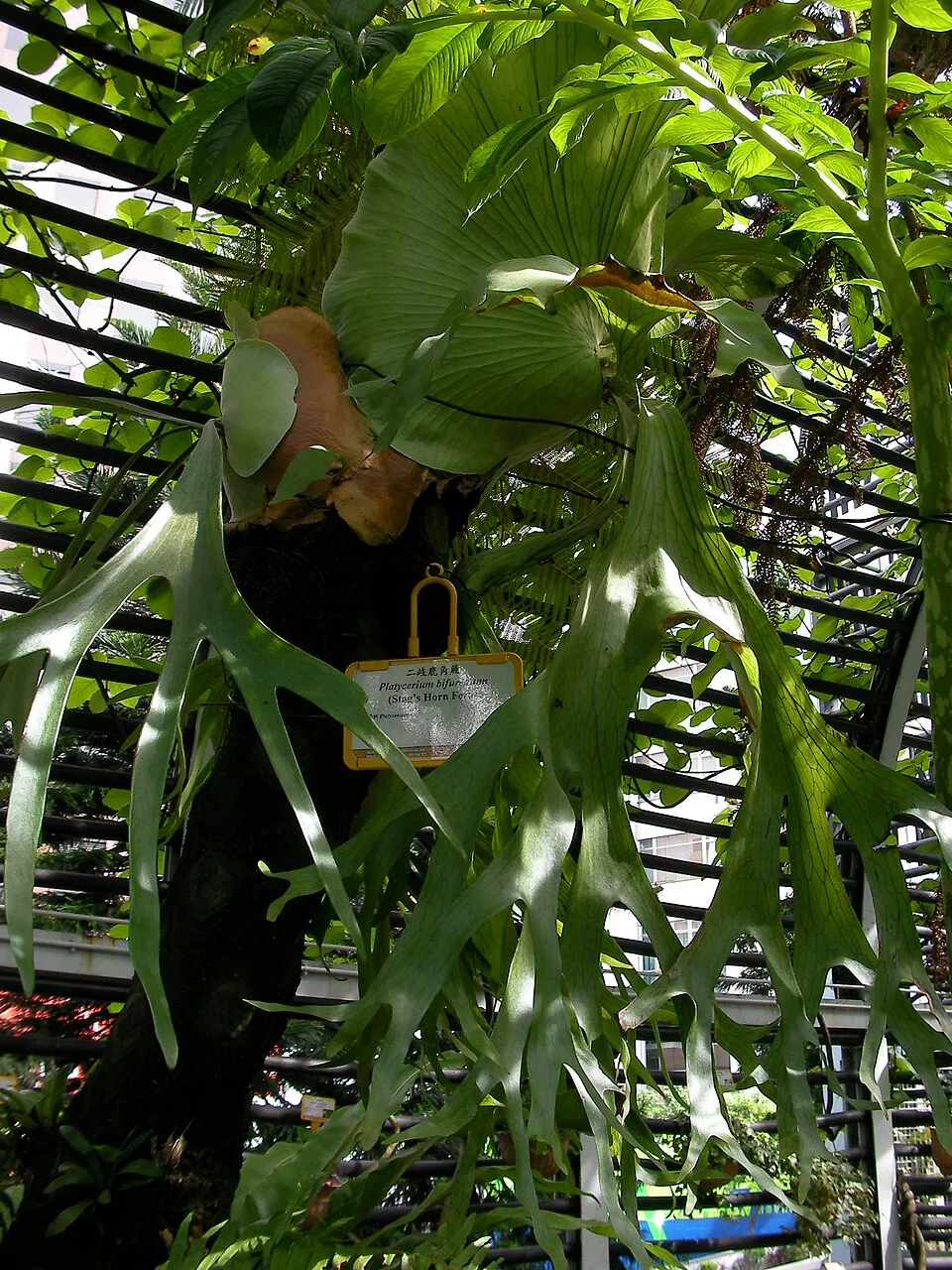
How does P. veitchii differ from P. bifurcatum? P. veitchii is more compact, more silvery, more sun-tolerant, and more drought-tolerant. P. bifurcatum has larger, greener fronds and prefers shade. Both are Australian, multi-bud, and easy to grow, but they suit different environments.
Need specialized care for this specimen? Check our cultivation guides for mounting, watering, and pest control techniques.