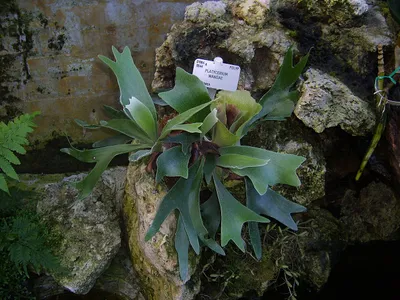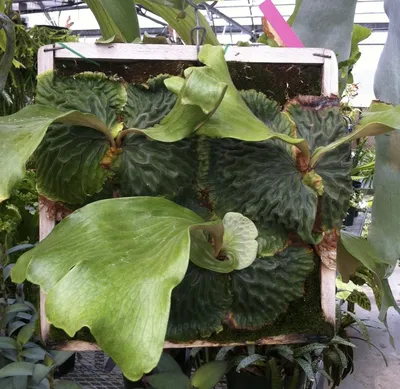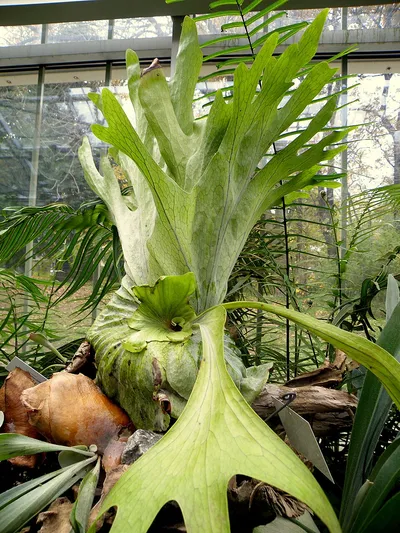
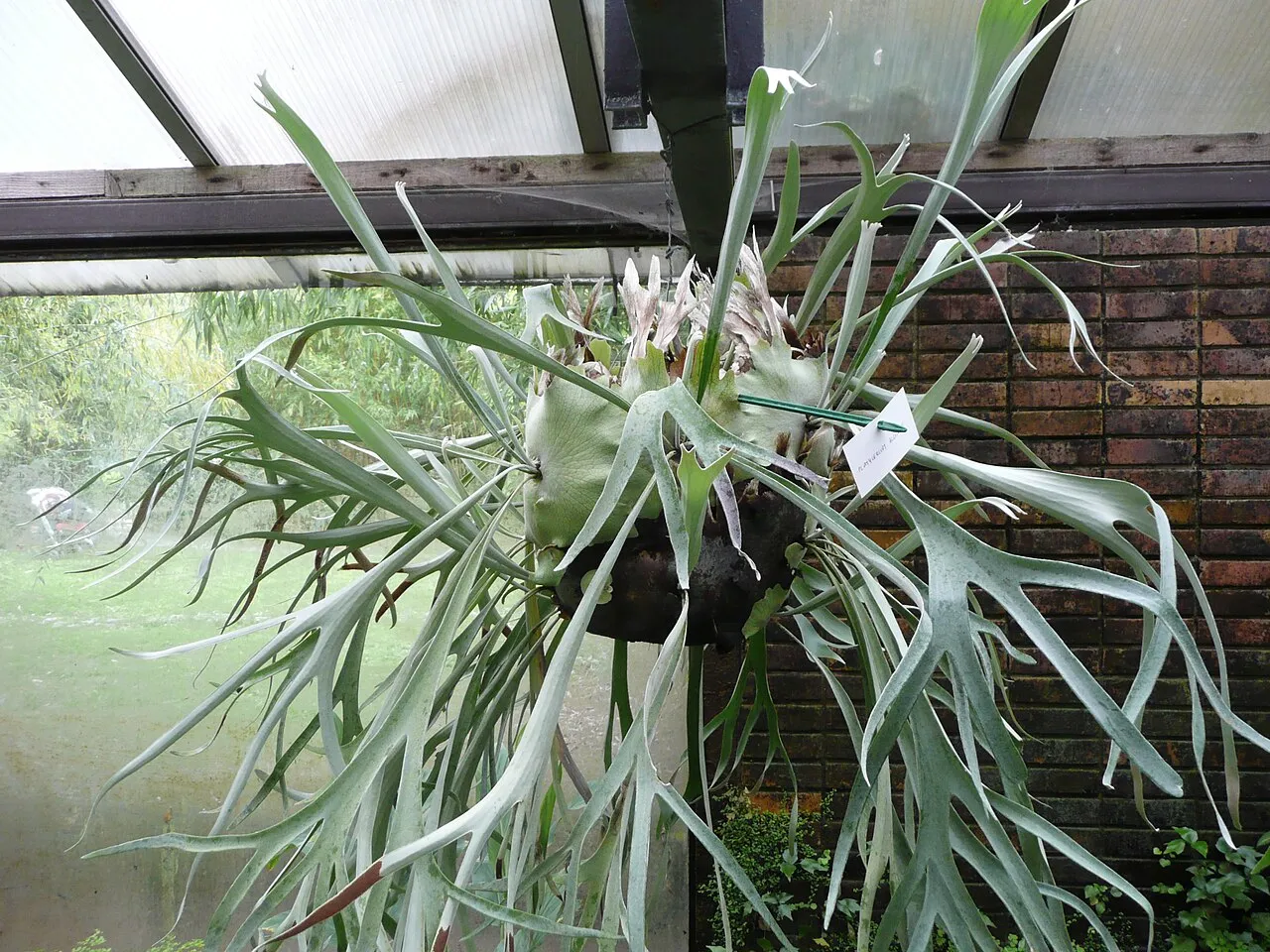
“Do staghorn ferns flower?” is one of the most common questions from new growers. The short answer: no — staghorn ferns never flower, and they never will. But the biology behind why they do not flower, and how they actually reproduce, is fascinating.
Why Staghorn Ferns Cannot Flower
Staghorn ferns belong to the genus Platycerium, which is part of the fern family Polypodiaceae. Ferns are a completely separate lineage from flowering plants (angiosperms). The split happened over 360 million years ago — ferns existed for hundreds of millions of years before the first flower ever evolved.
Ferns reproduce through spores, a more ancient reproductive strategy. No amount of perfect care, special fertilizer, or ideal conditions will make a staghorn fern flower — it is genetically impossible, like asking a fish to fly.
What Are the Brown Patches on Staghorn Fern Fronds?
The most common reason people ask about flowers is the brown, fuzzy patches visible on the underside (or tips) of fertile fronds. These are often mistaken for:
- Flowers or buds (they are not)
- Disease or rot (they are not)
- Insect damage (they are not)
These brown patches are sori — clusters of sporangia (spore-producing structures). Each sorus contains millions of microscopic spores. When mature, the sporangia open and release the spores into the air.
Do not remove the brown patches. They are a sign of a healthy, mature plant. Scrubbing or cutting them off does not help the plant and removes its reproductive structures.
How Staghorn Ferns Actually Reproduce
Staghorn ferns have two reproduction methods:
1. Spores (Sexual Reproduction)
All Platycerium species produce spores. The process works like this:
- Spore production: Mature fertile fronds develop brown sori containing millions of spores
- Spore release: Sporangia dry and crack open, releasing spores into the air
- Germination: Spores that land on moist substrate germinate into a tiny, heart-shaped structure called a gametophyte (prothallus)
- Fertilization: The gametophyte produces egg and sperm cells. Sperm swim through a film of water to reach the egg
- New fern: The fertilized egg grows into a new fern plant (sporophyte)
This process takes 6–18 months from spore to visible plant, and requires consistently moist, warm conditions. Growing staghorn ferns from spore is possible but slow and challenging. See our propagation guide for details.
2. Pups / Offsets (Asexual Reproduction)
Multi-bud species — including P. bifurcatum, P. hillii, P. veitchii, P. coronarium, P. elephantotis, and P. stemaria — produce pups (offsets, or “keikis”). These are genetically identical clones that grow from the base of the parent plant.
Pups can be separated once they have 2–3 fronds and mounted independently. This is the fastest and easiest propagation method. See our propagation guide.
Single-bud species — like P. ridleyi, P. andinum, P. madagascariense, and P. wallichii — do not produce pups. Their only reproduction method is spores, which is one reason these species tend to be rarer and more expensive.
Other Common Staghorn Fern Myths
”The brown shield fronds are dead and should be removed”
Wrong. The brown, papery shield fronds (basal fronds) are a natural part of the plant’s structure. They protect the root ball, collect water and nutrients, and anchor the plant to its mount. Old shield fronds naturally turn brown as new ones grow over them. Never remove them.
”Staghorn ferns are parasites”
Wrong. Staghorn ferns are epiphytes, not parasites. They grow on trees for physical support but take no nutrients from the host tree. Their nutrients come from rainwater, decomposing organic matter trapped in their shield fronds, and airborne particles.
”You need to mist staghorn ferns daily”
Misleading. Misting raises humidity briefly but does not substitute for proper watering. Most staghorn ferns need deep soaking of the root ball every 7–14 days, not surface misting. Misting can be beneficial for humidity-sensitive species but is not a primary watering method.
”Staghorn ferns need soil”
Wrong. Staghorn ferns grow best in sphagnum moss, bark, or other epiphytic media — not potting soil. In the wild, they grow on tree trunks and branches with no soil at all. See our soil and potting mix guide.