Staghorn ferns range from palm-sized miniatures to massive specimens that can fill a wall. If you are planning space for a new plant — or wondering whether your current one will outgrow its spot — this guide covers the mature size of all 18 Platycerium species.
Staghorn Fern Size Chart: All 18 Species
| Species | Common Name | Mature Size | Weight | Growth Rate |
|---|---|---|---|---|
| P. madagascariense | Madagascar Staghorn | 20–30 cm | < 1 kg | Very slow |
| P. ellisii | Ellis’s Staghorn | 25–35 cm | < 1 kg | Slow |
| P. hillii | Green Staghorn | 40–60 cm | 2–5 kg | Moderate |
| P. veitchii | Silver Staghorn | 40–60 cm | 2–5 kg | Moderate |
| P. alcicorne | Round Shield Staghorn | 40–70 cm | 2–5 kg | Moderate |
| P. andinum | Andean Staghorn | 40–60 cm | 2–4 kg | Slow |
| P. wallichii | Butterfly Staghorn | 50–80 cm | 3–6 kg | Slow (dormant periods) |
| P. quadridichotomum | Four-Fork Staghorn | 40–60 cm | 2–4 kg | Slow (dormant periods) |
| P. stemaria | Triangle Staghorn | 50–80 cm | 3–8 kg | Moderate |
| P. ridleyi | Ridley’s Staghorn | 50–80 cm | 3–8 kg | Slow |
| P. bifurcatum | Common Staghorn | 60–90 cm | 5–15 kg | Moderate–Fast |
| P. willinckii | Java Staghorn | 60–100 cm | 5–10 kg | Moderate |
| P. elephantotis | Elephant Ear Staghorn | 60–90 cm | 5–10 kg | Moderate |
| P. holttumii | Holttum’s Staghorn | 80–120 cm | 8–15 kg | Moderate |
| P. superbum | Staghorn Fern | 100–150 cm | 10–25 kg | Moderate |
| P. coronarium | Crown Staghorn | 100–200 cm | 15–30+ kg | Moderate |
| P. grande | Giant Staghorn | 120–200+ cm | 20–40+ kg | Slow–Moderate |
| P. wandae | Queen Staghorn | 150–200+ cm | 30–40+ kg | Slow |
Sizes represent individual plants in cultivation. Wild specimens and colonial clusters of multi-bud species can be significantly larger.
Small Staghorn Ferns (Under 60 cm)
If space is limited — an apartment, a small indoor wall, or a terrarium — these species stay compact:
P. madagascariense (20–30 cm): The smallest species. Perfect for terrariums but extremely challenging to grow (heat-intolerant, narrow moisture tolerance). Advanced growers only.
P. ellisii (25–35 cm): Compact and shade-tolerant. Excellent for terrariums and display cases. Needs high humidity.
P. hillii (40–60 cm): Compact, upright growth habit. One of the easiest species — excellent for beginners with limited space.
P. veitchii (40–60 cm): Beautiful silver trichome coverage. Hardy and drought-tolerant. Great beginner species that stays manageable.
Medium Staghorn Ferns (60–100 cm)
These species make impressive mounted specimens without overwhelming most rooms:
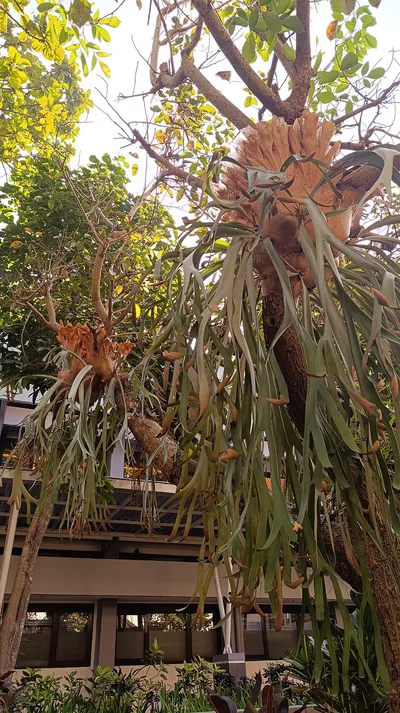
P. bifurcatum (60–90 cm individual): The most common species. Individual plants are medium-sized, though multi-bud colonies on trees can grow much larger over decades.
P. willinckii (60–100 cm): Long, elegant fertile fronds with silvery trichomes. Popular with collectors and fits well in a home environment.
P. elephantotis (60–90 cm): Broad, undivided fronds need horizontal space but the overall plant stays moderate.
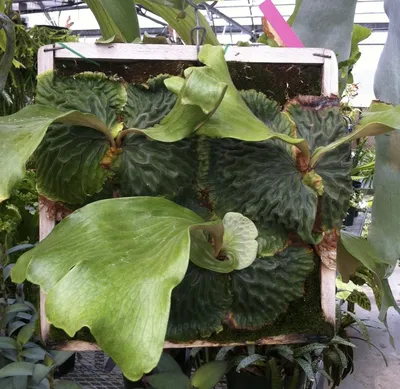
P. ridleyi (50–80 cm): Compact and slow-growing. Its cabbage-like shield fronds make it a living sculpture that fits on a single mount.
Large Staghorn Ferns (100+ cm)
These species are serious statement plants that need dedicated space — a greenhouse, covered patio, or large wall:
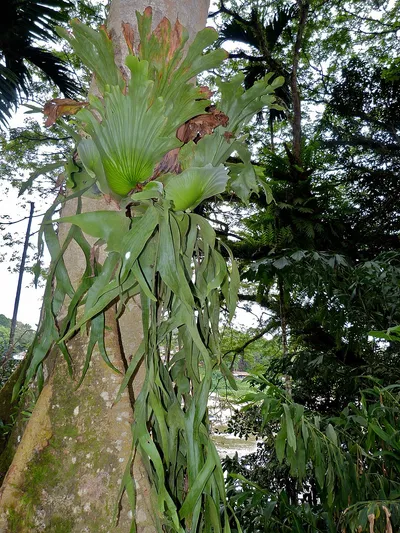
P. superbum (100–150 cm): A single, dramatic plant (not to be confused with P. grande). Massive shield fronds create a nest shape that can reach 1.5 meters across.
P. coronarium (100–200 cm): The cascading fertile fronds can reach 2–3 meters, creating a chandelier effect. Needs a reinforced mount — mature specimens exceed 30 kg.
P. grande (120–200+ cm): True to its name, this is one of the largest species. Colonial specimens in the wild grow much larger.
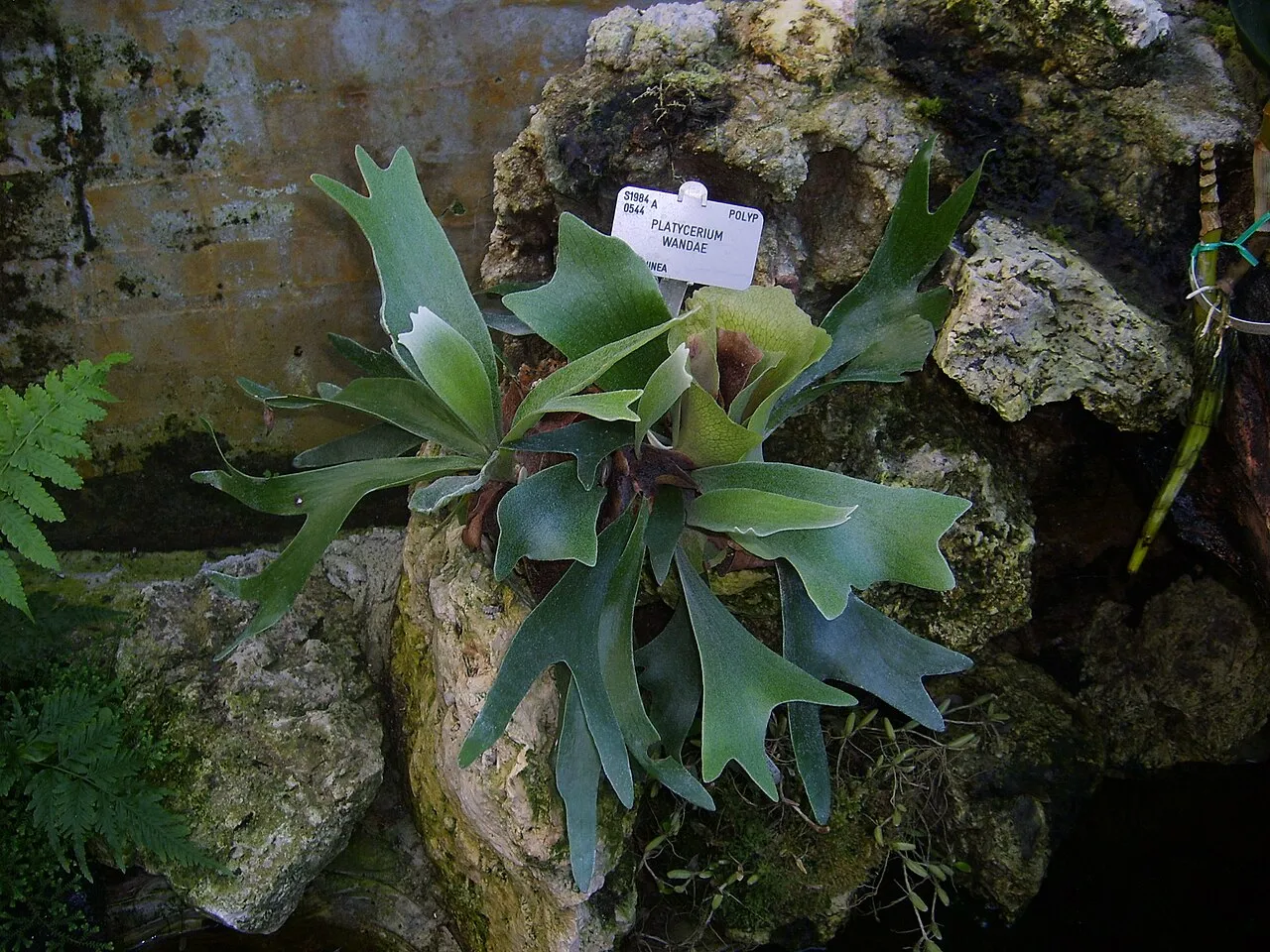
P. wandae (150–200+ cm): The Queen Staghorn — potentially the largest Platycerium. Shield fronds alone can exceed 2 meters. Mature specimens weigh 40+ kg and need industrial-strength mounting.
How Fast Do Staghorn Ferns Grow?
All staghorn ferns are slow to moderate growers. Expect:
- 2–4 new fronds per year for most species under good conditions
- 3–5 years for a small pup to reach a displayable size (30–50 cm)
- 8–15+ years for a specimen to reach full mature size
- Faster growth with optimal light (bright indirect), correct watering, high humidity, and regular fertilizing
Species with dormancy periods — like P. wallichii, P. elephantotis, and P. quadridichotomum — grow even more slowly because active growth only happens during part of the year.
Choosing the Right Size for Your Space
| Your Space | Best Species |
|---|---|
| Terrarium / display case | P. madagascariense, P. ellisii |
| Small apartment wall | P. hillii, P. veitchii |
| Living room feature | P. bifurcatum, P. willinckii |
| Large wall or covered patio | P. superbum, P. elephantotis |
| Greenhouse or outdoor tree | P. coronarium, P. grande, P. wandae |
The best approach is to choose a species that fits your space at maturity, rather than trying to limit a large species’ growth. A healthy P. hillii on a board mount is far more rewarding than a stressed P. wandae crammed into a corner.