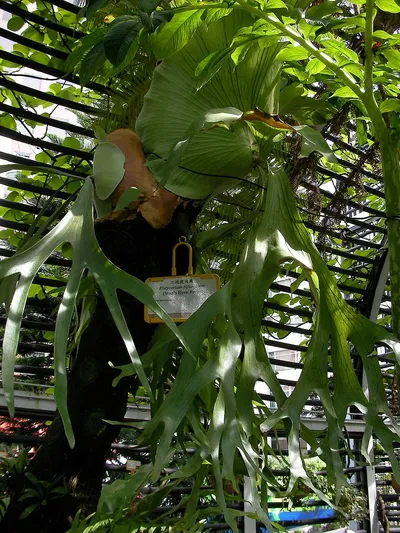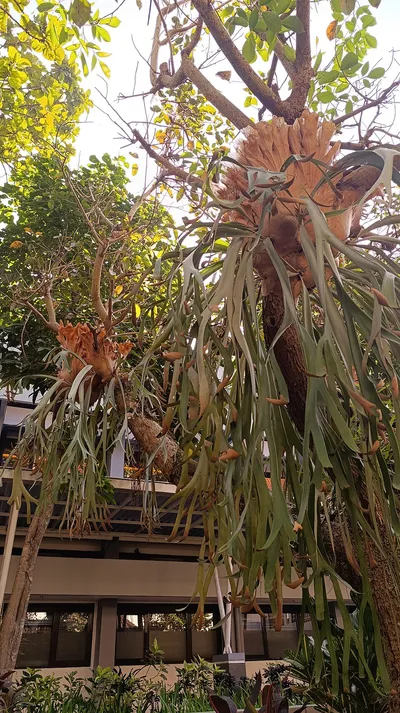
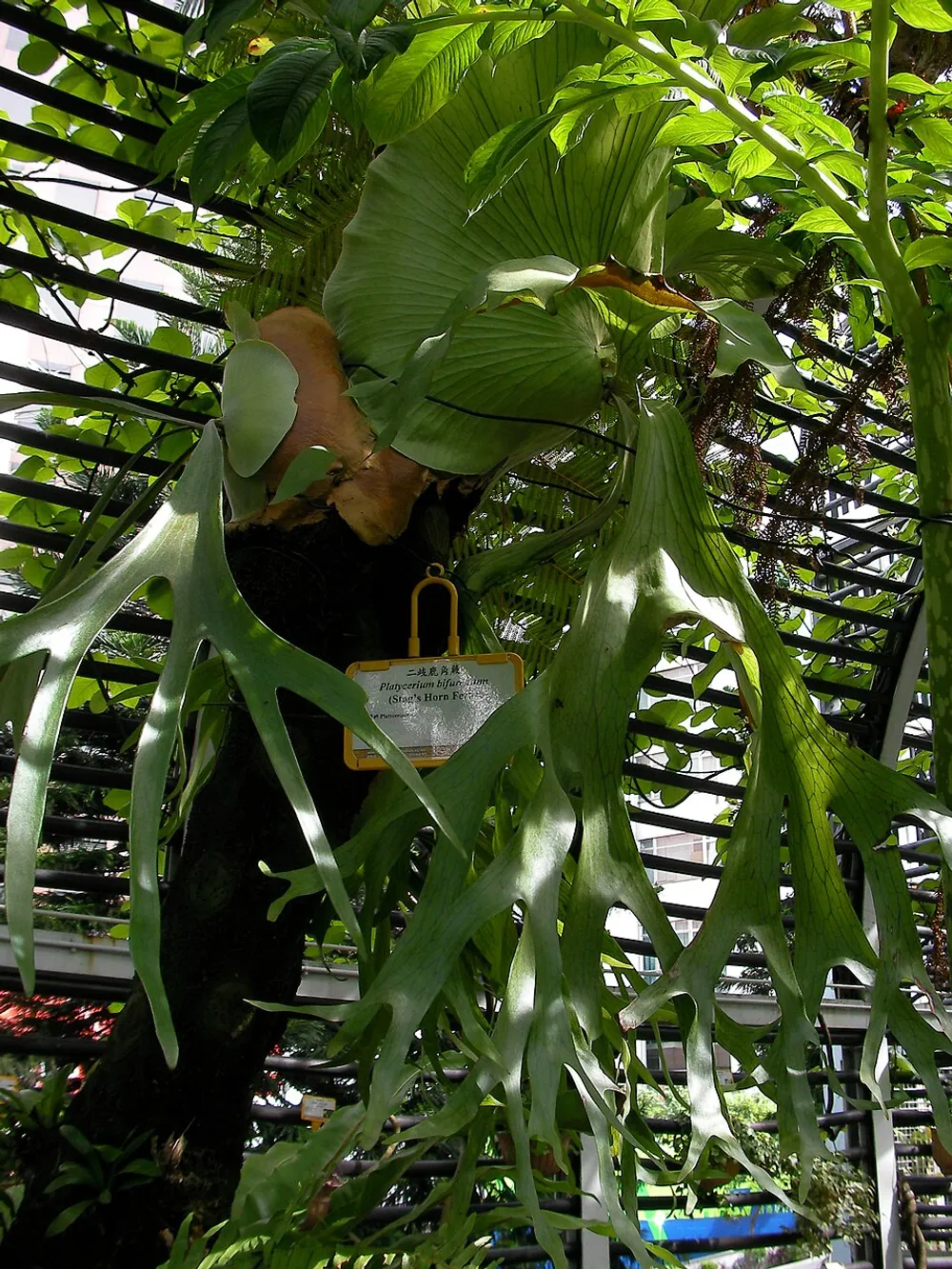
If you want a fuller, faster-growing staghorn fern, fertilizer is the lever — but it’s also the easiest way to harm one. The best fertilizer for a staghorn fern is a balanced, water-soluble formula at a roughly 1:1:1 NPK ratio, diluted to half strength, fed every few weeks while the plant is actively growing. This guide covers exactly which fertilizer to use, the right NPK ratio, how often to feed by season and plant age, how to apply it on a mount versus a pot, and the truth about the famous banana-peel trick.
Because Platycerium are epiphytes — they grow on tree bark in the wild, not in rich soil — they’re adapted to a lean, trickle-fed diet. That’s the single most important thing to remember: with staghorn ferns, under-feeding is recoverable; over-feeding burns roots fast.
What Fertilizer Does a Staghorn Fern Need?
Staghorn ferns are technically a high-feeding plant during active growth, but they want that feed delivered gently. University and master-gardener guidance consistently points to a balanced NPK ratio — the three numbers on every fertilizer label, standing for Nitrogen (frond growth), Phosphorus (roots), and Potassium (overall vigor).
- A 1:1:1 balanced ratio like 10-10-10 or 20-20-20 suits ferns at every stage.
- A slightly nitrogen-heavy blend (e.g. 3:1:2) pushes lush antler-frond growth if that’s your goal.
- Avoid high-phosphorus “bloom booster” formulas — staghorns don’t flower (they reproduce by spores), so the extra phosphorus is wasted.
Here’s how the common options compare:
| Fertilizer type | NPK example | Best for | Notes |
|---|---|---|---|
| Balanced liquid (water-soluble) | 20-20-20 | Most growers | Dilute to ½ strength; easiest to control |
| Slow-release pellets | 14-14-14 | Low-effort feeding | Press a few into the moss; lasts 2–3 months |
| Fish emulsion / seaweed | ~5-1-1 | Organic, gentle feeding | Mild, hard to overdo; can smell |
| Banana peel / Epsom salt | — | Occasional supplement only | Adds K & Mg, not a complete feed |
[!IMPORTANT] Whatever you choose, dilute liquid fertilizers to half (or even quarter) the label’s recommended strength. A staghorn’s tiny root system can’t process a full-strength dose, and excess fertilizer salts scorch roots and brown frond tips — damage that looks a lot like under-watering but gets worse if you add more.
How Often to Fertilize (by Season & Age)
Timing matters as much as the formula. Feed when the plant is growing — in the warm months — and ease off when it rests. Since it’s now peak summer, your fern is in its hungriest stretch of the year.
| Season | Feeding frequency | Why |
|---|---|---|
| Spring–Summer (growing season) | Every 2–4 weeks | Active frond growth, high demand |
| Early Autumn | Every 4–6 weeks, then taper | Growth slowing |
| Winter | Stop, or once at ¼ strength | Dormant; unused salts build up and burn |
Plant age also matters: young plants and recently divided pups benefit from regular light feeding to establish, while a large, mature mounted specimen needs surprisingly little — a few feeds across the whole growing season is plenty.
Feeding only works if the other basics are right. A fern in poor light won’t use the nutrients you give it, so pair feeding with proper light and a sensible watering routine.
How to Apply Fertilizer
On a mounted fern (the most common setup — see our mounted fern care guide):
- Mix liquid fertilizer at half strength in a watering can or spray bottle.
- Pour or spray it onto the moss and root ball behind the shield fronds, where the roots actually are — not on the antler fronds.
- Many growers simply add fertilizer to the water every second or third watering during summer, which keeps the dose naturally low and frequent.
In a pot or basket: water with the diluted solution until it drains, the same as a normal watering. For slow-release pellets, tuck a few into the top of the medium and let watering carry the nutrients down.
A gentle option that’s hard to overdo: a dilute fish emulsion or seaweed feed, which mimics the trickle of organic matter a wild staghorn would catch from its host tree.
The Banana Peel Question (and 2 Homemade Recipes)
Tucking a banana peel behind the shield frond is the internet’s favorite staghorn-fern hack — and it’s partly sound. Banana peels release potassium and a little phosphorus as they break down, which staghorns do use. But peels contain almost no nitrogen, the nutrient that drives frond growth, so they can’t replace a balanced fertilizer. Worse, laying raw food scraps on a damp mount can attract gnats, ants, and mold right next to living roots — a caveat extension horticulturists specifically warn about.
The verdict: use bananas (and the recipes below) as an occasional supplement between regular feeds, not your only fertilizer.
Recipe 1 — Banana “tea” (cleaner than a raw peel):
- Steep 1–2 chopped banana peels in a quart of water for 24–48 hours.
- Strain, then use the potassium-rich liquid to water the mount. No solids left to rot or attract pests.
Recipe 2 — Epsom salt boost (for pale, slow ferns):
- Dissolve ½ teaspoon of Epsom salt (magnesium sulfate) in a quart of water.
- Use once a month in summer if fronds look pale between feeds — magnesium supports the green chlorophyll. This supplements, but does not replace, your balanced NPK feed.
Signs You’re Over- or Under-Feeding
Your fern will tell you when the feeding is off:
| What you see | Likely cause | Fix |
|---|---|---|
| Crispy brown frond tips/edges, white crust on moss | Over-fertilizing (salt burn) | Flush mount with plain water; halve dose |
| Whole plant pale yellow-green, slow growth, no new fronds | Under-feeding (nitrogen shortage) | Resume balanced feed at ½ strength |
| Soft, blackening base after heavy feeding | Fertilizer stress → rot risk | Stop feeding; check roots |
| Deep green, steady new antler fronds | Feeding is just right ✅ | Keep the routine |
Pale, uniform yellowing is the classic sign of a fern that’s gone too long without food — our staghorn fern turning yellow guide helps you tell nitrogen hunger apart from overwatering. And if over-feeding has stressed the roots, catch it early before it tips into root rot.
The Bottom Line
Feed your staghorn fern a balanced, half-strength liquid fertilizer (around 20-20-20) every 2–4 weeks through spring and summer, ease off in autumn, and stop in winter. Apply it to the moss and roots behind the shield frond, never at full strength, and treat banana peels and Epsom salt as occasional supplements rather than a complete diet. Get the dose light and the timing seasonal, and your fern rewards you with bigger, greener antler fronds — without the brown, burned tips that come from trying too hard.