Moving a staghorn fern outdoors can transform it from a slow-growing houseplant into a vigorous, sculptural showpiece. The combination of natural humidity, air circulation, and diffused sunlight triggers faster frond production and larger shield leaves — benefits that are hard to replicate indoors.
But outdoor growing comes with real risks. A single cold night or an afternoon of direct sun can undo months of growth. This guide covers everything you need to know about growing Platycerium species outdoors, from hardiness zones and species-specific temperature limits to the best mounting strategies and seasonal transition routines.
Hardiness Zones: Which Species Can Live Outside?
Not all staghorn ferns are created equal when it comes to cold tolerance. The common P. bifurcatum is far hardier than tropical species like P. coronarium. Here is a species-by-species breakdown:
| Species | Min. Temp (Brief) | Min. Temp (Sustained) | USDA Zones | Outdoor Suitability |
|---|---|---|---|---|
| P. veitchii | 25°F (−4°C) | 35°F (2°C) | 9b–11 | Most cold-hardy; dry-climate adapted |
| P. bifurcatum | 30°F (−1°C) | 40°F (4°C) | 9b–11 | Classic outdoor species |
| P. hillii | 35°F (2°C) | 45°F (7°C) | 10–11 | Moderate hardiness |
| P. superbum | 40°F (4°C) | 50°F (10°C) | 10b–11 | Needs protection below 50°F |
| P. willinckii | 45°F (7°C) | 55°F (13°C) | 10b–11 | Tropical; limited outdoor window |
| P. elephantotis | 50°F (10°C) | 60°F (16°C) | 11+ | Strictly tropical |
| P. coronarium | 50°F (10°C) | 60°F (16°C) | 11+ | Strictly tropical |
| P. ridleyi | 55°F (13°C) | 65°F (18°C) | 11+ | Hot tropical only |
| P. wandae | 55°F (13°C) | 65°F (18°C) | 11+ | Hot tropical only |
Key takeaway: If you live in zones 9–10, stick with P. bifurcatum or P. veitchii for year-round outdoor growing. In zone 11 and above, most species thrive outdoors. Everyone else should treat outdoor time as a seasonal boost — move plants out in spring and back inside before fall frosts.
For a deeper dive into species differences, see our Platycerium species guide.
Light: Sun or Shade?
In their native habitat, staghorn ferns grow on tree trunks under a forest canopy. Mimic this outdoors by providing bright, filtered light:
- Ideal: Dappled shade under a large tree, a covered porch, or a north-facing (southern hemisphere: south-facing) wall
- Acceptable: Morning sun (before 10 AM) with afternoon shade
- Avoid: Full afternoon sun, especially in zones 9–10 where summer temperatures exceed 90°F (32°C)
If your only outdoor space gets full sun, use 50–70% shade cloth stretched above the mounting area. This mimics the canopy filtering that staghorn ferns evolved under.
[!IMPORTANT] A staghorn fern moved from indoor light to outdoor sun needs 1–2 weeks of gradual acclimation. Start in full shade and increase light exposure slowly to prevent sunburn.
Watering Outdoors vs. Indoors
Outdoor staghorn ferns dry out faster than indoor ones due to wind and sun exposure. Adjust your watering routine accordingly:
Summer (Active Growth)
- Mounted ferns: Soak the root ball 2–3 times per week in hot weather. In dry climates, daily misting helps supplement humidity.
- Basket ferns: Water when the top of the sphagnum moss feels dry — typically every 2–3 days.
Transition Seasons (Spring & Fall)
- Reduce to 1–2 waterings per week as temperatures cool.
- Watch for rain — if your area gets regular rainfall, you may only need to supplement during dry stretches.
Winter (for year-round outdoor growers)
- Reduce watering significantly. Let the mounting medium dry out more between waterings.
- Overwatering in cool weather is the fastest path to root rot.
A good test: feel the weight of the mount. A well-soaked staghorn mount is noticeably heavy. When it feels light, it is time to water.
Best Outdoor Mounting Methods
Outdoor mounting needs to withstand wind, rain, and temperature swings. Here are the most reliable options:
Tree Mounting (The Natural Way)
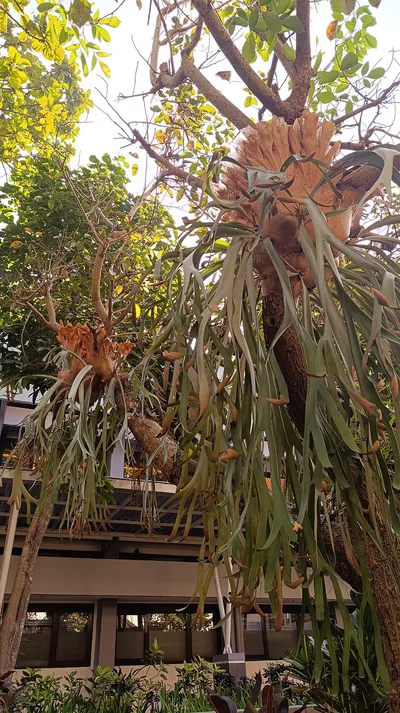
Strap the fern directly to a living tree trunk using stainless steel wire or nylon fishing line over a pad of sphagnum moss. Choose a tree with textured bark — oaks, palms, and mature maples are ideal. The fern will eventually attach its own roots.
Cedar Board Mount
A classic choice for porches and patios. Cedar naturally resists rot and lasts 5–10 years outdoors. Attach the fern with fishing line and a bed of sphagnum moss. For detailed instructions, see our mounting basics guide.
Wire Basket (Hanging)
Line a wire basket with sphagnum moss and nestle the fern inside. This method gives the roots excellent drainage and air circulation — crucial for preventing rot in humid climates. Hang from a sturdy hook under an eave or tree branch.
For more creative approaches, check out our display ideas guide.
The Seasonal Transition: Moving Outdoors in Spring
Late March through April is the perfect window to start transitioning your staghorn fern outdoors in most of the continental US. Here is a step-by-step approach:
1. Check Your Night Temperatures
Wait until nighttime lows consistently stay above 50°F (10°C) — or above 60°F (16°C) for tropical species. A sudden cold snap can shock a plant that has been indoors all winter.
2. Acclimate Gradually
- Days 1–3: Place the fern in full shade outdoors for a few hours, then bring it back inside at night.
- Days 4–7: Leave it in shade all day, bring in only if nights drop below your species’ threshold.
- Week 2: Move to its final position with filtered light. Leave outdoors overnight.
3. Inspect and Prepare
Before moving outdoors, check for pests — scale insects and mealybugs love to hitchhike. Give the plant a strong spray of water to dislodge any visitors. This is also a good time to fertilize with a dilute balanced fertilizer to fuel spring growth.
4. Secure the Mount
Outdoor mounts face wind. Make sure your board, basket, or tree attachment is firmly secured. For hanging mounts, use a rated hook and a chain or wire rated for at least 3× the plant’s weight when soaked.
Bringing Plants Back Inside for Winter
For growers outside zones 9–11, bringing staghorn ferns back indoors is non-negotiable. Start the reverse transition 2–3 weeks before your first expected frost:
- Reduce outdoor light gradually — move to deeper shade for a week to pre-adjust to lower indoor light levels.
- Inspect thoroughly for pests. Outdoor plants often carry hitchhikers. Treat with insecticidal soap or neem oil before bringing inside. See our pest control guide for treatment details.
- Adjust watering down. Indoor conditions mean slower drying. Overwatering a freshly-transitioned plant is the number one winter mistake.
- Place in the brightest indoor spot available — near a south-facing window or under a grow light.
Climate-Specific Tips
Hot & Humid (Florida, Gulf Coast, Hawaii — Zones 10–11)
This is staghorn paradise. Most species can live outdoors year-round. Focus on air circulation to prevent fungal issues. Avoid mounting in corners where air stagnates.
Hot & Dry (Southern California, Arizona — Zones 9–10)
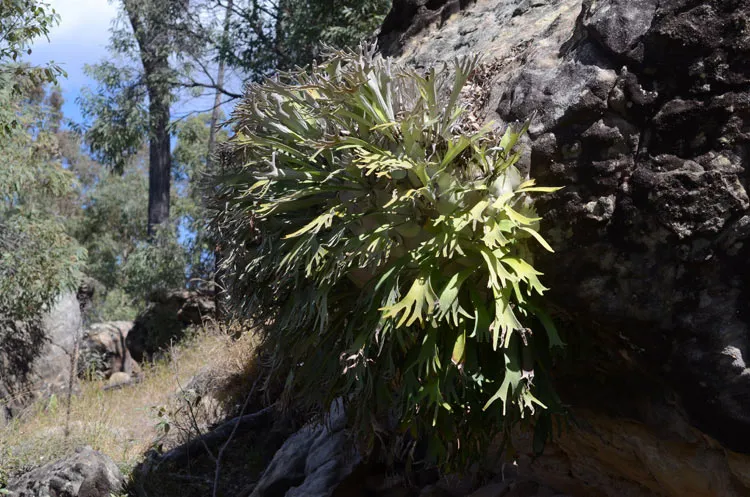
P. veitchii is your best bet — it is naturally adapted to dry conditions in Australia. For other species, supplement humidity with regular misting or a nearby drip irrigation line. Shade cloth is essential.
Mild & Wet (Pacific Northwest — Zones 8–9)
The summer months are excellent for outdoor growing, but the cool, damp winters are deadly. Bring ferns inside by early October. During outdoor months, ensure excellent drainage — moss that stays constantly wet invites rot.
Cold Winters (Zones 5–8)
Treat outdoor time as a seasonal summer vacation — May through September in most areas. The growth boost is still significant. Pair this with spring care routines for the best results.
Why Outdoor Growing Matters
Recent research published by the Royal Society documented how staghorn fern colonies develop communal structures with shared water and nutrient reservoirs. In outdoor conditions that mimic their natural habitat, these colony behaviors emerge more readily — shield leaves grow larger, pup production increases, and the overall vitality of the plant improves markedly.
The 2026 houseplant movement is shifting toward statement plants over collections — and a large, healthy staghorn fern mounted on a porch column or garden tree is about as dramatic a living statement as you can make. A few months of outdoor growing each year is one of the simplest ways to achieve that impressive, gallery-worthy specimen.
Quick Reference
| Factor | Recommendation |
|---|---|
| Light | Bright indirect / dappled shade (50–70% shade cloth if exposed) |
| Temperature | 60–80°F (16–27°C) ideal; species-dependent cold limits |
| Watering | 2–3× weekly in summer; reduce in cool weather |
| Humidity | 50%+ preferred; mist in dry climates |
| Best outdoor species | P. bifurcatum, P. veitchii, P. hillii |
| Move outdoors | When nights stay above 50°F (10°C) consistently |
| Move indoors | 2–3 weeks before first expected frost |
| Mounting | Tree, cedar board, or wire basket — all weather-resistant |