“Staghorn fern” and “elkhorn fern” are names that get used interchangeably — even in garden centers. But they actually refer to different species within the genus Platycerium, and understanding the difference helps you provide the right care. Here’s how to tell them apart.
The Short Answer
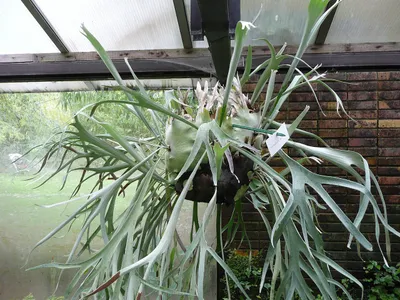
- Staghorn fern usually refers to Platycerium bifurcatum — the most common species in cultivation worldwide
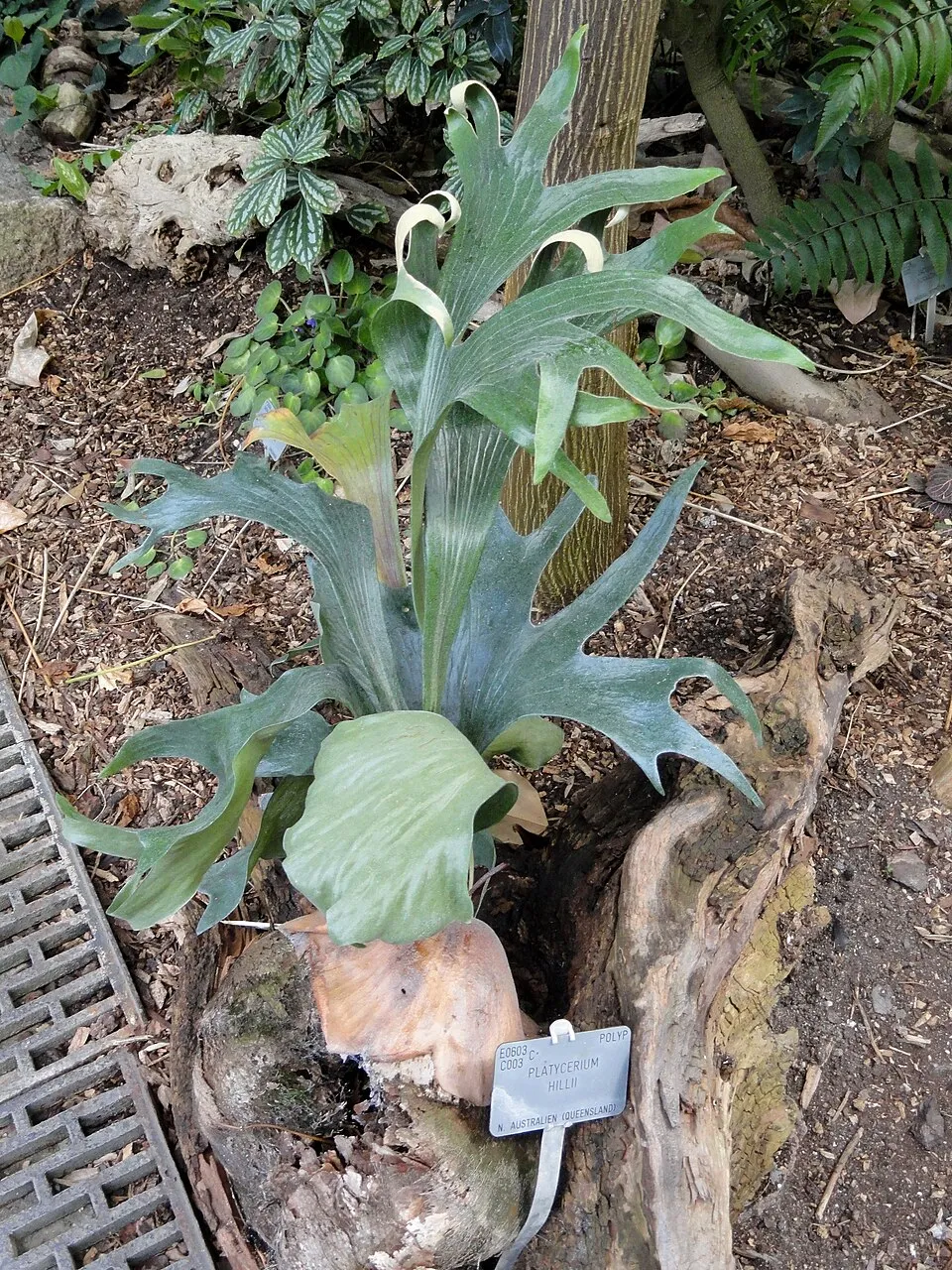
- Elkhorn fern usually refers to Platycerium hillii — native to Australia, with thinner, more upright fronds
Both are real staghorn ferns (genus Platycerium), but “elkhorn” became the common name for P. hillii in Australia because its fronds resemble elk antlers rather than the broader, flatter antlers of a stag.
Visual Differences
Fertile Fronds (The “Antlers”)
| Feature | Staghorn (P. bifurcatum) | Elkhorn (P. hillii) |
|---|---|---|
| Shape | Broad, deeply forked, drooping | Narrower, more erect, less divided |
| Width | Wide — up to 30 cm across | Slender — typically 10–15 cm |
| Forking | Deeply and evenly bifurcated (2-way splits) | Irregularly divided with longer “fingers” |
| Posture | Arching and pendulous | More upright and stiff |
| Size at maturity | 60–90 cm long | 30–50 cm long |
The easiest way to remember: staghorn = broad and droopy, elkhorn = narrow and upright.
Shield Fronds (Basal Fronds)
Both species produce round shield fronds at their base, but:
- Staghorn shields tend to be larger, deeply lobed at the top, and more prominently ridged
- Elkhorn shields are rounder, smoother, and less dramatically lobed
Growth Habit
This is the most reliable distinguishing feature:
- Staghorn (P. bifurcatum) grows as a single crown or produces only a few pups. A mature plant forms one large, dramatic rosette
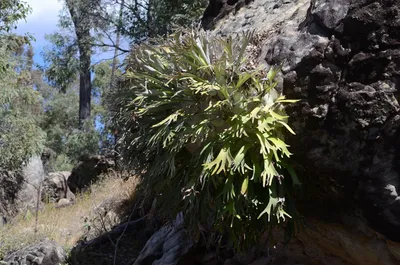
- Elkhorn (P. hillii) grows in dense colonies, producing many pups that clump together. Mature plants form a thick mass of overlapping fronds
If you see a tree covered in a massive cluster of dozens of interconnected ferns, that’s almost certainly an elkhorn. A single, striking specimen with sweeping antlers is likely a staghorn.
Care Differences
Both species are among the easiest Platycerium to grow, but they differ in a few important ways:
Light
- Staghorn: Tolerates slightly brighter light. Can handle 1–2 hours of gentle morning sun
- Elkhorn: Prefers deeper shade. More susceptible to sunburn in direct light
Cold Tolerance
- Staghorn: Hardy to about 30°F (−1°C) for brief periods. One of the most cold-tolerant species. Can grow outdoors year-round in USDA zones 9–12
- Elkhorn: Slightly less cold-hardy. Best kept above 40°F (4°C). Thrives in USDA zones 10–12
Watering
- Both prefer the soak-and-dry method (see our watering guide)
- Elkhorn colonies trap more moisture in their dense shields, so they can go slightly longer between waterings
- Staghorn as a single crown dries out faster, especially when mounted
Mounting
- Staghorn is ideal for single-specimen board mounts — the classic “mounted head” display (learn how in our mounting guide)
- Elkhorn does best in large hanging baskets or on tree trunks where it can spread naturally into a colony
Other Commonly Confused Species
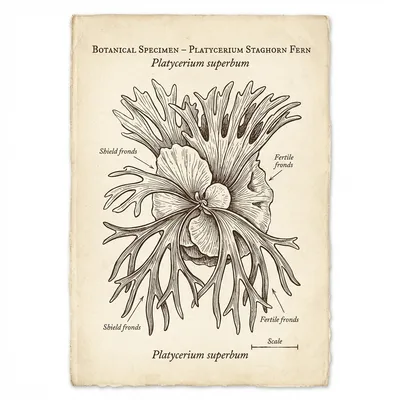
Moosehorn Fern (Platycerium superbum)
Often confused with the common staghorn. P. superbum is a much larger Australian species with:
- Massive, upright shield fronds that can reach 1.5 meters across
- Fertile fronds that hang straight down like a curtain
- Spore patches shaped like a dark “bib” at the base of the fertile fronds
- Does not produce pups — reproduces only by spores
Bird’s Nest Fern (Asplenium nidulare)
Not a Platycerium at all — belongs to a completely different fern family. Sometimes confused because it also grows epiphytically on trees and has a rosette shape. Key differences:
- Leaves are simple, undivided, and strap-shaped (no forking)
- Bright green, glossy fronds (no silver trichomes)
- Grows in a tight “nest” or vase shape
- Much more shade-tolerant than any staghorn
Identification Cheat Sheet
| Feature | Staghorn | Elkhorn | Moosehorn |
|---|---|---|---|
| Species | P. bifurcatum | P. hillii | P. superbum |
| Frond shape | Broad, forked, drooping | Narrow, upright | Very long, hanging |
| Growth habit | Single or few pups | Dense colony | Single crown |
| Spore patch | Small, on frond tips | Small, on frond tips | Large “bib” shape |
| Cold hardy | To 30°F | To 40°F | To 35°F |
| Difficulty | Easy | Easy | Medium |
Still not sure what species you have? Browse our complete species index with photos and detailed profiles for every commonly cultivated Platycerium.
Does It Actually Matter?
For casual growers, not much — both staghorn and elkhorn ferns enjoy similar conditions and are forgiving plants. But knowing which one you have helps you:
- Set expectations for growth habit (single specimen vs. spreading colony)
- Choose the right display (board mount vs. basket vs. tree)
- Understand cold tolerance if you plan to grow outdoors
- Propagate correctly — dividing pups from an elkhorn colony is very different from separating a single staghorn pup
Whether you call yours a staghorn or an elkhorn, the fundamentals remain the same: bright indirect light, thorough but infrequent watering, and the patience to watch one of nature’s most architectural plants do its thing.