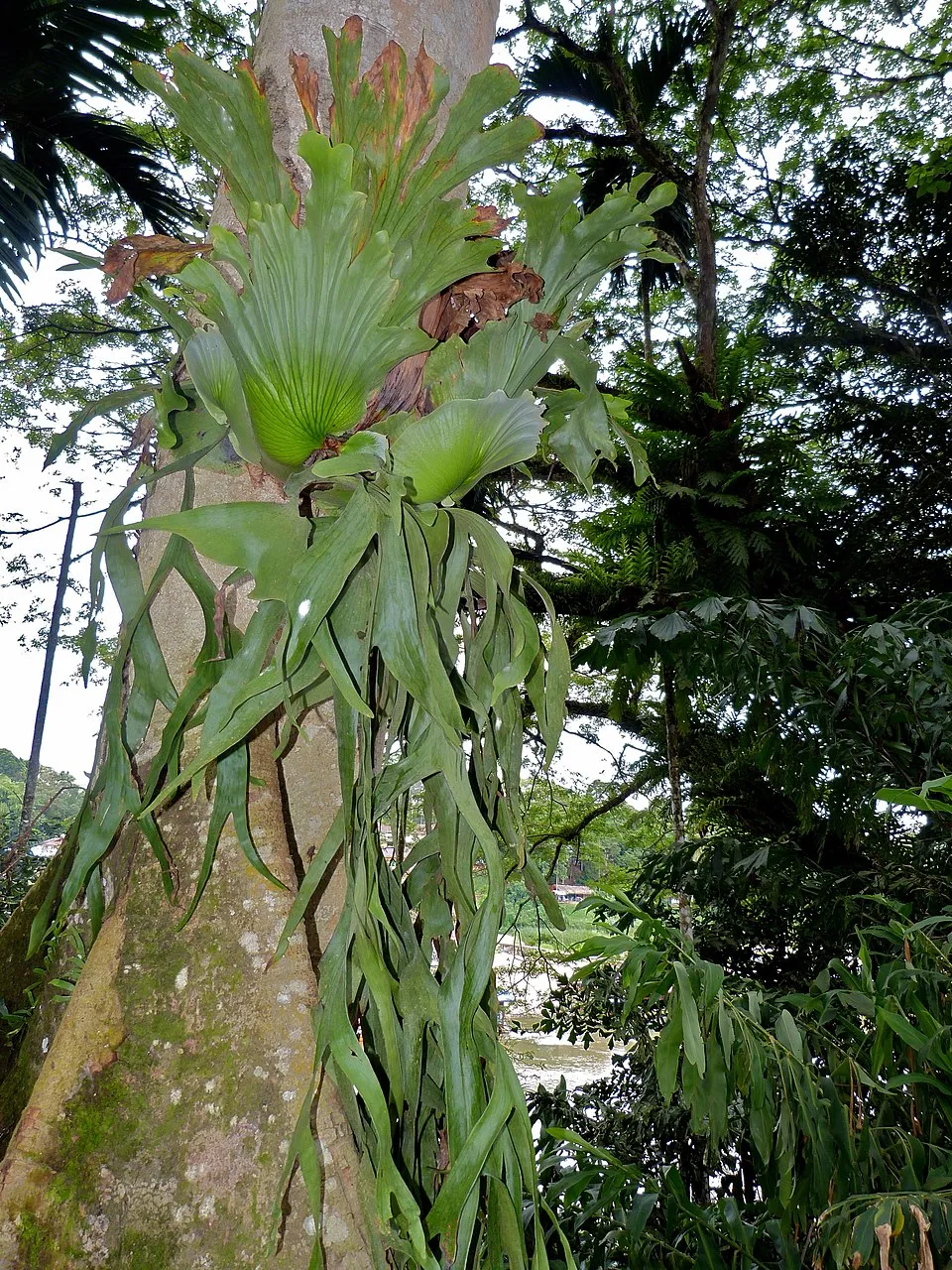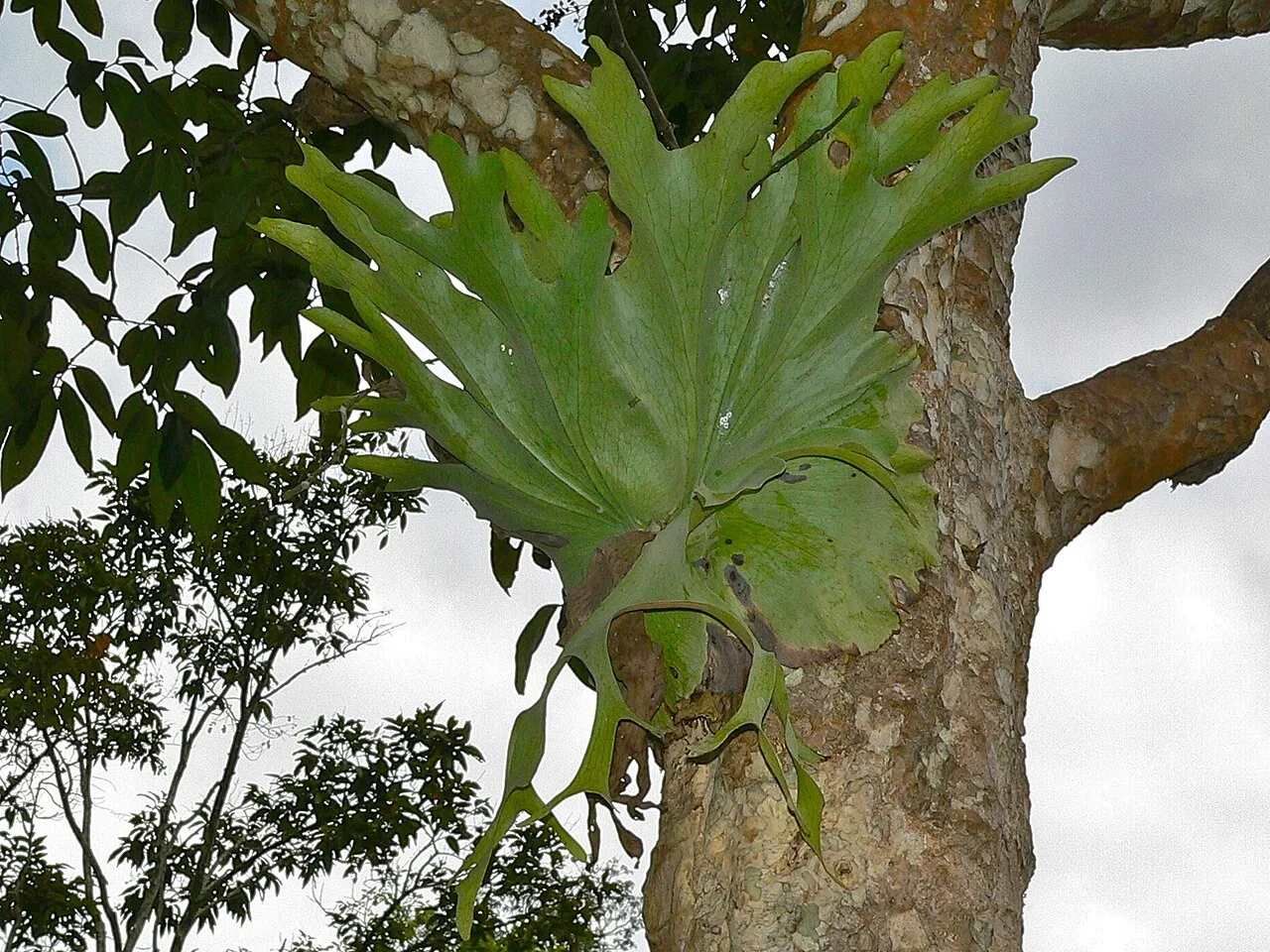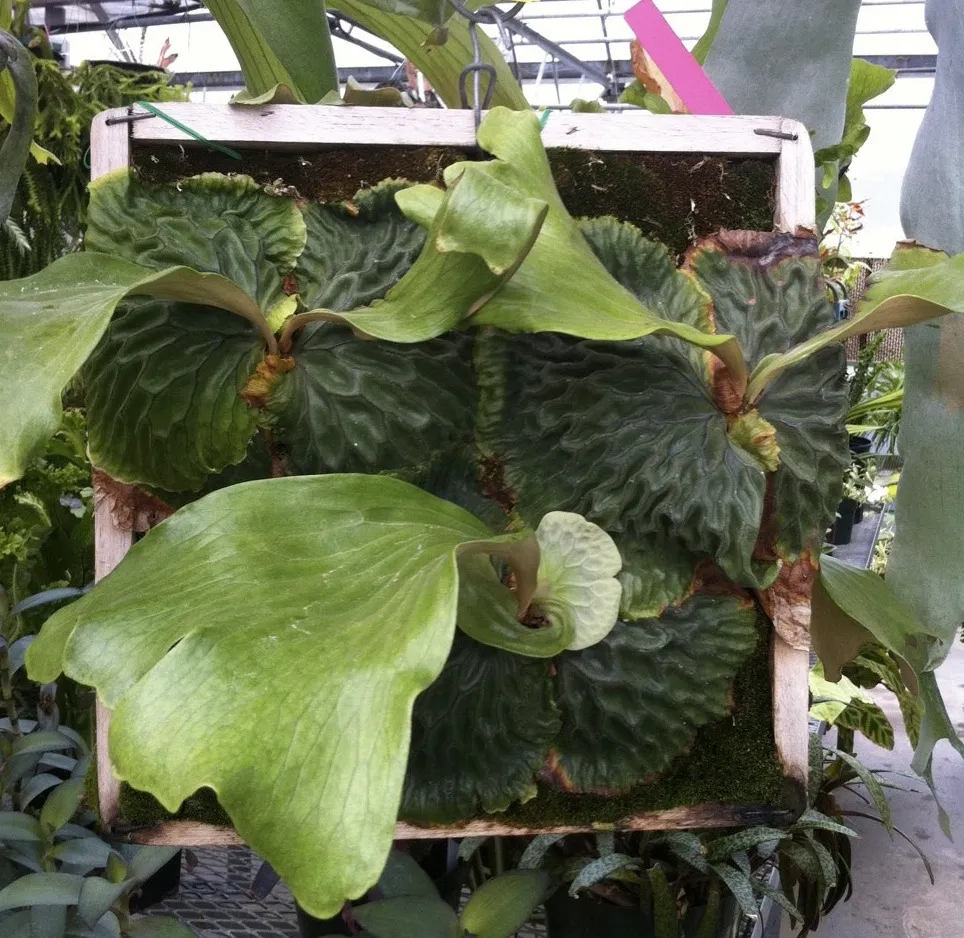
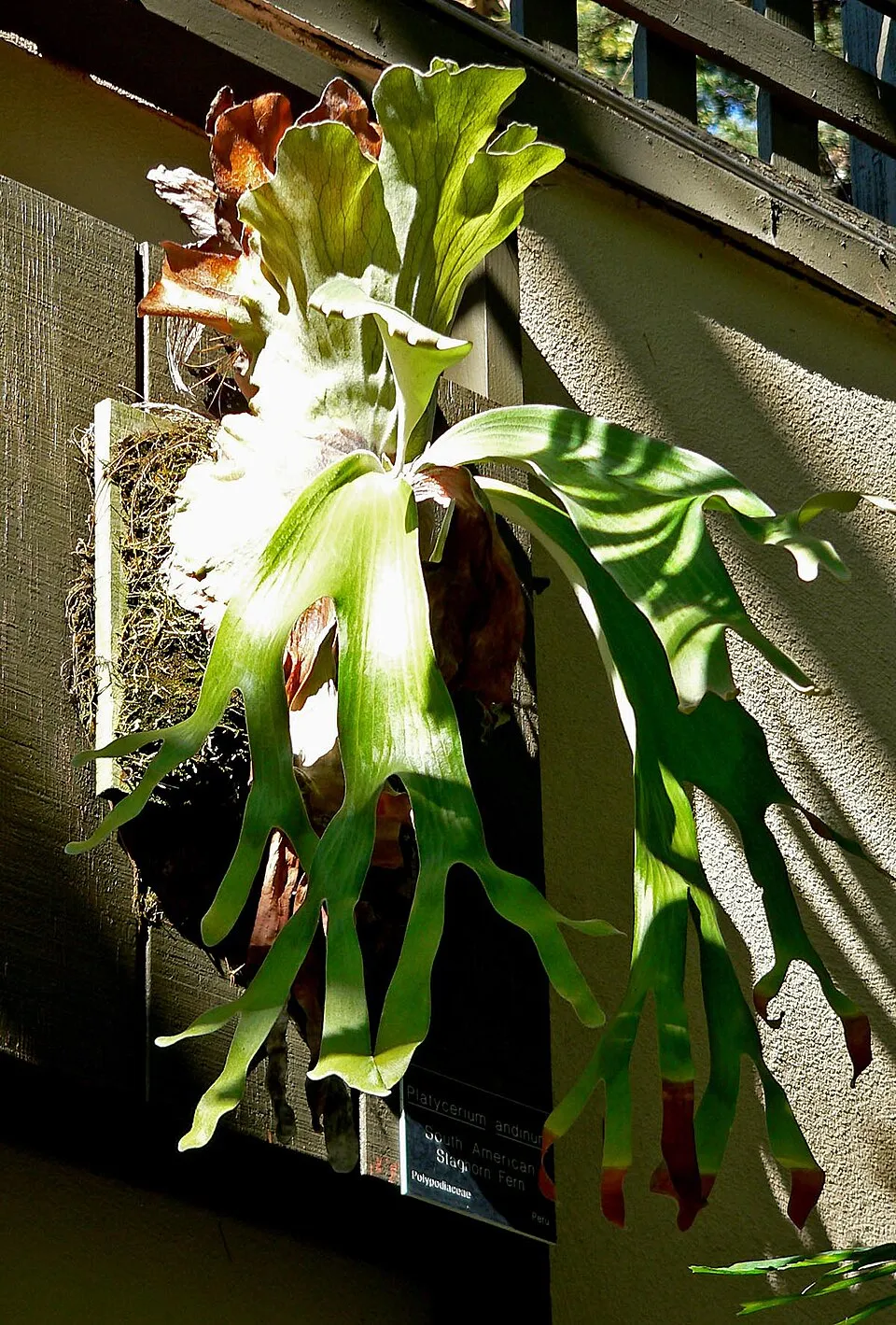
Overview
The only Platycerium species native to the Americas, found in scattered populations across the Andes of Peru and Bolivia. Despite its geographic isolation, it belongs to Clade A (Africa–Madagascar) — a Gondwanan relic from when South America and Africa were connected.
Bud type: Single-bud.
Key traits: Displays the strongest stellate trichome expression of any Platycerium species — heavy white trichome coverage provides UV protection and enables dew collection in its montane habitat. An epiphyte in mountain habitats, growing on tree trunks at elevation. Fertile frond forking is relatively weak compared to Asian and Australian species. Very susceptible to root rot if airflow is poor — excellent ventilation is critical in cultivation. Its phylogenetic placement in the Africa–Madagascar clade despite being in South America is a key piece of evidence for Gondwanan biogeography of the genus.
Range: South American Andes — scattered populations in Peru and Bolivia. Montane, mountain-attached habitat.
Care Tips for P. andinum
P. andinum is a collector’s species that demands attention to airflow and humidity simultaneously — a combination that challenges most growing environments.
Light: Bright indirect light, mimicking the dappled conditions of its Andean montane habitat. Avoid direct sun, which can bleach the trichome layer. The heavy white trichome coverage actually helps with UV tolerance, but sustained direct exposure still causes damage.
Watering: Allow the medium to dry slightly between waterings — never let it sit wet. P. andinum is extremely susceptible to root rot, more so than most Platycerium species. In active growth, water every 5–7 days depending on your medium’s retention. Reduce in cooler months. See our watering guide for the weight test method.
Temperature: 15–30°C. As a montane species, P. andinum prefers moderate temperatures and does not tolerate sustained heat above 32°C. Nighttime temperature drops (to around 15°C) are natural and even beneficial, mimicking Andean conditions.
Humidity: 60%+ is essential, but — critically — it must be paired with excellent airflow. Stagnant humid air around P. andinum is a recipe for rot and fungal infection. A fan providing gentle, constant air movement is strongly recommended.
Mounting: Board or basket mounting with a very open, fast-draining medium. Sphagnum moss mixed with perlite or orchid bark works well. As a single-bud species, the plant stays a manageable size. See our mounting guide.
Frequently Asked Questions
Why is P. andinum in the African clade if it grows in South America? P. andinum’s placement in Clade A (Africa–Madagascar) is strong evidence for the Gondwanan origin of the genus. When South America and Africa were still connected (over 100 million years ago), the ancestor of P. andinum was part of the same population. After continental drift separated the landmasses, the South American population evolved in isolation. This makes P. andinum a living biogeographic relic.
What are the white patches on P. andinum fronds? The white covering is stellate (star-shaped) trichomes — tiny hair-like structures on the frond surface. P. andinum has the densest trichome layer of any Platycerium species. These trichomes serve dual purposes: reflecting UV radiation at high altitude and trapping dew droplets for moisture absorption.
Does P. andinum produce pups? No — it is a single-bud species. Propagation is by spore only, which is slow and challenging. This, combined with its restricted natural range, makes P. andinum relatively rare in cultivation. See our propagation guide.
Is P. andinum good for beginners? No — this is an advanced species. The simultaneous need for high humidity, excellent airflow, and careful watering makes it unforgiving of mistakes. Start with P. bifurcatum or P. veitchii and build experience before attempting P. andinum.
Need specialized care for this specimen? Check our cultivation guides for mounting, watering, and pest control techniques.