Overview
A large species from the western mountains of the Indochina Peninsula, found at elevations of 0–700 m. Belongs to Clade B (Asia–Australia) and is closely related to P. wallichii.
Bud type: Single-bud.
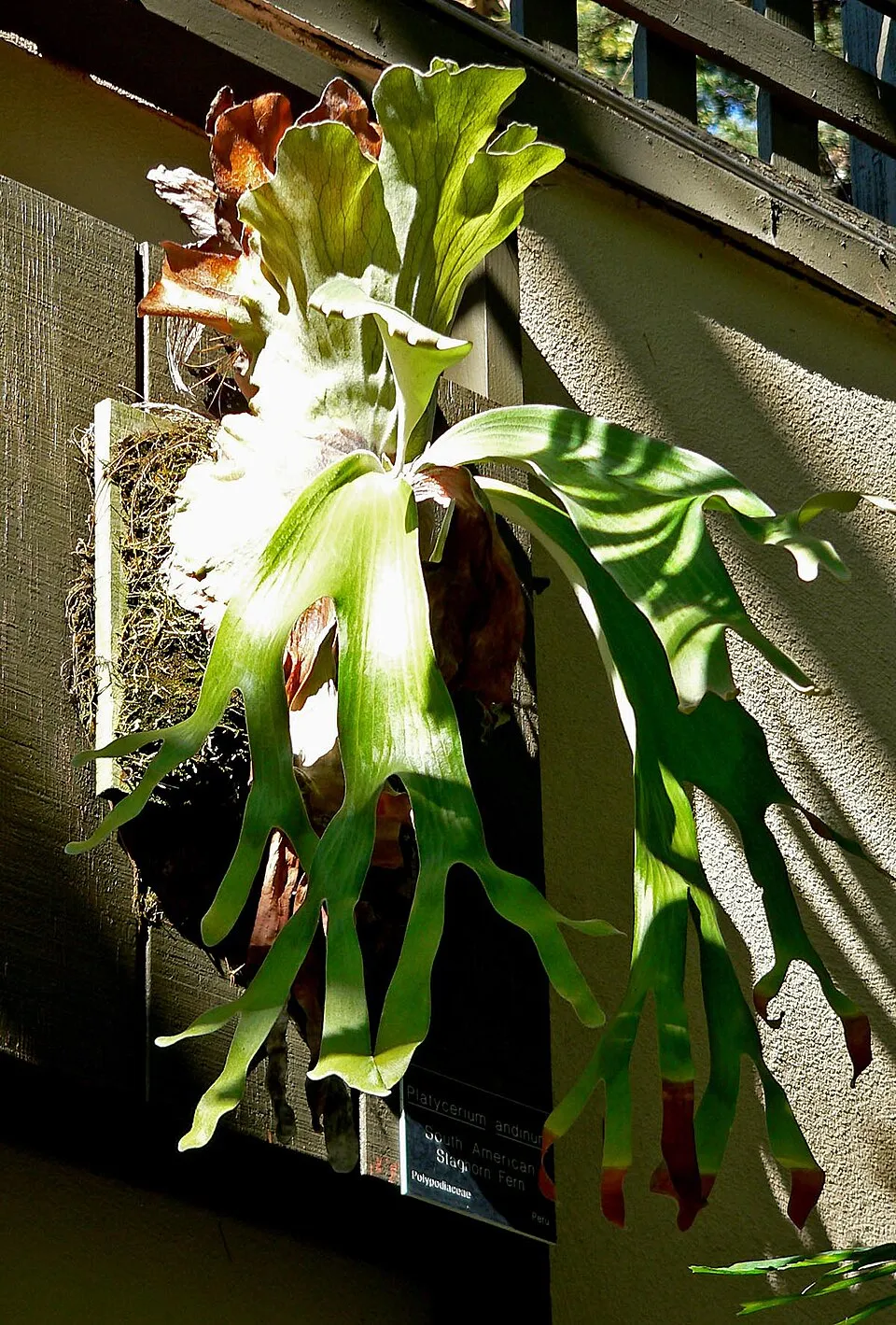
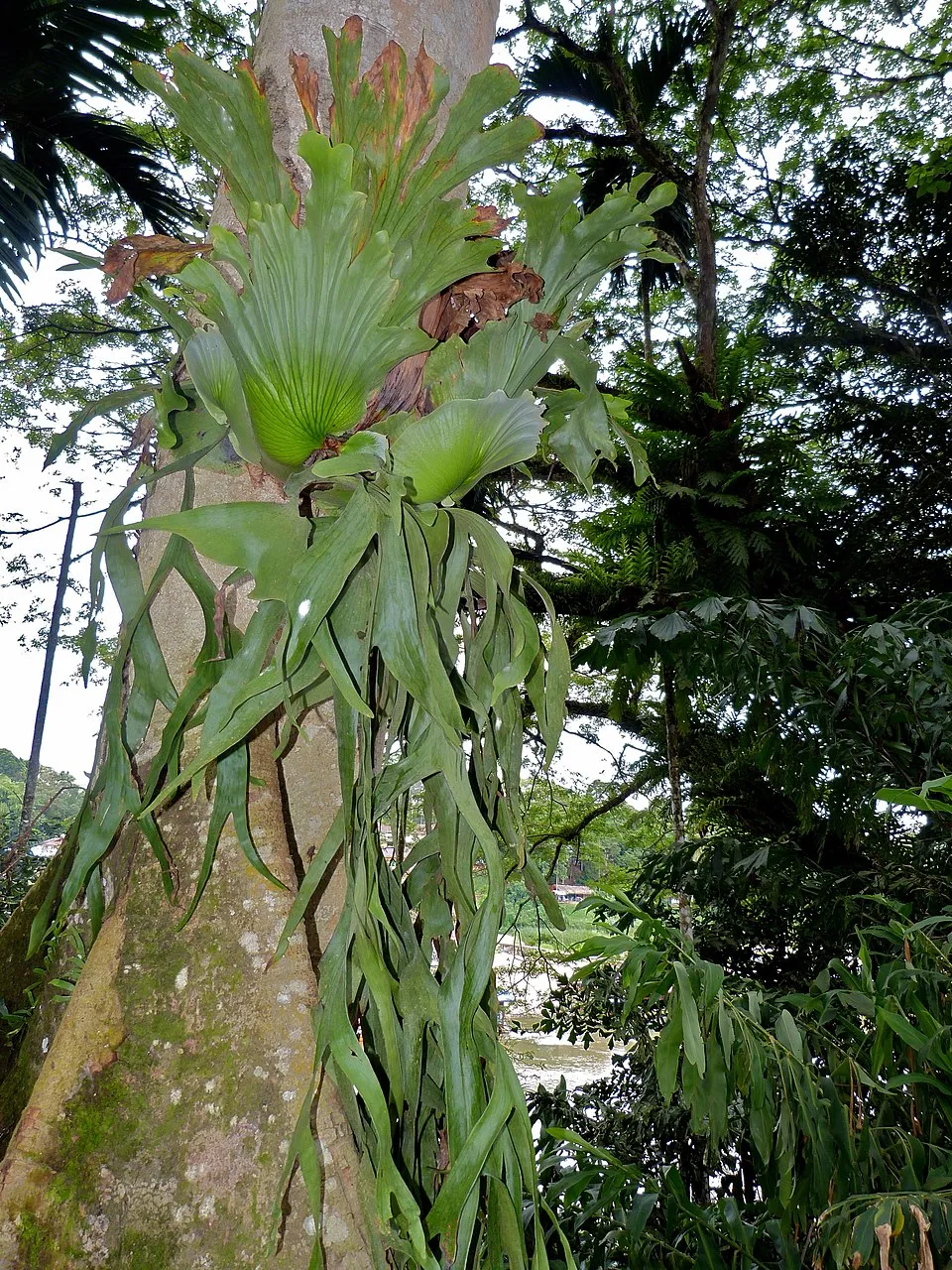
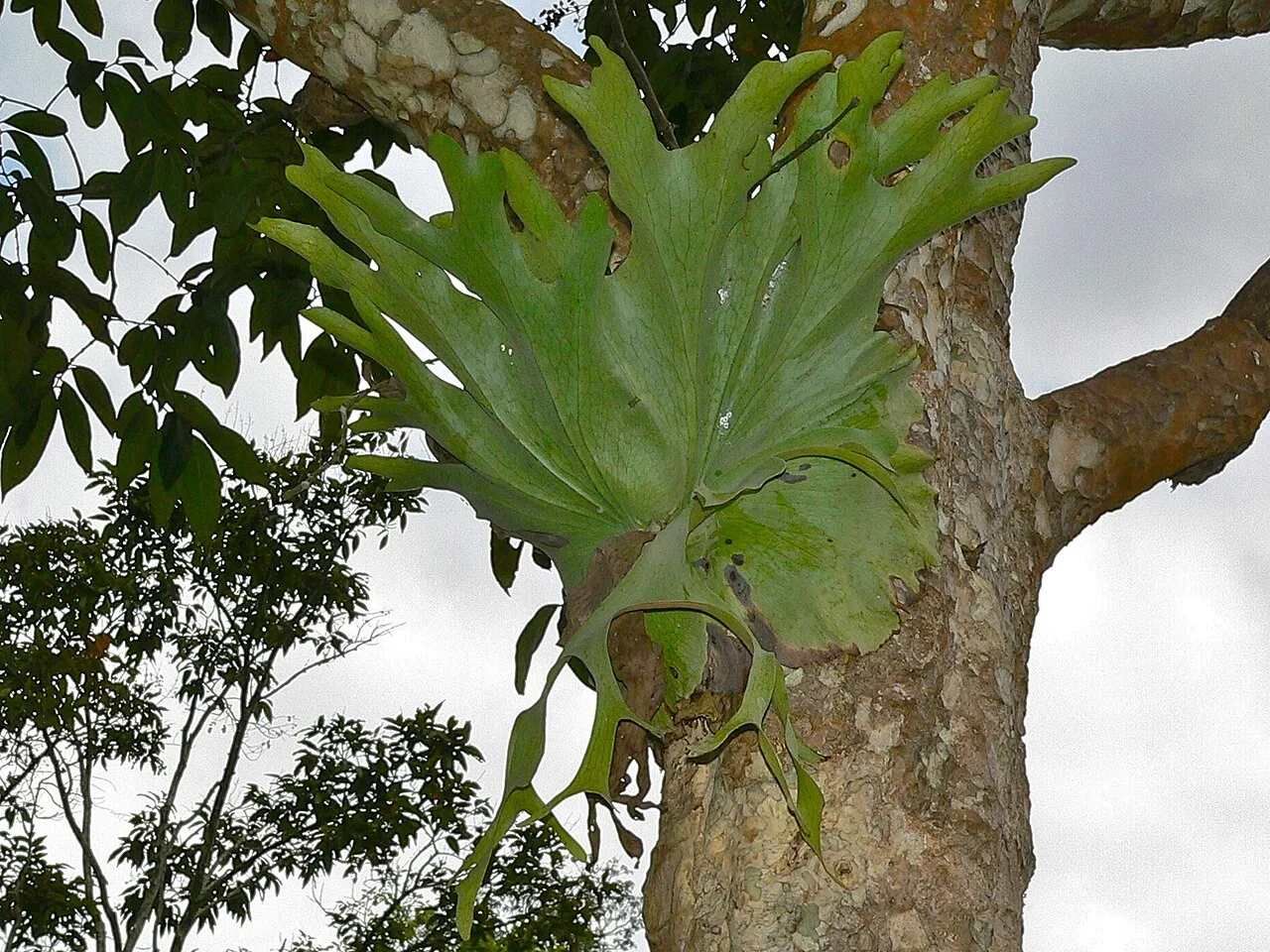
Key traits: Produces tall, erect shield fronds and long, pendulous fertile fronds. Has a dormancy-like mechanism similar to P. wallichii, though not temperature-driven — instead, it follows a fixed two cycles of growth per year regardless of conditions. This cyclical growth pattern makes it unique among the larger Platycerium species. Sensitive to cold and requires consistently high humidity. Its understory habitat means it prefers bright but filtered light rather than direct exposure.
Range: Indochina Peninsula — western mountain rainforests, elevation 0–700 m.
Care Tips for P. holttumii
P. holttumii is a large, dramatic species that rewards patient growers who respect its fixed growth rhythm. Understanding the two-cycle growth pattern is key to success.
Light: Bright indirect to filtered light. In its native habitat, P. holttumii grows in the understory of mountain rainforests, receiving dappled light through the canopy. Avoid direct sun, which scorches the fronds. A north-facing window (in the Northern Hemisphere) or a position set back from a bright east-facing window works well.
Watering: Moderate watering aligned with the growth cycle. During active growth phases, keep the medium consistently moist but not waterlogged. During the rest phases between growth cycles, reduce watering and allow the medium to dry slightly. P. holttumii follows a fixed two-cycle growth pattern per year — observe your plant’s rhythm and adjust accordingly. See our watering guide.
Temperature: Minimum 18°C. Ideal range is 22–32°C. P. holttumii is more cold-sensitive than its close relative P. wallichii — temperatures below 15°C cause stress and potential tissue damage.
Humidity: 60%+ is essential at all times. This species does not tolerate dry air well. A greenhouse, humidity tent, or large terrarium with air circulation is ideal. Regular misting is helpful but cannot substitute for ambient humidity.
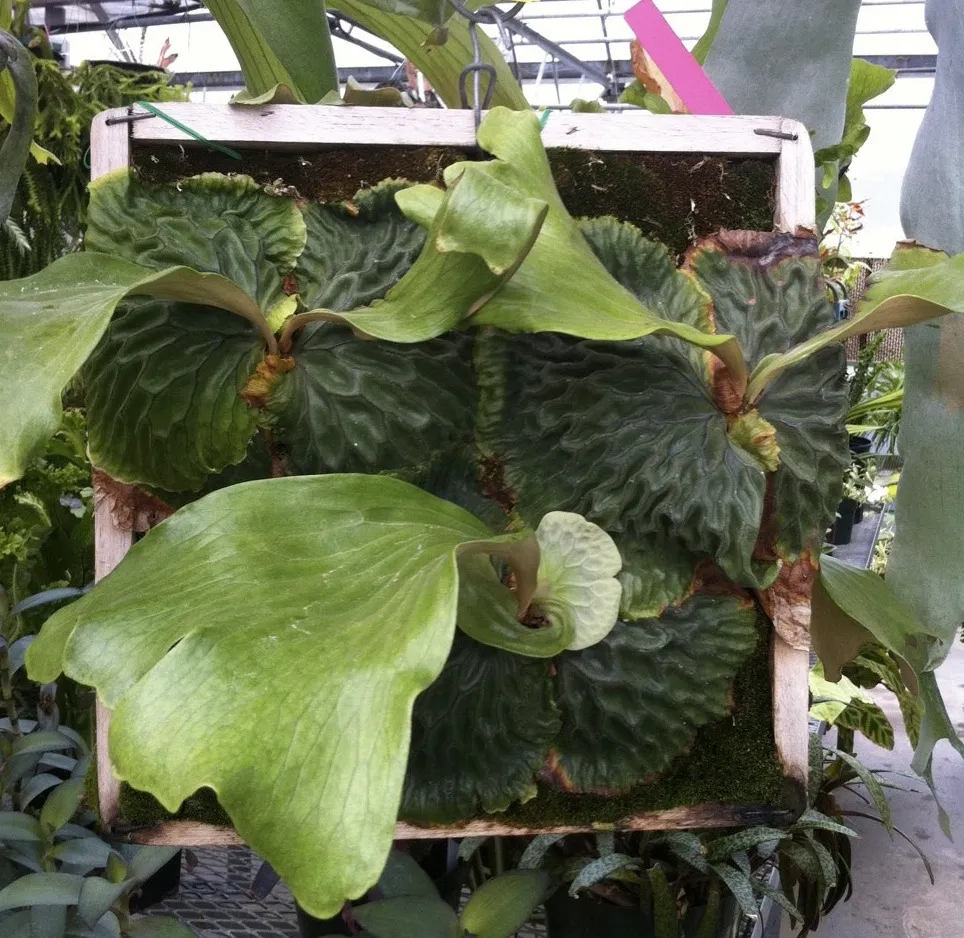
Mounting: Large board or basket mounting. P. holttumii produces tall, erect shield fronds and long, pendulous fertile fronds, so plan for vertical space. Ensure the mount is robust enough for the eventual size. As a single-bud species, it will not form colonies but individual specimens can become impressively large. See our mounting guide.
Frequently Asked Questions
What is the two-cycle growth pattern? Unlike most Platycerium species that grow continuously in favorable conditions, P. holttumii follows a fixed rhythm of two growth flushes per year. Each flush produces a new set of shield and fertile fronds, followed by a rest period. This pattern persists regardless of temperature or light changes — it appears to be genetically programmed rather than environmentally triggered.
How does P. holttumii differ from P. wallichii? Both are closely related single-bud species in Clade B, but they differ in key ways. P. wallichii enters dormancy triggered by temperature extremes (cold or heat), while P. holttumii follows a fixed two-cycle growth pattern unrelated to temperature. P. holttumii is also less cold-tolerant and grows at lower elevations.
Does P. holttumii produce pups? No — it is a single-bud species. Propagation is by spore only. This makes multiplication slow and contributes to its relative rarity in cultivation. See our propagation guide.
Is P. holttumii suitable for indoor growing? Difficult without a greenhouse or controlled environment. The combination of high humidity requirements, large eventual size, and sensitivity to cold drafts makes typical home conditions inadequate. Successful indoor growers typically use grow rooms or large display cases with humidity control.
Need specialized care for this specimen? Check our cultivation guides for mounting, watering, and pest control techniques.