The Garden Media Group’s 2026 Garden Trends Report named rare houseplants “the fastest growing category” of collectibles — and no genus rewards collectors quite like Platycerium. With 18 recognized species, hundreds of named cultivars, and a global community of growers trading everything from tissue-cultured pups to decades-old mounted specimens, staghorn ferns offer a collecting depth that most houseplants simply cannot match.
Whether you are mounting your first P. bifurcatum or hunting for a wild-collected P. ridleyi, this guide maps out the collector’s journey — what to grow at each stage, what makes a specimen truly collectible, and how to curate a “personal Platycerium museum” that is as beautiful as it is botanically diverse.
Why Staghorn Ferns Are the Ultimate Collectible
Several traits make Platycerium uniquely suited to collecting:
- Species diversity. Eighteen species span four continents, from the cloud forests of the Andes (P. andinum) to the rainforests of Madagascar (P. madagascariense). Each species has a distinct silhouette, making a multi-species collection visually dramatic
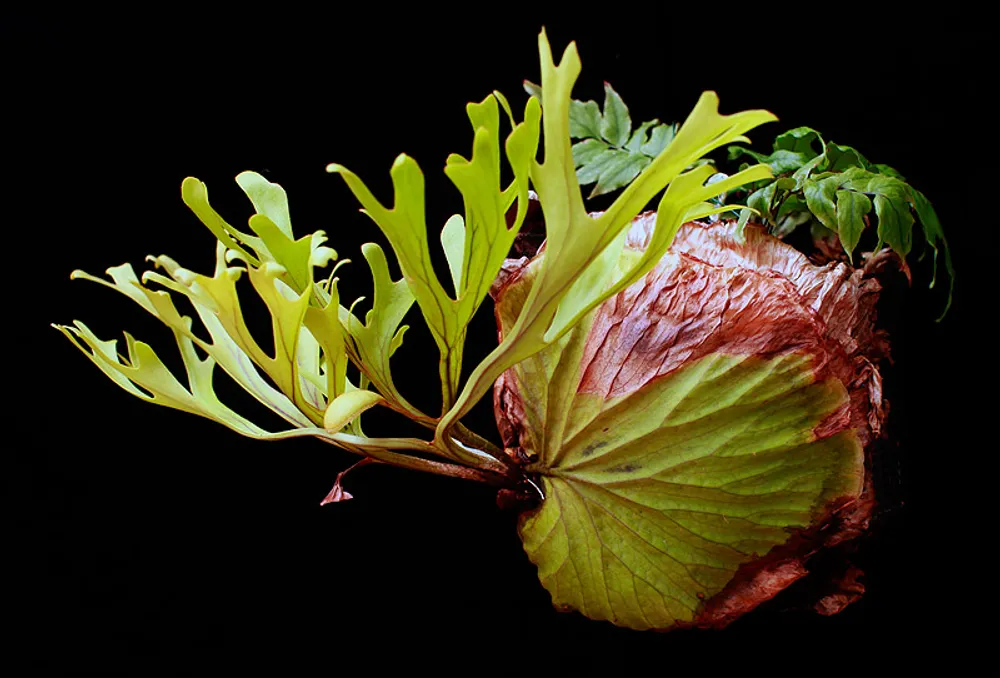
- Cultivar explosion. Species like P. willinckii have spawned dozens of named cultivars — Jade Girl, Smurf, Spur, Roll — each with unique frond shapes and trichome patterns
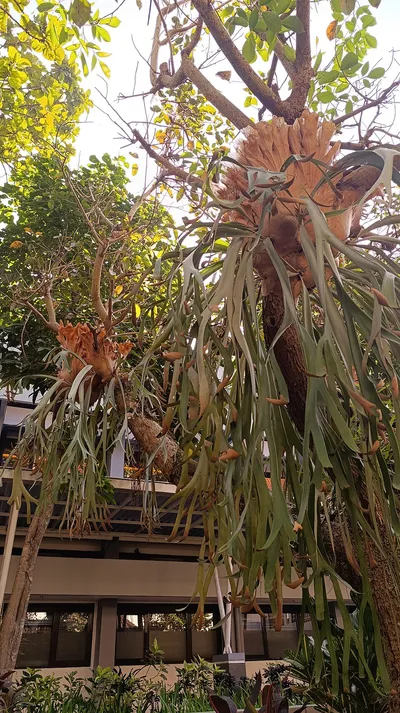
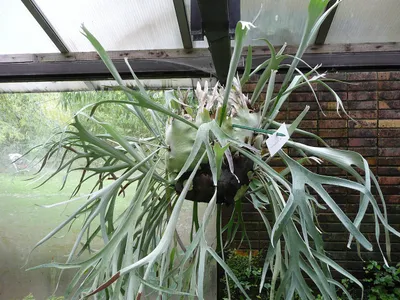
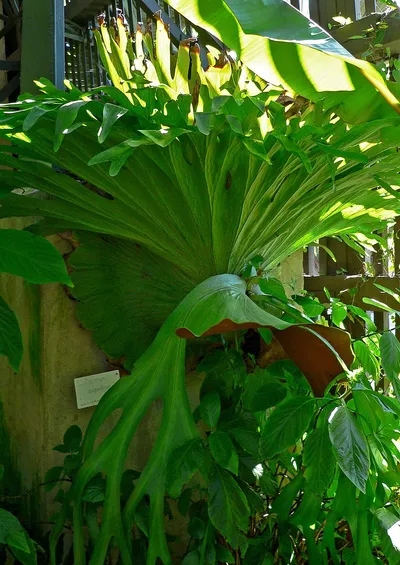
- Living sculpture. Staghorns are typically mounted on boards or baskets rather than potted, transforming each plant into a wall-hung art piece. A collection displayed across a wall becomes a living gallery
- Slow appreciation. Most species add only 2–4 fronds per year. A large, mature specimen represents years of careful cultivation — which is exactly why they command premium prices
Martha Stewart’s staghorn fern terrace made headlines in April 2026, proving that these plants have crossed from niche collector circles into mainstream design. But serious collectors know: the real joy is in the diversity, not just the aesthetics.
The Collector Progression
Not every species is suited to every grower. Think of your collection as a journey through tiers of increasing challenge and reward.
Tier 1: Foundation Species (Beginner)
Start here. These species tolerate a wider range of conditions and forgive the occasional watering mistake.
| Species | Why Collect It | Difficulty |
|---|---|---|
| P. bifurcatum | The gateway species — cold-hardy, fast-growing, cheap | Easy |
| P. veitchii | Silvery trichomes, handles dry air and cool temperatures | Easy |
| P. hillii | Compact form, upright fronds, great for small spaces | Easy |
| P. alcicorne | African species with elegant forking, underappreciated | Easy-Medium |
Collector goal: Master watering rhythms and light placement. Propagate your first pup from P. bifurcatum via division.
Tier 2: Intermediate Collectibles
These species require more attention to humidity and airflow but reward you with striking visual diversity.
| Species | Why Collect It | Difficulty |
|---|---|---|
| P. willinckii | The collector favorite — endless cultivar variety | Medium |
| P. elephantotis | Unique round, undivided fronds — unlike any other species | Medium |
| P. stemaria | African species with distinctive triangular shield fronds | Medium |
| P. superbum | The moosehorn fern — dramatic crown fronds, single-bud | Medium |
Collector goal: Start a cultivar sub-collection within P. willinckii. Experiment with different mounting substrates to see what each species prefers.
Tier 3: Advanced and Rare
These species demand precise conditions — high humidity, stable temperatures, excellent airflow. They are also the most rewarding to grow successfully.
| Species | Why Collect It | Difficulty |
|---|---|---|
| P. ridleyi | The “King of Staghorns” — vein-patterned shield fronds, single-bud | Hard |
| P. coronarium | Massive tropical species, dramatic crown nesting fronds | Hard |
| P. grande | Giant species, often confused with P. superbum | Hard |
| P. wandae | The largest species — specimens can exceed 2 meters across | Hard |
| P. wallichii | Himalayan species, deciduous in winter — a true oddity | Hard |
Collector goal: Successfully grow a P. ridleyi to maturity. This is the unofficial badge of a serious Platycerium collector.
Tier 4: Unicorns
Species so rare that owning one means you are part of a very small global community of growers.
| Species | Why It’s Rare | Difficulty |
|---|---|---|
| P. madagascariense | Extremely few specimens in cultivation outside Madagascar | Expert |
| P. quadridichotomum | Madagascar endemic, limited availability | Expert |
| P. andinum | The only New World species — South American cloud forests | Expert |
| P. ellisii | Another Madagascar endemic, rarely offered | Expert |
These species often require greenhouse conditions, and even experienced growers lose them to rot or cold snaps. Acquiring one usually involves years of networking within collector communities.
What Makes a Specimen Collectible?
Not every staghorn fern is “collectible” in the connoisseur sense. Here is what collectors look for beyond species rarity:
Provenance
Wild-collected specimens or plants from known locality forms (e.g., P. willinckii from Bali vs. Bogor) carry more collector interest than generic tissue-cultured plants. Provenance tells a story.
Form and Expression
Two plants of the same cultivar can look different depending on growing conditions. A well-grown specimen with optimal light and generous space develops fuller fronds and larger shield fronds. Collectors prize specimens that express the “ideal form” of their variety.
Size and Maturity
A mature, mounted P. ridleyi with overlapping shield fronds is exponentially more valuable than a small pup. Size represents years of care and cannot be rushed — most species add only 2–4 fronds per year.
Named Cultivars
Named cultivars of popular species — particularly P. willinckii cultivars like ‘Jade Girl’, ‘Smurf’, and ‘Celso Tatsuta’ — have established market identities and loyal followings. New cultivars occasionally emerge and gain rapid value.
Which of those names are real selections and which are trade descriptions is sorted out in the Platycerium cultivar directory.
Curating Your Collection for Display
A collection should look intentional, not cluttered. Consider these display strategies:
- Group by region. Mount your African species (P. alcicorne, P. stemaria, P. elephantotis) together, and your Southeast Asian species separately. This creates visual storytelling and makes care easier since regional groupings often share humidity preferences
- Vary mounting methods. Mix board mounts, basket mounts, and hanging mounts to add visual rhythm to your wall
- Create a focal point. Place your most dramatic specimen (a large P. superbum or mature P. coronarium) at eye level, with smaller species arranged around it
- Label your collection. Serious collectors add small tags with species names, cultivar names, and acquisition dates. This turns your wall into a true botanical exhibition
For more mounting and display ideas, see our mounting guide and the mounted vs potted comparison.
Where to Source Rare Species
Finding rare Platycerium requires looking beyond garden centers:
- Online specialty growers. Nurseries that focus exclusively on ferns or aroids often carry species beyond P. bifurcatum
- Collector groups. Facebook groups, Reddit’s r/Platycerium, and Instagram collector communities frequently have members selling or trading pups and divisions
- Auctions. Specialized plant auctions (online and at botanical events) are where the rarest specimens and named cultivars change hands
- Botanical garden plant sales. Some gardens propagate and sell uncommon species at annual fundraising events — a great source for verified, healthy plants
- International sellers. Thailand, Indonesia, and Australia have thriving Platycerium nursery industries. Import regulations and phytosanitary requirements vary by country, so always check your local rules before purchasing internationally
[!IMPORTANT] Never purchase wild-collected plants from endangered populations. Ethical collecting means buying from nursery-propagated stock or responsibly divided specimens. The long-term health of wild Platycerium populations depends on it.
Starting Today
You do not need a greenhouse or a rare-plant budget to start collecting. A single P. bifurcatum mounted on a board, hung in a bright window, is the beginning of a collection. Add a P. veitchii for its silver shimmer. Then a P. willinckii cultivar for its dramatic drape. Before you know it, you have a personal Platycerium museum — and in 2026, you are right on trend.
For care fundamentals that apply across all species, start with our complete care guide and species overview.