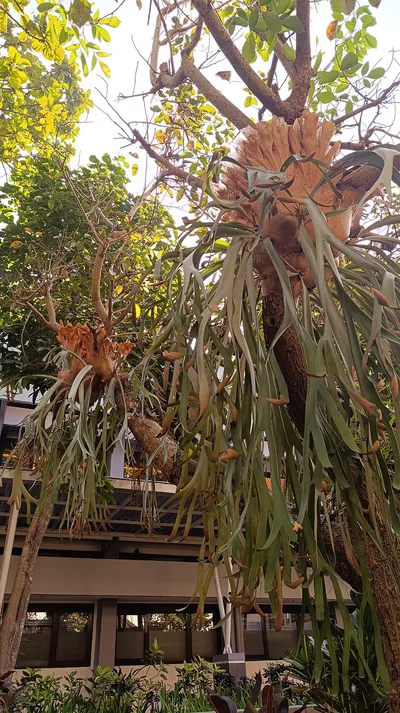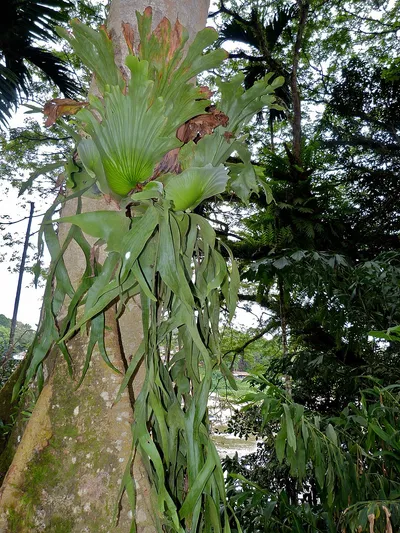
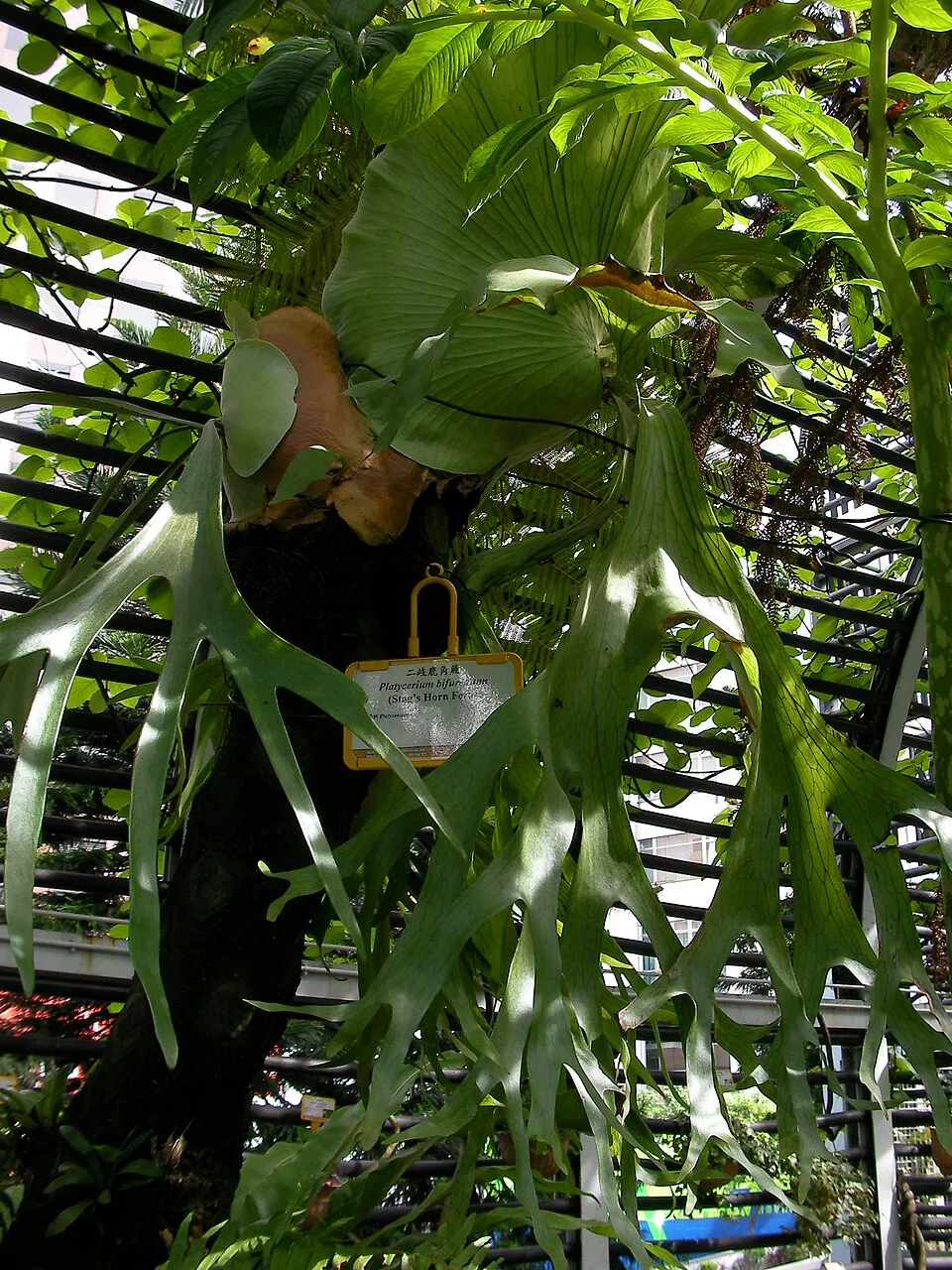
Brown discoloration is the number one concern among staghorn fern owners — and for good reason. Unlike many houseplants where “a little brown” is cosmetic, brown patches on a Platycerium can signal anything from normal aging to life-threatening rot. This guide helps you identify exactly what’s happening and what to do about it.
Brown Shield Fronds (Basal Fronds)
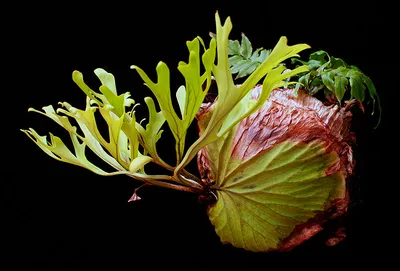
The most common source of panic among new owners. Shield fronds — the round, flat fronds that hug the mounting surface — naturally turn brown as they age. This is completely normal and not a sign of disease.
When Brown Shields Are Normal
- The oldest shield frond (the one furthest from the growing point) dries out and turns papery brown
- New green shield fronds grow over the old brown ones
- The brown shields still serve a purpose: they protect roots and trap organic debris for nutrients
When to Worry
- Black, mushy shield fronds near the growing point — this indicates rhizome rot, usually from overwatering or poor drainage
- Foul smell coming from behind the shields — bacterial infection, likely fatal if it reaches the growth crown
- All shields brown simultaneously on a young plant — environmental shock (sudden temperature drop, transplant stress)
Fix: If rot is present, reduce watering immediately. Remove the plant from its mount, trim away any black, mushy tissue with a sterile blade, dust with cinnamon (a natural fungicide), and remount on fresh, dry sphagnum moss. Do not water for 5–7 days.
Brown Tips on Fertile Fronds (Antler Fronds)
The “antlers” — the dramatic, forked fronds — develop brown tips for several distinct reasons.
Cause 1: Low Humidity
The most common culprit, especially indoors during winter when heating systems dry the air.
Symptoms: Tips turn dry, crispy, and light brown. Progresses slowly inward from the tip.
Fix: Increase humidity to 50–70%. Use a humidifier near the plant, group it with other plants, or move it to a bathroom or kitchen. Misting alone rarely provides enough sustained humidity.
Cause 2: Underwatering
Symptoms: Similar to low humidity, but the entire frond may also droop or curl inward. The mounting medium feels bone-dry and feather-light when lifted.
Fix: Soak the entire root ball in room-temperature water for 20–30 minutes. Resume regular watering using the weight test method. In summer, most mounted staghorns need soaking every 5–7 days.
Cause 3: Sunburn
Symptoms: Brown patches appear on the parts of the frond that face direct sunlight. The brown areas may have a bleached or white center with brown edges. Damage appears within 1–2 days of sun exposure.
Fix: Move the plant to bright, indirect light immediately. Damaged tissue will not recover, but new fronds will grow normally. Staghorn ferns thrive in the same light as an east-facing window or dappled shade outdoors. For detailed light requirements, see our lighting guide.
Cause 4: Fertilizer Burn
Symptoms: Brown tips that appear within a week of fertilizing. May also see a white salt crust on the mounting medium.
Fix: Flush the moss thoroughly by soaking for 30 minutes in plain water. Reduce fertilizer concentration — staghorn ferns need only half-strength balanced fertilizer (20-20-20) once per month during the growing season.
Cause 5: Cold Damage
Symptoms: Brown or blackened tips that appear suddenly after exposure to temperatures below 50°F (10°C). Affected tissue may look water-soaked before turning brown.
Fix: Move the plant to a warmer location. Most Platycerium species prefer temperatures between 60–80°F (16–27°C). Some species like P. veitchii tolerate cooler temperatures, while tropical species like P. coronarium and P. wandae need consistent warmth.
Brown Spots on Leaves
Distinct spots (rather than tip browning) usually indicate a biological cause.
Fungal Spots
Appearance: Circular brown spots with a darker border, sometimes with a yellow halo. May appear anywhere on the frond.
Fix: Improve air circulation. Remove severely affected fronds with a sterile blade. Avoid getting water on the fronds during watering — water the root ball, not the leaves. A copper-based fungicide can help in severe cases, but test on a small area first as some staghorns are sensitive.
Scale Insects
Appearance: Small, raised brown bumps that don’t wipe away easily. Often found along the midrib or underside of fronds.
Fix: Remove individual scale with a cotton swab dipped in rubbing alcohol. For heavy infestations, see our pest control guide. Avoid neem oil on staghorn ferns — it can damage the fine trichomes (silver hairs) that protect the fronds.
Brown Bumps on Fertile Fronds
If you notice evenly distributed, fuzzy brown patches on the undersides of fertile fronds — congratulations, those are sporangia (spore-producing structures). This is completely normal and a sign of a healthy, mature plant. Do not remove them.
Quick Diagnosis Chart
| Symptom | Most Likely Cause | Urgency |
|---|---|---|
| Old shield frond turning brown | Normal aging | None |
| Black, mushy shield near crown | Root rot / overwatering | Urgent |
| Dry, crispy tips | Low humidity or underwatering | Moderate |
| Bleached patches with brown edges | Sunburn | Move plant now |
| Brown tips after fertilizing | Fertilizer burn | Flush medium |
| Brown tips after cold snap | Cold damage | Move to warmth |
| Circular spots with dark border | Fungal infection | Improve airflow |
| Raised brown bumps on midrib | Scale insects | Treat with alcohol |
| Fuzzy brown patches underneath | Spores (normal!) | None — celebrate |
Prevention: The 80/20 Rule
Most brown-tip problems come down to two factors: humidity below 50% and inconsistent watering. If you maintain ambient humidity above 50% and water based on weight rather than a calendar, you will avoid 80% of browning issues.
For species-specific care requirements, browse our species index — some species like P. elephantotis need higher humidity, while P. veitchii is more forgiving in dry conditions.