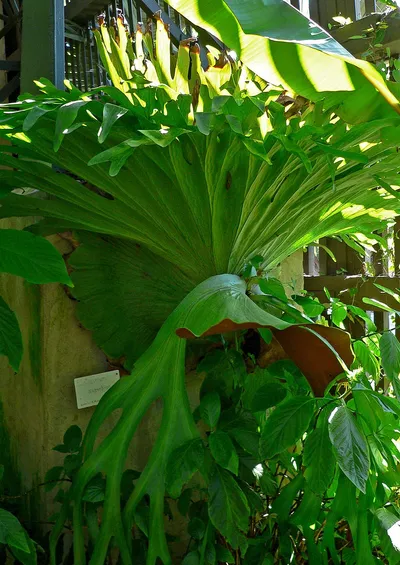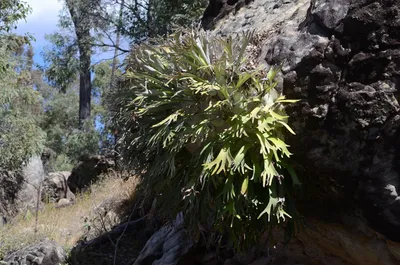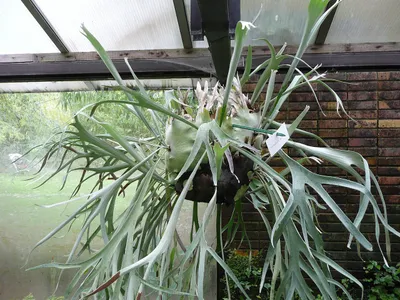
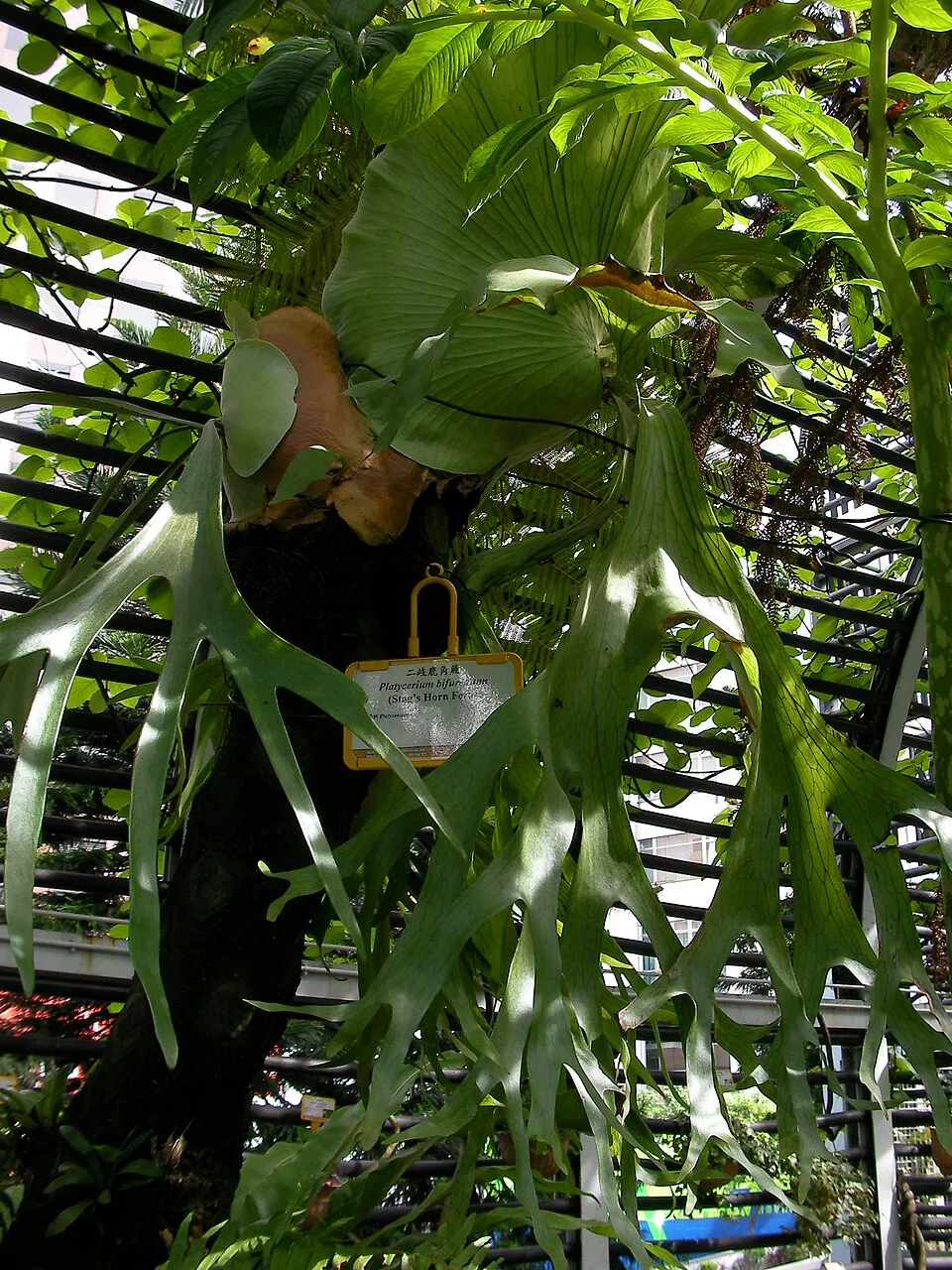
Hanging a staghorn fern is one of the most rewarding ways to display these dramatic epiphytes. Whether you want to create a living wall sculpture indoors or attach a specimen to an oak tree in your yard, the right hanging method makes all the difference between a thriving showpiece and a plant that slowly declines. This guide covers every popular technique — from simple hanging baskets to heavy-duty chain systems for large specimens — so you can choose the method that fits your space, your plant, and your skill level.
Choosing a Hanging Method
Not every staghorn fern belongs on a board. Your choice of hanging method depends on three factors: the plant’s size, where you want to display it, and how much maintenance you’re comfortable with.
| Method | Best For | Difficulty | Weight Capacity | Indoor/Outdoor |
|---|---|---|---|---|
| Wire hanging basket | Beginners, small–medium ferns | Easy | Up to 15 lbs | Both |
| Mounted board with chain | Statement pieces, wall display | Medium | Up to 30 lbs | Both |
| Moss ball (kokedama) | Small ferns, minimalist look | Medium | Up to 5 lbs | Indoor |
| Direct tree mounting | Outdoor collections, naturalized look | Medium | Unlimited | Outdoor |
| Hanging basket ball | Large specimens, 360° display | Advanced | Up to 50+ lbs | Both |
How to Hang a Staghorn Fern in a Basket
A wire hanging basket is the simplest way to get started. It’s forgiving, allows excellent airflow, and makes watering easy.
Materials
- 12–14 inch wire hanging basket (open-weave, not solid plastic)
- Long-fiber sphagnum moss
- Fishing line or zip ties
- S-hook or swivel hook rated for the weight
Steps
- Line the basket with a 1.5-inch layer of pre-soaked sphagnum moss, pressing it firmly against the wire frame.
- Add substrate — a mix of sphagnum moss and coarse orchid bark works well. Fill the basket halfway.
- Position the fern with the growing point (the crown where new fronds emerge) facing slightly upward and outward.
- Pack moss around the root ball, filling all gaps. The roots should be completely covered but the shield fronds left exposed.
- Secure with fishing line if the plant feels loose. Wrap a few passes across the moss surface.
- Hang with a swivel hook — this lets you rotate the basket every few weeks for even light exposure.
Pro tip
For Platycerium bifurcatum and P. hillii, you can plant pups around the entire basket to eventually create a full “staghorn ball.” Start with 3–5 pups spaced evenly, and in 2–3 years they’ll merge into a spectacular sphere.
How to Hang a Staghorn Fern on a Wall
Wall-mounted staghorn ferns are living art. If you’ve already mounted your fern on a board, the next step is getting it securely on the wall.
Hardware options
- French cleat (recommended for ferns over 10 lbs) — a two-piece angled bracket system that distributes weight evenly and allows easy removal for watering.
- Heavy-duty picture hook — suitable for smaller, lighter mounts under 10 lbs.
- Toggle bolts — necessary for drywall when there’s no stud available. Use a toggle bolt rated for at least 2× the plant’s weight.
Weight matters
A freshly watered staghorn fern can weigh 2–3 times its dry weight. A medium P. grande on a cedar board that weighs 8 lbs dry can easily hit 20 lbs after soaking. Always size your hardware for the wet weight, not the dry weight.
Steps
- Find a stud using a stud finder. Mounting into a stud is always the most secure option.
- Install a French cleat — screw the wall piece into the stud (or use toggle bolts for drywall). Level it carefully.
- Attach the mating cleat to the back of your mounting board using stainless steel screws.
- Hang the board — the angled cleats lock together. Test stability by gently pulling the bottom of the board outward.
- Consider drainage — place a drip tray or waterproof pad behind the mount if hanging over furniture or hardwood floors.
[!IMPORTANT] Never hang a staghorn fern on a wall that receives no air circulation. Stagnant air behind the mount promotes fungal growth and rot. Leave at least 1 inch of clearance between the board and the wall.
How to Hang a Staghorn Fern from a Tree
Outdoor tree mounting creates the most natural display — after all, staghorn ferns are epiphytes that grow on trees in the wild. This method works in USDA zones 9–12, or anywhere winter temperatures stay above 40°F (4°C).
Best host trees
Choose a tree with rough, non-shedding bark:
- Live oak — the classic choice in the southern US
- Palm trunks — excellent grip and humidity
- Mature crape myrtle — good for smaller species
- Avoid: smooth-barked trees (birch, eucalyptus) and resinous conifers (pine, cedar)
Steps
- Choose a spot on the trunk or a large horizontal branch that gets bright indirect light or dappled shade. East-facing positions are ideal.
- Create a moss pad — pack a fist-sized mound of wet sphagnum moss against the bark.
- Place the fern against the moss pad with the shield fronds touching the bark.
- Wrap with stretchy plant tie or old pantyhose — go around the trunk or branch 3–4 times, firm but not crushing.
- Add more moss around the root ball for moisture retention.
- Check monthly — once the shield fronds grip the bark (usually 3–6 months), you can remove the ties.
Hanging from a branch with chain
For a dramatic hanging display under a canopy:
- Use stainless steel or galvanized chain (never copper, which is toxic to ferns).
- Wrap the chain around the branch with a padded sleeve to protect the bark.
- Hang a wire basket or mounted board from the chain using an S-hook.
- Leave enough length so the fern hangs at eye level or slightly above — you’ll need to see the shield fronds to monitor plant health.
How to Hang a Large or Heavy Staghorn Fern
Mature staghorn ferns — especially P. grande, P. superbum, and P. wandae — can weigh 50–100+ lbs when wet. Hanging these specimens requires serious hardware.
Indoor heavy-duty setup
| Component | Specification |
|---|---|
| Ceiling anchor | Lag bolt into joist, or toggle bolt rated 100+ lbs |
| Chain or cable | Galvanized steel chain, 3/16” minimum |
| Swivel | Ball-bearing swivel rated for the load |
| Connection | Welded S-hooks or carabiners (never open hooks) |
Steps
- Locate a ceiling joist — this is non-negotiable for specimens over 20 lbs. Use a stud finder.
- Install a lag eye bolt (3/8” × 4”) directly into the joist. Pre-drill the pilot hole.
- Attach chain of appropriate length using a closed S-hook or quick link.
- Add a ball-bearing swivel between the chain and the basket/board — this lets you rotate the plant without unthreading hardware.
- Test the setup by hanging a bucket of water at the expected wet weight for 24 hours before trusting it with your plant.
[!IMPORTANT] A falling 50-lb staghorn fern is a safety hazard. Over-engineer the hardware. If in doubt, consult a handyman or contractor for ceiling-mounted installations.
Hanging Staghorn Ferns Indoors: Location Tips
Where you hang your fern matters as much as how. Keep these factors in mind:
- Light: Bright indirect light is ideal. Within 3–6 feet of a north or east window works well. Read more in our lighting guide.
- Humidity: Aim for 50–70% relative humidity. Kitchens and bathrooms are naturally better environments than living rooms.
- Airflow: Good air circulation prevents pest problems and fungal issues. A gentle ceiling fan on low is beneficial.
- Accessibility: Hang at a height where you can easily take the plant down for watering — or install drip-friendly hardware if you water in place.
- Temperature: Keep away from heating vents, AC drafts, and cold windows. Staghorn ferns prefer 60–80°F (16–27°C).
Maintenance After Hanging
Once your fern is up, ongoing care is straightforward:
- Water by soaking the root ball (basket or board) in a sink or bucket for 15–20 minutes, or use a gentle hose spray for tree-mounted specimens. See our full watering guide.
- Fertilize monthly during the growing season with a diluted balanced fertilizer. Our fertilizer guide covers ratios and homemade recipes.
- Rotate basket-hung and board-mounted ferns 90° every 2–4 weeks for even growth.
- Inspect hardware every 6 months — check for rust, loosening, or signs of strain. Outdoor chains exposed to rain will need replacement sooner than indoor setups.
Quick Reference: Hanging Troubleshooting
| Problem | Likely Cause | Fix |
|---|---|---|
| Plant tilting to one side | Uneven growth toward light | Rotate 180° and secure with additional line |
| Mount feels loose on wall | Hardware fatigue or drywall damage | Upgrade to a French cleat or move to a stud |
| Brown shield fronds near wall | Poor airflow behind mount | Add spacers for 1” clearance |
| Basket drying out too fast | Low humidity or too much airflow | Switch to a larger basket with more moss |
| Fern won’t grip tree bark | Too shady or ties removed too early | Reposition to brighter spot; re-tie for 6 more months |
Hanging a staghorn fern transforms it from a potted plant into a living sculpture. Start with a simple basket if you’re new, and as your collection grows, you’ll naturally graduate to wall mounts, tree installations, and full hanging basket balls. The key is matching the method to both the plant’s needs and your space — and always sizing your hardware for the wet weight.