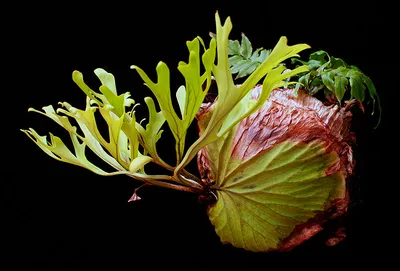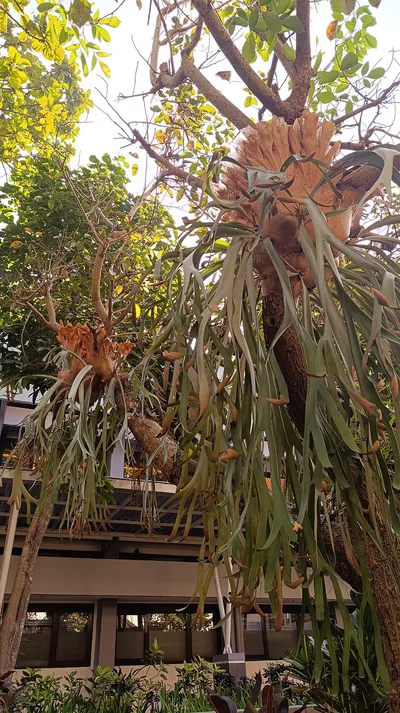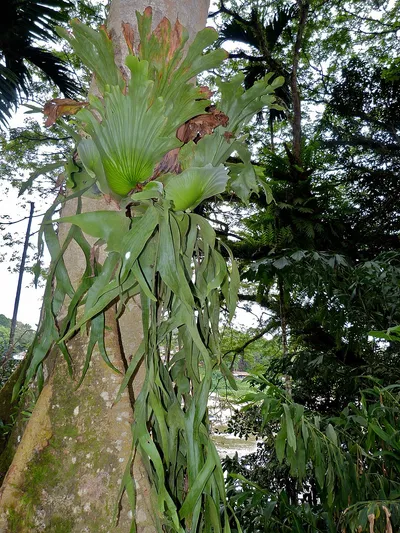
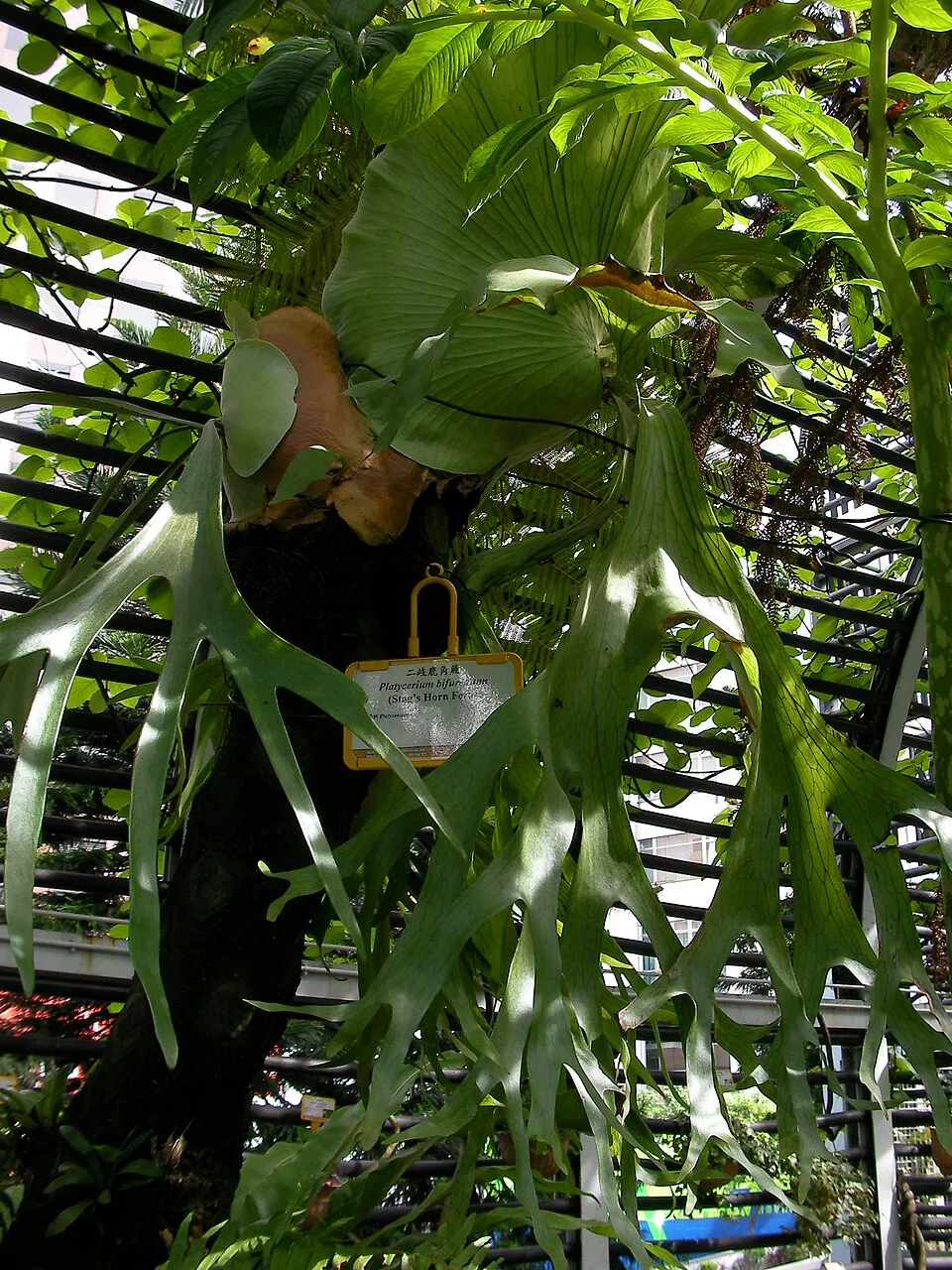
Staghorn ferns (Platycerium spp.) are epiphytes — they grow on trees, not in soil — so their nutritional needs are very different from a typical potted houseplant. In the wild, decaying leaves trapped behind their shield fronds provide a slow drip of nutrients. In our homes, that natural compost cycle doesn’t exist, which means fertilizer is the single biggest factor separating a surviving staghorn from a thriving one.
This guide covers the best fertilizer types, the ideal NPK ratio, a proven homemade recipe, and a month-by-month feeding schedule you can follow year-round.
Why Staghorn Ferns Need Fertilizer
Because staghorns lack a traditional root system embedded in rich soil, they depend almost entirely on whatever nutrients wash over their root ball and shield fronds. Without supplemental feeding:
- New fertile fronds (“antlers”) grow slowly and stay smaller
- Shield fronds turn pale or yellowish instead of a vigorous green
- Pup production slows dramatically
- The plant becomes more vulnerable to pests and environmental stress
A well-fed staghorn, on the other hand, will push out multiple new fronds per season and develop thick, overlapping shield fronds that protect the root mass.
Best NPK Ratio for Staghorn Ferns
Fertilizer labels display three numbers — N-P-K — representing nitrogen, phosphorus, and potassium. For staghorn ferns, the ideal ratio is:
| Nutrient | Role | Ideal Range |
|---|---|---|
| Nitrogen (N) | Drives frond growth and green color | Medium-high |
| Phosphorus (P) | Supports root and shield frond development | Low-medium |
| Potassium (K) | Strengthens cell walls, improves stress tolerance | Low-medium |
Recommended ratio: 1:1:1 (balanced) or 3:1:2 (growth-focused).
A balanced 10-10-10 or 20-20-20 water-soluble fertilizer, diluted to half strength, is the safest all-purpose choice. If your fern is actively pushing new fronds and you want to encourage faster growth, a ratio closer to 3:1:2 (such as 12-4-8) gives a nitrogen boost without over-supplying phosphorus.
[!IMPORTANT] Always dilute to half the label’s recommended strength. Epiphytes are extremely sensitive to salt buildup, and excess fertilizer can burn the roots and shield fronds faster than it helps.
Best Fertilizer Types Compared
Not all fertilizers work equally well for mounted or basketed staghorns. Here’s how the main types stack up:
| Type | Pros | Cons | Best For |
|---|---|---|---|
| Water-soluble (e.g., Miracle-Gro, Peters) | Easy to dilute; feeds immediately; uniform coverage | Needs frequent reapplication; easy to over-apply | Most growers — simple and effective |
| Slow-release granules (e.g., Osmocote) | Apply once per season; less maintenance | Hard to control dose on mounts; can concentrate in pockets | Basket-grown staghorns only |
| Organic liquid (fish emulsion, seaweed) | Gentle; adds micronutrients; low burn risk | Smelly indoors; lower NPK values | Outdoor-mounted staghorns |
| Banana peel / compost tea | Free; mimics natural leaf litter | Unpredictable nutrient content; can attract insects | Supplemental only — not primary |
For most indoor collectors, a half-strength water-soluble 20-20-20 applied during watering is the sweet spot of simplicity and results.
Homemade Staghorn Fern Fertilizer Recipe
If you prefer a DIY approach, this homemade recipe provides a balanced, gentle feed:
Banana Peel + Epsom Salt Tea
- Collect 2–3 banana peels and chop them into small pieces
- Steep the peels in 1 liter (1 quart) of water for 24–48 hours
- Strain out the solids
- Add ½ teaspoon of Epsom salt (magnesium sulfate) per liter — magnesium supports chlorophyll production
- Dilute the tea 1:1 with fresh water before applying
- Apply by pouring over the root ball or soaking the mount for 10–15 minutes
Banana peels provide potassium and trace phosphorus, while the Epsom salt adds magnesium. This works well as a supplemental feed between regular fertilizer applications, but it does not replace a balanced NPK fertilizer entirely.
Fish Emulsion & Seaweed Blend
For outdoor-mounted staghorns where smell is less of a concern:
- Mix 5 ml fish emulsion (5-1-1) per liter of water
- Add 5 ml liquid seaweed extract for micronutrients and growth hormones
- Apply every 2 weeks during the growing season
This combination closely mimics the nutrient profile that wild epiphytes receive from decomposing organic matter.
Seasonal Feeding Schedule
Staghorn ferns are not heavy feeders in winter. Match your fertilizer schedule to the plant’s natural growth cycle:
| Season | Frequency | Strength | Notes |
|---|---|---|---|
| Spring (Mar–May) | Every 2 weeks | Half strength | Growth resumes — begin regular feeding |
| Summer (Jun–Aug) | Every 2 weeks | Half strength | Peak growth period; watch for rapid frond expansion |
| Autumn (Sep–Nov) | Monthly | Quarter strength | Taper off as growth slows |
| Winter (Dec–Feb) | None or once monthly | Quarter strength | Most species enter dormancy; see winter care |
If your fern lives indoors under grow lights with stable temperatures year-round, you can maintain a lighter summer-like schedule through winter — but reduce to quarter strength to be safe.
How to Apply Fertilizer to Mounted Staghorns
Applying fertilizer to a mounted staghorn is different from feeding a potted plant. Here are three methods:
Method 1: Soaking (Recommended)
Mix your fertilizer solution in a basin or bucket. Submerge the entire mount — root ball, shield fronds, and sphagnum moss — for 15–20 minutes. This is the same technique described in our watering guide, just with fertilizer added to the water.
Method 2: Spray Bottle
For wall-mounted staghorns that are difficult to remove, fill a spray bottle with diluted fertilizer and mist the root ball and the underside of the shield fronds. This is less thorough than soaking but works in a pinch.
Method 3: Top-Pouring
Hold the mount over a sink or take it outdoors. Slowly pour the fertilizer solution over the top of the shield fronds, allowing it to trickle down through the sphagnum moss. Repeat 2–3 times to ensure saturation.
For basket-grown ferns, simply water with the fertilizer solution as you normally would, allowing it to drain freely from the bottom.
Signs of Over-Fertilization
More fertilizer does not mean more growth. Watch for these warning signs:
- Brown or black leaf tips that appear suddenly (distinct from the dry, crispy tips caused by underwatering)
- White salt crust on the surface of the sphagnum moss or shield fronds
- Soft, mushy roots — salt buildup damages root tissue and invites rot
- Stunted new fronds — paradoxically, over-feeding can suppress new growth
If you suspect over-fertilization, flush the root ball thoroughly by soaking in plain water for 30 minutes, then skip fertilizer for 4–6 weeks.
Species-Specific Considerations
Not every Platycerium species has the same appetite. Fast growers tolerate heavier feeding; slow growers are more sensitive.
| Species | Growth Rate | Fertilizer Tolerance |
|---|---|---|
| P. bifurcatum | Fast | High — handles full half-strength easily |
| P. willinckii | Medium | Moderate — stick to half strength |
| P. ridleyi | Slow | Low — quarter strength recommended |
| P. grande | Medium | Moderate — benefits from extra nitrogen |
| P. elephantotis | Medium-fast | Moderate-high — responds well to organic feeds |
| P. superbum | Slow-medium | Low-moderate — easy to overfeed |
When in doubt, less is always safer than more. You can always increase the dose next month — but salt-burned roots take months to recover.
Frequently Asked Questions
Can I use orchid fertilizer on staghorn ferns?
Yes. Orchid fertilizers are typically balanced and formulated for epiphytes, making them an excellent choice for staghorns. Use at the label-recommended strength for orchids (they’re already conservative).
Should I fertilize newly mounted pups?
Wait 4–6 weeks after mounting or dividing pups before fertilizing. Let the plant establish its root hold first — fresh cuts are vulnerable to fertilizer burn.
Is Miracle-Gro safe for staghorn ferns?
The standard Miracle-Gro All Purpose (24-8-16) works fine at quarter to half strength. Its higher nitrogen is actually beneficial for frond growth, but the salt content is on the heavier side, so dilute conservatively and flush with plain water between feedings.
Can I put banana peels directly behind the shield fronds?
Technically yes — it mimics decaying leaf litter — but the peels can attract fungus gnats, fruit flies, and mold in indoor environments. The banana peel tea recipe above gives you the nutrients without the pest risk.
Key Takeaways
- Use a balanced (20-20-20) or growth-focused (12-4-8) water-soluble fertilizer diluted to half strength
- Feed every 2 weeks during spring and summer, tapering to monthly or none in winter
- Soaking is the most effective application method for mounted ferns
- Homemade banana peel tea is a good supplement but not a replacement for NPK fertilizer
- Less is more — epiphytes are far more sensitive to over-feeding than under-feeding