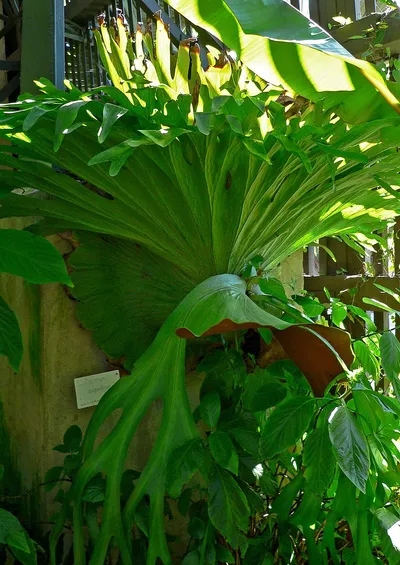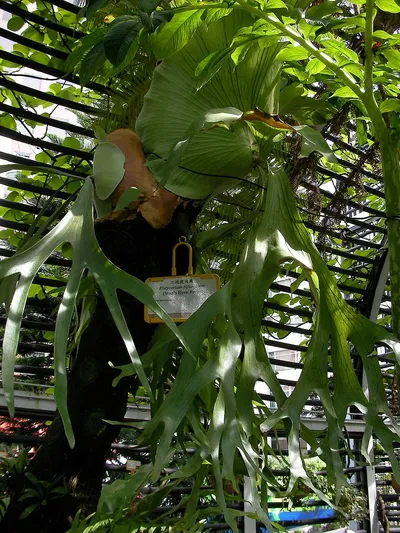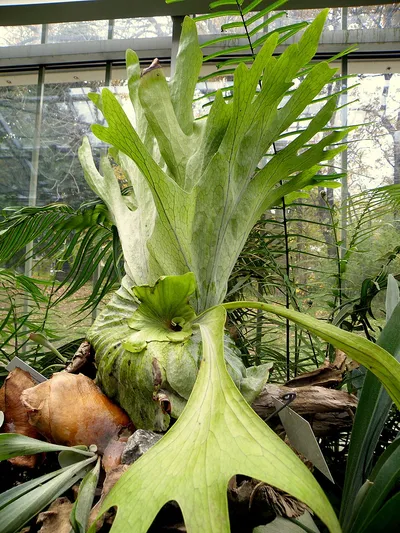
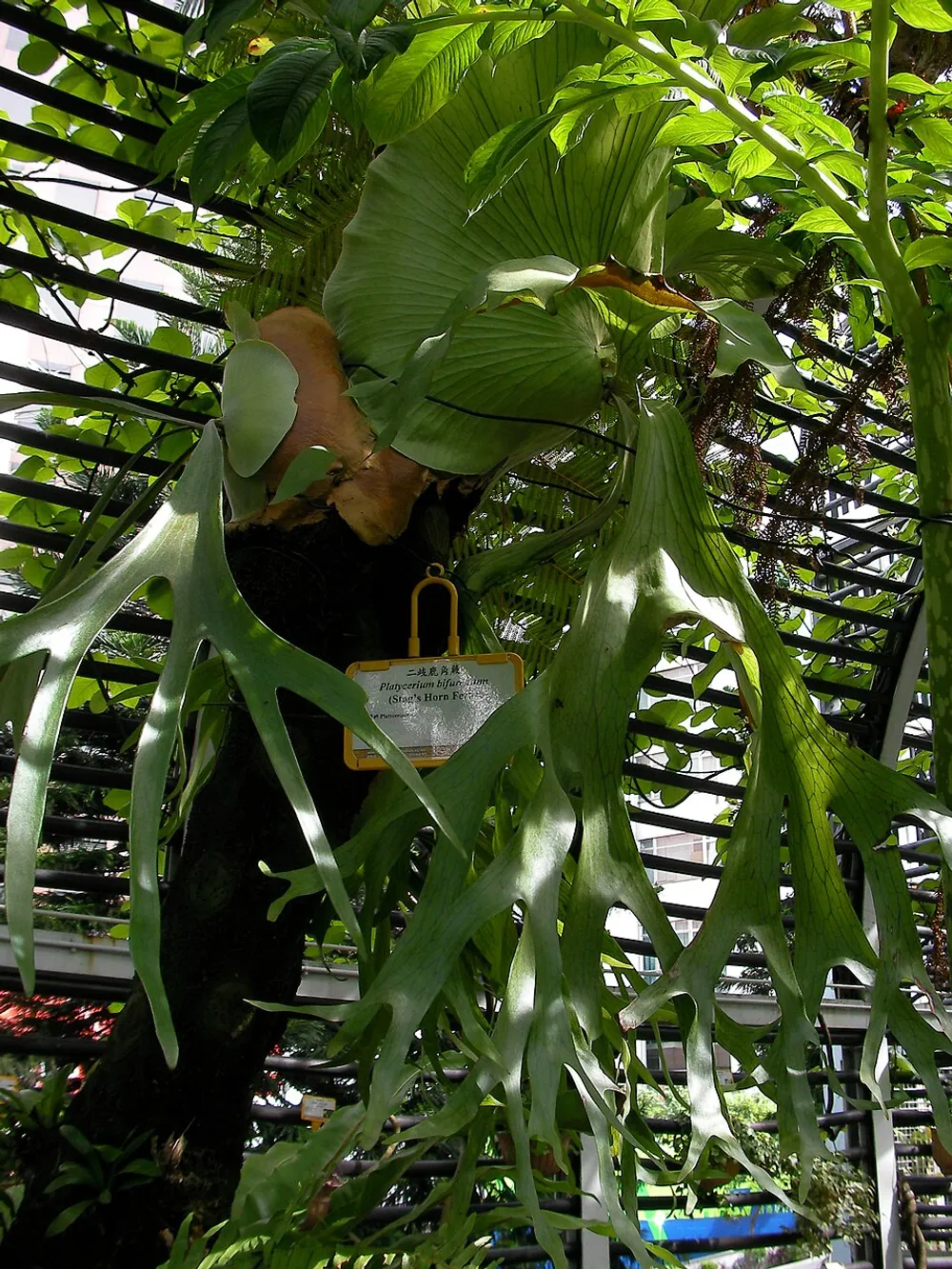
If you have grown a staghorn fern (Platycerium) for more than a year or two, sooner or later you will notice small versions of the parent plant emerging around the base — often pushing out from under the brown shield fronds. These offsets are called pups, and learning how to separate staghorn fern pups is one of the most rewarding skills in this hobby. A single mature Platycerium bifurcatum can produce a small colony of pups that you can mount, gift, or trade with other collectors.
Late April through early June is prime pup-division season in temperate climates — the mother plant is actively growing, humidity is climbing, and newly separated pups have a long warm window to establish roots before autumn. This guide walks through the full workflow: identifying a pup ready to leave, cutting cleanly without damaging the mother, and mounting the pup so it actually survives the move.
When Is a Pup Ready to Separate?
Not every small frond cluster is a pup ready for division. A genuine, separable pup has three signals:
| Signal | What to look for | Why it matters |
|---|---|---|
| Size | At least 10 cm (4 in) across, ideally 12–15 cm | Below this, the pup hasn’t built the energy reserves to survive a transplant |
| Own shield frond | One round, brown shield distinct from the mother’s | Means the pup has begun its own root mass behind the shield |
| Visible rhizome connection | A short woody stem joining pup to mother | Lets you cut cleanly without tearing into the mother’s core |
If any of those three are missing, leave the pup alone for another two to three months. Forcing a separation early is the single most common reason division fails.
For more detail on what shield fronds do and how to read their health, see our shield frond guide.
What You Need
Before you start, gather everything in one place. Once you cut, you want the pup mounted within an hour — exposed roots dehydrate quickly.
- Sharp, sterilized knife or pruning saw (wipe the blade with 70% isopropyl alcohol)
- A new mounting board, basket, or slab — see our mounting guide for material choices
- Long-fibered sphagnum moss, soaked and squeezed out
- Fishing line, plant-safe wire, or cotton string for tying down
- Clean spray bottle with rainwater or distilled water
- Gloves — staghorn fronds shed irritating felt-like hairs
A staple gun and a small handful of orchid bark or coco husk chips are optional but make the mount tidier.
Step-by-Step: Separating the Pup
1. Inspect the connection point
Gently lift the lower fronds of the mother and look at where the pup’s shield meets her rhizome. You are looking for the woody bridge between the two plants. On older specimens you may need to peel back a layer of dried shield to see it clearly. The cut will go through this bridge — not through living green tissue.
2. Hydrate before cutting
Mist both the mother and the pup thoroughly the morning of the division. A well-hydrated rhizome cuts cleaner and the pup’s exposed roots survive air exposure better.
3. Make the cut
Slide the blade behind the pup’s shield, angling slightly toward the bridge. Use a single firm slicing motion — sawing back and forth crushes tissue and invites rot. Aim to take as much of the pup’s own root mass as possible, even if that means leaving a small wedge of the mother’s outer rhizome behind.
[!IMPORTANT] Never cut into the mother’s central growing point — the cluster at the very heart of her shield where new fronds emerge. Damage there can kill an otherwise healthy specimen.
4. Wrap the root ball
Place the pup shield-down on your work surface. Pack a generous handful of damp sphagnum moss against the back of the shield, completely covering any exposed roots. The moss layer should be roughly 3–4 cm thick.
5. Mount immediately
Position the pup against your new board with the antler fronds pointing up and slightly outward. Tie firmly with fishing line, cross-wrapping over the moss and the lower edge of the shield. The pup should feel snug — if you can wiggle it with your finger, tighten the line. The shield will fuse to the board within a few months and the line can be removed once that happens.
Aftercare: The First Six Weeks
Newly separated pups are essentially in the ICU. Three things matter most:
- Humidity above 60%. Group with other plants, run a humidifier, or place near (not in) a bathroom window.
- Bright indirect light only. Direct sun on a stressed pup will scorch the antlers within days. Review our lighting guide for placement specifics.
- Daily light misting, weekly soak. Mist the moss and shield daily to keep humidity high; once a week, take the whole mount down and soak it in tepid water for 10–15 minutes.
Hold off on fertilizer for the first six weeks. The pup is rebuilding roots, not foliage — feeding too early can burn tender new tissue. After week six, return to a dilute monthly feed as outlined in our fertilizer guide.
You will know the pup has rooted when you tug gently on it and feel resistance — typically 6 to 12 weeks after mounting. New antler growth follows soon after.
Common Problems After Division
| Symptom | Likely cause | Fix |
|---|---|---|
| Shield turning black around the cut | Bacterial rot from a dirty blade | Trim back to clean tissue, dust with cinnamon, reduce watering |
| Antler fronds drooping and limp | Dehydration during mounting | Soak the entire mount, raise humidity, check moss isn’t bone-dry |
| New shield emerges yellow | Light too strong, or fertilizer applied too early | Move to softer light, flush with plain water, wait 4 more weeks before feeding |
| Pup falls off the board | Tied too loosely, or board surface too smooth | Re-tie with crosshatched fishing line and add a thin layer of moss against the board |
If you suspect rot has spread into the rhizome, see our deeper diagnostic in the root rot guide.
Which Species Pup Most Readily?
Not all Platycerium species produce pups in cultivation. The free-puppers — sometimes called the “social” species — form colonies easily and are ideal first division projects. The solitary species rarely or never offset and must be propagated from spores.
| Pup behavior | Species |
|---|---|
| Frequent pup producers (easy division) | P. bifurcatum, P. veitchii, P. hillii, P. willinckii, P. stemaria |
| Occasional puppers | P. alcicorne, P. elephantotis |
| Solitary — spore propagation only | P. grande, P. superbum, P. ridleyi, P. wandae, P. coronarium |
If you are working with one of the solitary giants, your propagation route is spores rather than division — a slower but rewarding path covered in our spore propagation guide. For collector context on why solitary species command higher prices, see our collectible staghorn ferns guide.
A Note on Spring Timing
The reason late April through June works so well is biological, not arbitrary. Research published by the Royal Botanic Gardens, Kew on epiphytic ferns shows that Platycerium root activity peaks when night temperatures stay consistently above 15°C (59°F) and ambient humidity sits above 55% — precisely the late-spring envelope in most temperate growing regions. A pup separated in this window typically establishes 30–40% faster than one divided in autumn, when the mother is winding down for the cooler months.
If your pups are not yet ready by early summer, do not force them — a healthy unforced pup divided in mid-summer will still root before winter. The window that you want to avoid entirely is October through February, when most cultivated staghorns are in semi-dormancy and any wound takes weeks longer to seal.
Building a Collection From One Plant
A vigorous P. bifurcatum can produce three to six separable pups every two to three years. Mounted thoughtfully on a long board or arranged as a vertical cluster, those pups form the kind of living wall that is fueling the broader 2026 collectible-houseplant movement — see our note on collectible staghorn ferns for context. One mother plant, patiently divided over a decade, is enough to build an entire personal Platycerium museum.
The discipline is simple: wait for the size signal, cut clean, mount fast, and resist the urge to feed too early. Get those four right and your pup will be pushing its first new antler frond before the summer is out.