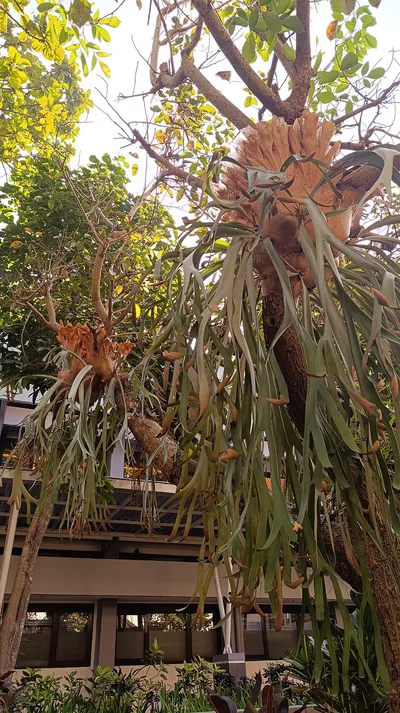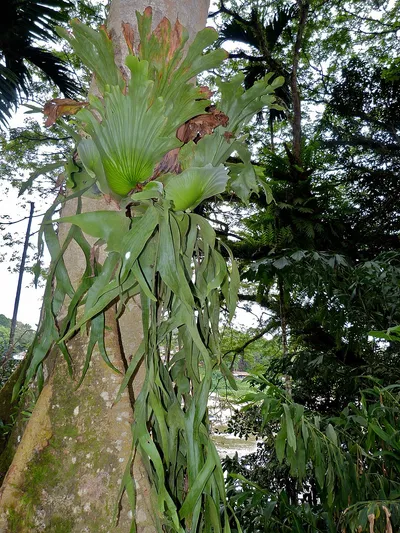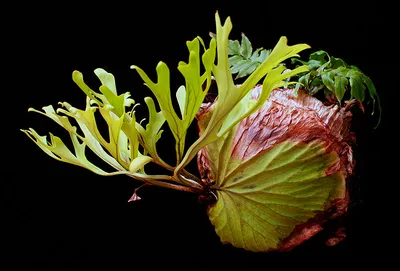
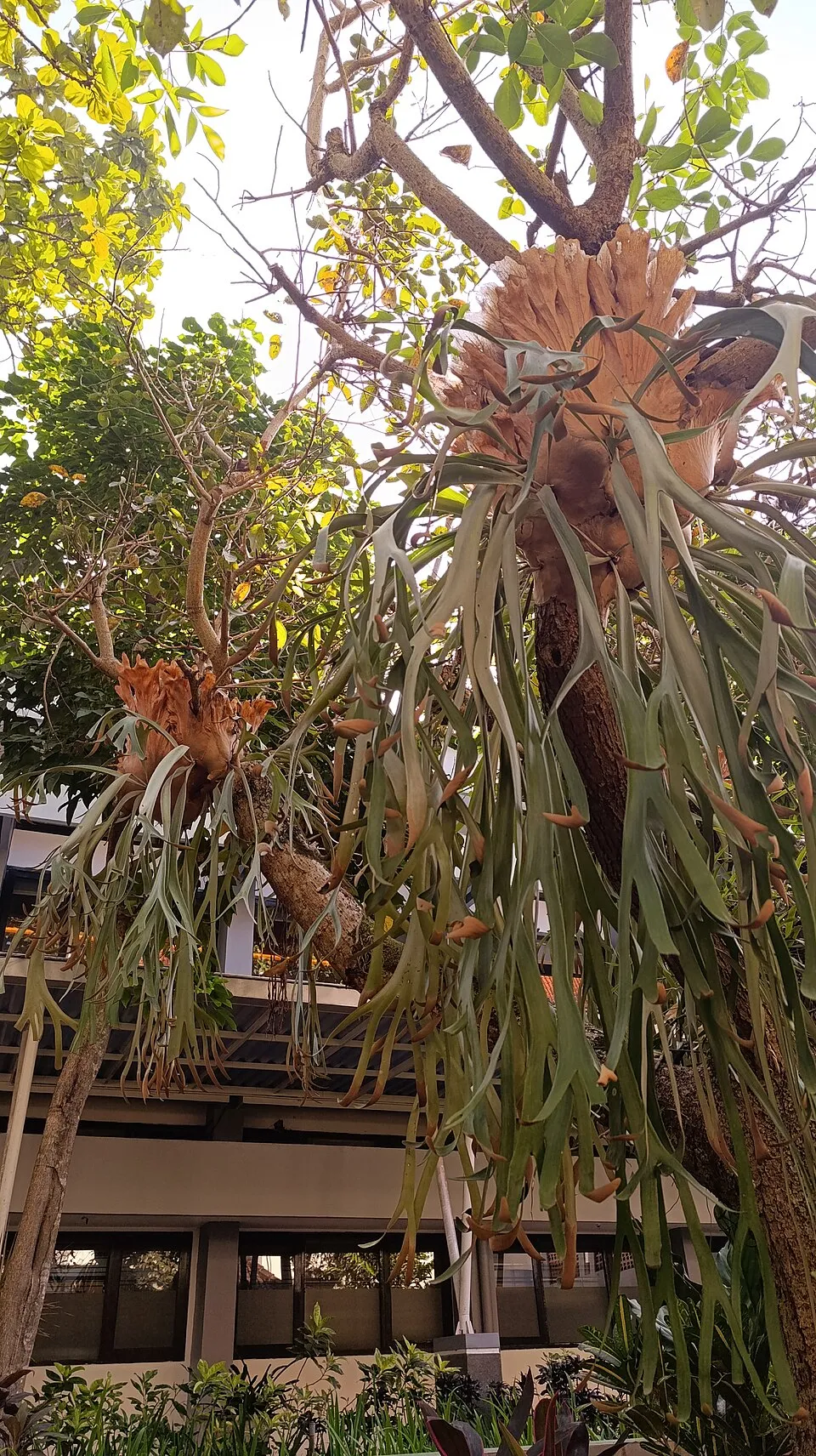
Platycerium willinckii — commonly called the Java Staghorn — is the species that turns casual houseplant owners into serious collectors. Its finely forked fronds, dense silver trichomes, and seemingly endless variety of cultivars make it one of the most visually rewarding staghorn ferns to grow. In a year when rare houseplants are being called “the new collectible”, P. willinckii sits at the center of the movement.
This guide covers everything you need to grow a healthy willinckii — from basic care to understanding what makes each cultivar unique.
Why Collectors Love Willinckii
Three things set P. willinckii apart from other staghorn species:
- Extreme variability. No two willinckii look the same. Locality forms from Bali, Bogor, and East Java each have distinct morphologies — and tissue-cultured cultivars have pushed that diversity even further
- Silver trichomes. Dense stellate trichomes give the fertile fronds a frosted, almost metallic sheen. The effect intensifies with bright light
- Elegant draping form. Mature specimens produce long, cascading fertile fronds that create a dramatic living sculpture — perfect for the “personal plant museum” trend sweeping the houseplant world in 2026
It’s also a multi-bud species, meaning it produces pups freely — making propagation by division straightforward.
Popular Cultivars at a Glance
The cultivar market for P. willinckii is booming. Here’s a quick reference to the most commonly traded forms:
| Cultivar | Key Feature | Size | Rarity |
|---|---|---|---|
| Java (wild type) | Classic fine forking, heavy trichomes | Medium-large | Common |
| Jade Girl | Compact dwarf form, jade-green color | Small (dwarf) | Moderate |
| Smurf | Extremely dense trichomes, silvery-white | Medium | Moderate-rare |
| Spur | Long, dramatically drooping fronds | Large | Moderate |
| Bogie | Wide, flat fertile fronds | Medium | Moderate |
| Roll | Fronds curl inward at edges | Medium | Rare |
| Nano | Ultra-compact miniature form | Very small | Rare |
[!IMPORTANT] All cultivars share the same fundamental care needs. The differences are cosmetic — adjust only for size (smaller cultivars dry faster and need more frequent watering).
Light
P. willinckii comes from the mountainous rainforests of Java and Bali, where it grows in the filtered canopy light of tall trees. Replicate this indoors:
- Ideal: Bright, indirect light — east or north-facing windows are perfect
- Acceptable: A few hours of gentle morning sun (before 10 AM)
- Avoid: Direct afternoon sun, which bleaches the trichomes and scorches frond tips
- Grow lights: Target 200–400 PPFD for 10–12 hours daily. See our complete lighting guide for setup details
The silver trichomes serve as a natural sunscreen — they reflect excess light. If your plant looks “extra fuzzy,” that’s a healthy response to good light levels.
Water
Willinckii follows the standard epiphyte watering pattern, but leans slightly drier than P. bifurcatum:
- Lift the mount. If it feels light, it’s time to water
- Soak the root ball in room-temperature water for 15–20 minutes
- Drain completely — never leave it sitting in water
- Wait until the moss feels nearly dry before the next soak
In practice, this means watering every 7–10 days in summer and every 14–21 days in winter. For a deeper dive on reading your fern’s thirst signals, see Watering Wisdom.
Dwarf cultivars (Jade Girl, Nano) have smaller root masses that dry faster. Check them every 4–5 days in warm weather.
Humidity and Temperature
This is where willinckii differs most from beginner-friendly species like P. bifurcatum:
| Factor | P. willinckii | P. bifurcatum |
|---|---|---|
| Humidity | 50–70% (ideally 60%+) | 40–60% |
| Temperature | 18–26°C (64–79°F) | 10–30°C (50–86°F) |
| Cold tolerance | Minimum ~12°C (54°F) | Down to –1°C (30°F) |
- Humidity below 50% causes frond tips to brown and curl. A room humidifier or grouping plants together helps. See indoor care tips for more
- Temperature spikes above 30°C stress the plant — its mountainous origin means it prefers moderate warmth, not tropical heat
- Cold drafts from windows or AC vents are a common killer in winter. See our winter care guide for protection strategies
Mounting and Display
Willinckii’s draping growth habit looks best mounted vertically:
- Board mount — cedar or cork bark, with a bed of sphagnum moss. The classic display method. See mounting basics for step-by-step instructions
- Hanging basket — wire baskets with sphagnum liner work well for larger specimens. Good airflow on all sides
- Tree mount — outdoors in USDA zones 10–12 only. Choose a shaded branch with rough bark
Avoid pots for mature willinckii. Their long fertile fronds need to drape freely, and the restricted airflow in pots increases rot risk. For creative mounting ideas, check out our display ideas guide.
Fertilizer
Feed monthly during the growing season (spring through early fall) with a balanced liquid fertilizer (20-20-20) diluted to half strength. Apply by soaking the mount in the fertilizer solution.
For homemade alternatives and a detailed feeding schedule, see our fertilizer guide.
Key rule: Stop fertilizing in winter. Willinckii’s growth slows significantly below 20°C, and unused fertilizer salts can damage roots.
Common Problems
| Symptom | Likely Cause | Fix |
|---|---|---|
| Brown, crispy frond tips | Low humidity (below 50%) | Increase humidity, mist lightly |
| Trichomes rubbing off | Handling, water spray pressure | Avoid touching fronds, use gentle soak method |
| Pale or yellowing fronds | Too much direct sun | Move to filtered light |
| Mushy crown base | Overwatering / poor drainage | Reduce watering, improve airflow. See dying fern rescue |
| Slow growth | Not enough light or nutrients | Check PPFD levels, resume feeding |
Willinckii in Hybridization
P. willinckii is one of the most important parent species in modern Platycerium hybridization. It contributes fine forking, trichome density, and elegant draping form to its offspring:
- DW line (P. diversifolium × P. willinckii) — produces Pegasus, White Hawk, and OMO
- LW line (P. lewis × P. willinckii) — yields the Dwarf Tatsuta direction: Snow Moon, Selene, Blue Sapphire
If you’re considering willinckii as a parent plant, understanding its anatomy and growth patterns will help you select the best breeding stock.
Frequently Asked Questions
How fast does Platycerium willinckii grow?
Under good conditions (60%+ humidity, bright indirect light, monthly feeding), expect 2–4 new fertile fronds per growing season. Dwarf cultivars like Jade Girl grow more slowly, producing 1–2 fronds per year. Shield fronds typically replace once annually.
Can I grow Platycerium willinckii outdoors?
Only in warm, humid climates — USDA zones 10–12. It has no meaningful cold tolerance below 12°C (54°F). In subtropical areas, it does well mounted on trees in deep shade. Everywhere else, grow it indoors or in a greenhouse.
Are tissue-cultured (TC) willinckii cultivars stable?
Most TC cultivars like Spur TC and Jade Girl TC are reasonably stable, meaning the offspring maintain the parent’s characteristics. However, some variation is normal — especially in trichome density and frond width. Buy from reputable tissue culture labs that select for consistent traits.