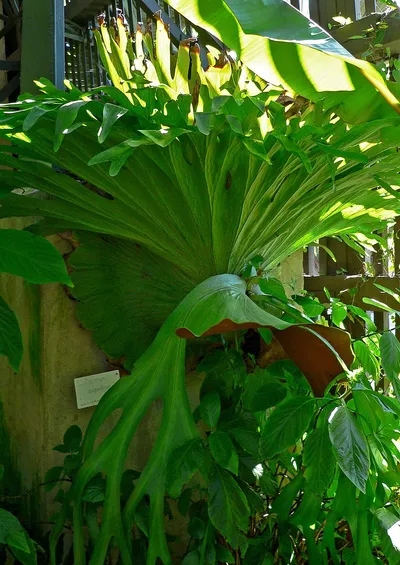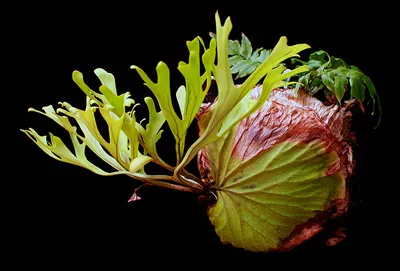
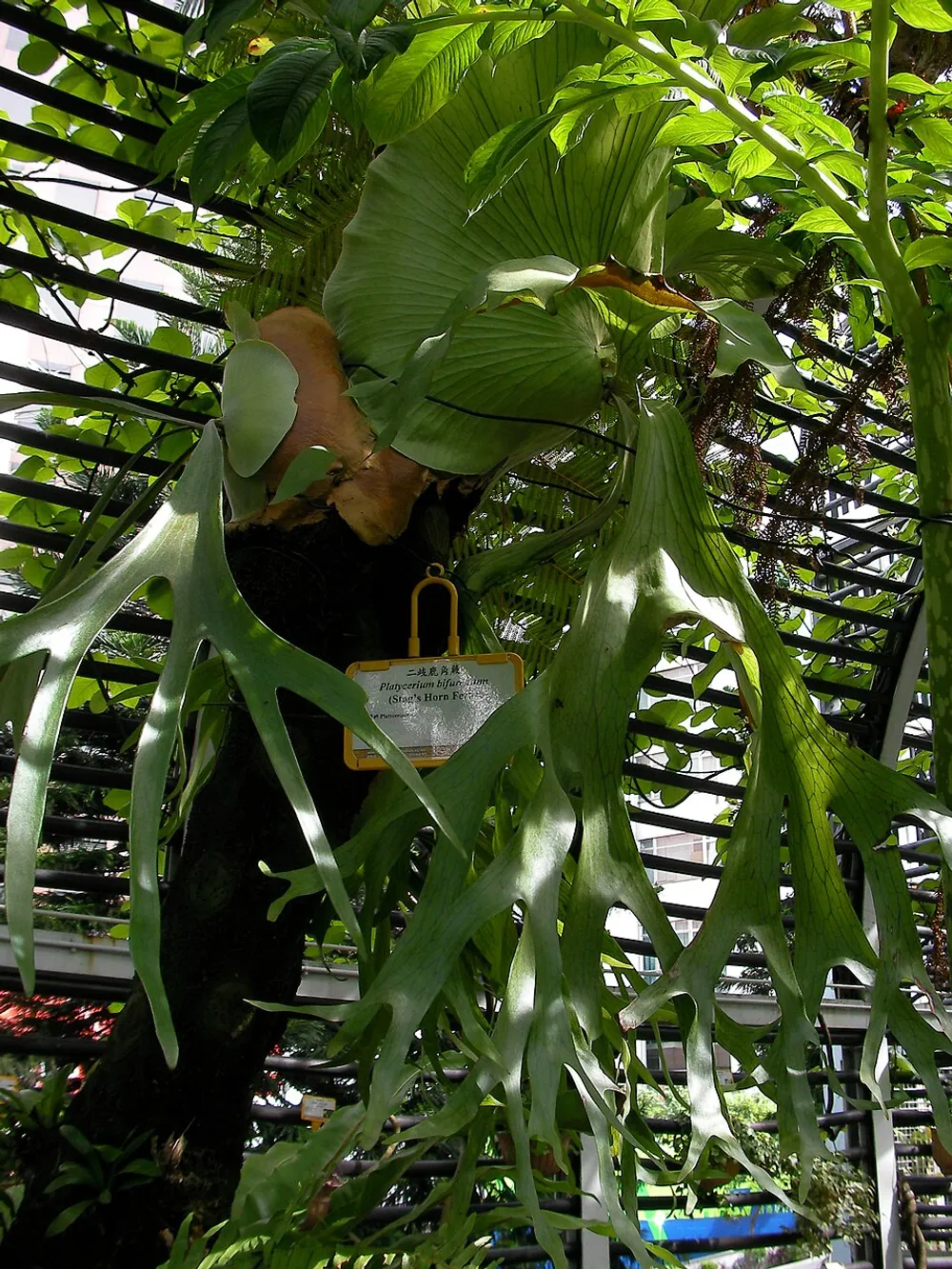
Staghorn ferns look like they belong in a greenhouse, but Platycerium is genuinely one of the best plants you can grow indoors — provided you get two things right. Indoor staghorn fern care comes down to light and watering rhythm; almost every indoor failure traces back to one of those two. This guide covers exactly where to put your fern, how often to water it inside a heated or air-conditioned home, which rooms work best, and how to diagnose the problems that only show up indoors.
It’s also the right moment to sort this out. Mounted staghorns have become a signature piece of the biophilic, wall-plant look driving 2026’s houseplant trends — and late summer is when two indoor problems peak at once: air-conditioning drying mounts far faster than owners expect, and outdoor ferns that need to come back inside before autumn nights turn cold.
Can Staghorn Ferns Live Indoors?
Yes — and unlike many tropical epiphytes, they don’t merely survive indoors, they thrive there for decades. The trade-off is speed. An indoor fern grows more slowly and stays more compact than the same plant hung under a shade tree, because indoor light is a fraction of outdoor light even next to a bright window.
| Indoors | Outdoors | |
|---|---|---|
| Growth rate | Slower, more compact | Faster, larger fronds |
| Watering frequency | Every 7–14 days | Every 3–7 days in heat |
| Humidity | Usually needs help | Usually sufficient |
| Pest pressure | Spider mites, scale | Broader, but predators help |
| Risk | Too little light | Sunburn, cold snaps |
If you’re weighing the two, our outdoor staghorn fern care guide covers the seasonal side. Many growers do both: outside for the warm months, indoors from autumn to spring.
Indoor Care at a Glance
| Factor | What indoors means in practice |
|---|---|
| Light | Bright indirect — east window, or 3–5 ft from a south/west window |
| Water | Full soak every 7–14 days; judge by weight, not calendar |
| Humidity | 50%+ preferred; bathrooms and plant groupings help |
| Temperature | 60–80°F (15–27°C); keep away from AC and heating vents |
| Fertilizer | Monthly, half strength, spring through early autumn |
| Airflow | Gentle movement is good; direct blasts are not |
Light: The Number One Indoor Failure
Indoors, the mistake is almost never too much light — it’s too little. A staghorn fern in a dim corner won’t die dramatically; it will simply stop producing new fronds, and the ones it has will slowly dull and thin out. That slow fade is why the problem often goes unnoticed for months.
Best indoor positions, in order:
- East-facing window — bright morning light, no scorching afternoon sun. The ideal.
- A few feet back from a south or west window — plenty of light, filtered by distance or a sheer curtain.
- Bright bathroom with a window — good light plus free humidity from showers.
- North-facing window — workable for tolerant species like P. bifurcatum, marginal for others.
If your brightest window still isn’t enough — common in apartments with deep overhangs or north-only exposure — a modest LED grow light on a 10–12 hour timer closes the gap. Our light requirements guide has the full breakdown by species.
[!IMPORTANT] Glass filters UV but concentrates heat. A fern pressed against a sunny south-facing pane can still scorch, even though the same light outdoors would be fine. Keep a few inches of air between fronds and glass.
Watering a Staghorn Fern Indoors
Indoor watering is where good intentions do the most damage. The instinct is a little water often; the correct method is a thorough soak, then genuine drying time.
The soak method: Take the mount or pot to a sink or tub. Submerge the root ball and moss for 10–20 minutes until saturated, then let it drain completely before rehanging. For large wall-mounted pieces, water slowly with a watering can until it runs freely, or take it down every few weeks for a proper dunk.
| Indoor conditions | Typical soak interval |
|---|---|
| Summer with air conditioning running | Every 7–10 days |
| Summer, no AC, humid room | Every 10–14 days |
| Winter with central heating | Every 7–12 days |
| Cool, bright, unheated room | Every 14–21 days |
Treat those as starting points and confirm with weight. A soaked mount is noticeably heavy; a thirsty one feels light and the moss is dry an inch in. If you’re unsure which direction you’re erring, the signs of overwatering guide shows what excess looks like before it becomes root rot — indoors, where evaporation is slow, overwatering is the more dangerous mistake.
Don’t be alarmed when the shield (basal) frond browns and hardens against the mount. That’s normal maturation, not decline — it’s the fern building its own root-protecting reservoir.
Humidity, Air Conditioning, and Heating
Average indoor humidity sits around 30–40%, and both AC in summer and central heating in winter push it lower. Staghorn ferns are happiest above 50%. The gap between those numbers explains most crispy-edged indoor ferns.
What actually works: a humidifier nearby, grouping plants together so they share transpired moisture, a pebble tray under a potted specimen, or simply relocating the fern to a bathroom. What doesn’t work is daily misting — the effect lasts minutes, and water sitting on fronds overnight invites fungal spotting. The full argument is in our humidity guide.
One placement rule matters more than any of this: never hang a fern in the direct path of an AC vent or heating register. A constant dry draft will crisp fronds faster than low ambient humidity ever will.
Common Indoor Problems
| Symptom | Likely indoor cause | Fix |
|---|---|---|
| No new fronds for months | Not enough light | Move closer to a window or add a grow light |
| Brown, crispy frond tips | Low humidity or underwatering | Raise humidity; check soak interval |
| Fronds limp, mount stays wet | Overwatering, poor drainage/airflow | Let it dry fully; improve air circulation |
| Fine webbing, stippled fronds | Spider mites (thrive in dry indoor air) | Treat promptly — see below |
| Brown bumps along frond veins | Scale insects | Manual removal plus horticultural oil |
| Pale, washed-out fronds | Too much direct sun through glass | Pull back from the window |
Indoor air is dry and predator-free, which makes it perfect for spider mites and scale. Inspect the undersides of fronds monthly — indoor infestations build quietly and are far easier to stop early. If tips are browning, our brown tips guide walks through the diagnosis.
Bringing an Outdoor Staghorn Fern Indoors
If your fern summered outside, move it back in before nighttime temperatures drop below 50°F (10°C) — for most temperate regions, that means early autumn rather than the first cold snap. A few days of gradual transition helps it adjust to the lower light.
Inspect thoroughly before it crosses the threshold: check frond undersides and the crevices behind the shield frond for hitchhiking pests, and hose the plant down. A quarantine of two weeks away from your other houseplants is cheap insurance. Expect some frond drop over the first month — that’s the fern adjusting to a dimmer environment, not dying.
Feeding and Long-Term Indoor Growth
Indoor ferns grow more slowly, so they need less food. A balanced liquid fertilizer at half strength, once a month from spring through early autumn, is plenty; skip it entirely in winter when growth stalls. The fertilizer guide covers the classic banana-peel method and what actually helps.
Mounted specimens outgrow their boards every 3–5 years. When roots visibly wrap the edges or the moss no longer holds water, remount onto a larger board — the mounting guide covers the process, and mounted staghorn fern care explains the ongoing routine. For species selection, hardy P. bifurcatum and P. veitchii are the most forgiving indoors; the thin-fronded tropicals like P. ridleyi want a humidity setup you’ve already dialed in.
Grown well, an indoor staghorn fern is a decades-long plant. The Missouri Botanical Garden notes that Platycerium bifurcatum is reliably grown as a houseplant in temperate climates — and mature indoor specimens routinely outlive the furniture they hang above.