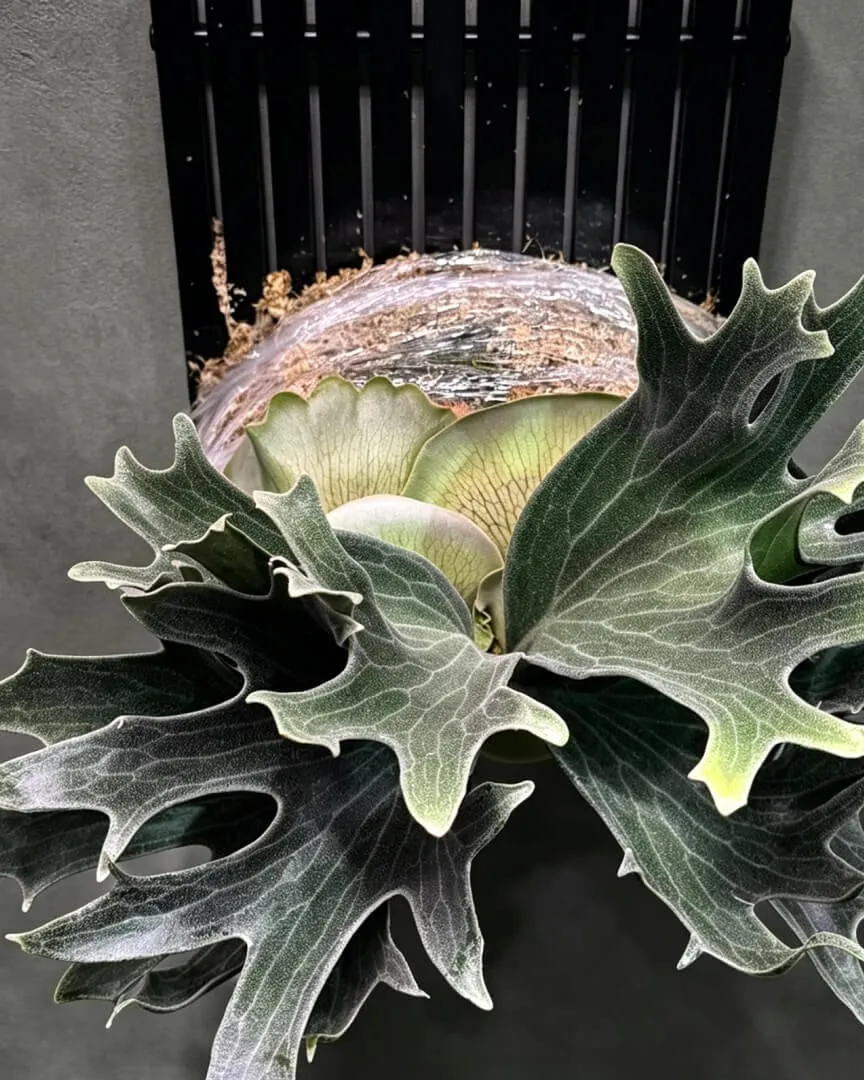
If your staghorn fern is yellowing, developing dark spots, or going soft at the base, overwatering is the most common cause — and in mid-summer it is the number one killer of otherwise healthy plants. The signs of an overwatered staghorn fern are easy to miss because they look almost identical to underwatering at first glance, which leads many growers to add water and accelerate the decline. This guide walks through the six warning signs, a side-by-side test to tell overwatering from thirst, and exactly how to reverse the damage before it becomes fatal root rot.
Why Overwatering Peaks in Summer
It sounds backwards — summer is hot, so surely the plant needs more water? The problem is that warmth plus the instinct to water often means the mount never fully dries. Platycerium are epiphytes: in the wild they cling to tree bark, and their roots are adapted to grab a quick drink and then breathe. When a mount or pot stays saturated, the roots suffocate from lack of oxygen and begin to rot. Warm, humid summer nights are the perfect incubator for the fungal and bacterial rot that follows. The Missouri Botanical Garden’s guidance for Platycerium bifurcatum is blunt about it: let the medium approach dryness between waterings, because these ferns tolerate a missed watering far better than a soggy one (Missouri Botanical Garden Plant Finder).
The 6 Signs of an Overwatered Staghorn Fern
Watch for these — the more that appear together, the more urgent the problem:
| # | Sign | What it looks like |
|---|---|---|
| 1 | Yellowing antler fronds | The upper “stag” fronds pale to yellow, often uniformly rather than at the tips |
| 2 | Dark, soft browning from the base | Brown or black areas that start where the frond meets the shield and creep outward |
| 3 | Mushy or spongy shield frond | The round basal frond feels soft and wet instead of firm and papery |
| 4 | A sour or musty smell | A swampy odour at the base — one of the most reliable overwatering tells |
| 5 | A mount that stays soggy | The moss or medium is still wet 3–5 days after watering |
| 6 | Black spots with a yellow halo | Fungal leaf spots, a sign moisture is sitting on the fronds too long |
A little browning on an old shield frond is normal and not a sign of overwatering — shield fronds are meant to brown and harden with age. See shield frond turning brown to tell normal aging from trouble.
Overwatering vs. Underwatering: The Key Difference
This is where most staghorns are lost. Both problems cause browning and drooping, but the character and location of the damage differ. Use this table before you reach for the watering can:
| Clue | Overwatered | Underwatered |
|---|---|---|
| Frond texture | Soft, limp, mushy | Crispy, dry, brittle |
| Browning starts | At the base, spreading up | At the tips and edges |
| Browning colour | Dark brown to black | Pale, tan, papery |
| Smell | Sour or musty | None |
| Mount weight | Heavy, waterlogged | Bone-dry, feather-light |
| Overall look | Yellowing, blackening | Wilting, shrivelled |
If your fern turns out to be underwatered instead, the fix is different — see how often to water a staghorn fern for a summer schedule, and staghorn fern humidity if crispy edges are your issue.
How to Reverse an Overwatered Staghorn Fern
Act as soon as you spot the signs — the window between “too wet” and “root rot” is short in summer.
- Stop watering immediately. Do not water again until the mount is fully dry all the way through. This may take a week or more.
- Move it to bright, airy conditions. Bright indirect light with good airflow (a fan or an open window) dries the base and slows fungal growth. Avoid direct midday sun, which adds heat stress to an already weakened plant.
- Remove damaged tissue. Trim mushy, blackened frond sections with a sterile blade. Clean cuts heal; leaving rot invites it to spread.
- Inspect the roots and base. If the shield frond is soft and the base smells sour, you are already into root rot. Follow the full unmount-and-rescue steps in the root rot recovery guide.
- Remount if the medium is broken down. Soggy, compacted sphagnum holds water against the roots. Fresh, airy moss restores drainage — the same principle covered in mounted staghorn fern care.
How to Prevent It From Happening Again
- Water by weight and dryness, not by calendar. Lift the mount; water only when it is light and the moss is dry to a finger-poke. Even in summer, most mounted ferns need water only once or twice a week.
- Water in the morning so fronds and mount can dry before the humid night.
- Improve airflow rather than piling on humidity. Stagnant, saturated air is what fungus loves.
- Never let a mount sit in a saucer of water. Soak, drain fully, and rehang.
- Match watering to light and warmth. A fern in lower light (see light requirements) uses less water and dries slower, so it needs less frequent watering, not more.
Overwatering is the most common way growers accidentally kill an otherwise tough, forgiving plant. But because Platycerium are epiphytes that bounce back from root damage far better than most houseplants, a fern caught early almost always recovers. When in doubt, wait — a staghorn fern would rather be a little too dry than a little too wet.
Not sure which species you’re growing, or how thirsty it is? Browse the species comparison guide — different Platyceriums have different water appetites.