If you are wondering how much light your staghorn fern needs, the short answer is: bright, indirect light — plenty of it, but almost never harsh direct sun. Getting the light right is the single biggest factor in whether a Platycerium grows lush, sturdy fronds or sits there pale and stalled. This guide covers exactly how much light a staghorn fern needs, how much direct sun is safe (and when it scorches), the best windows and placement, and how to diagnose a fern that’s getting too much or too little.
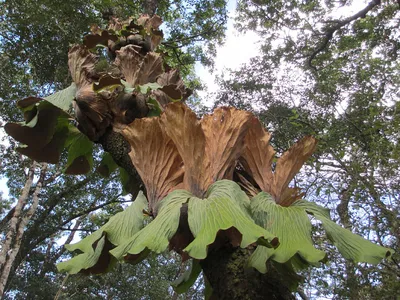
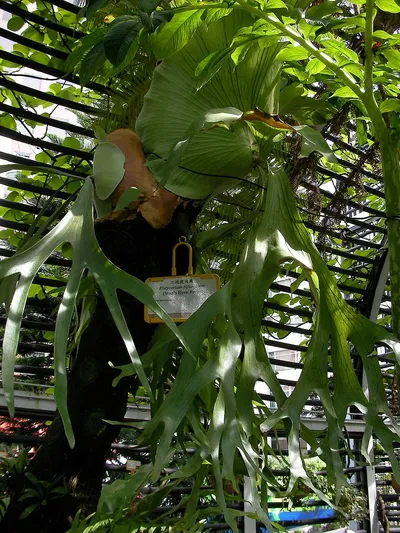
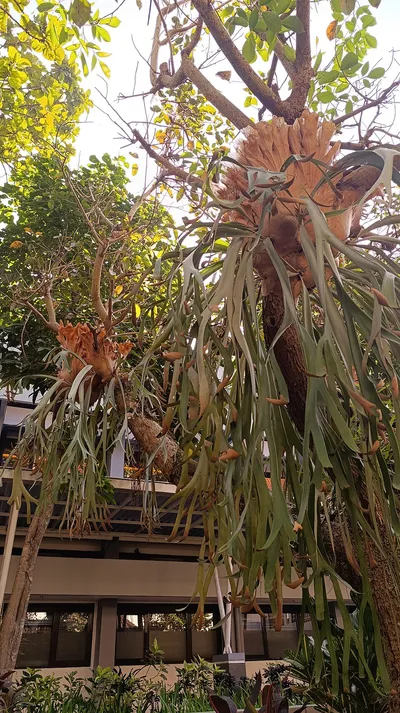
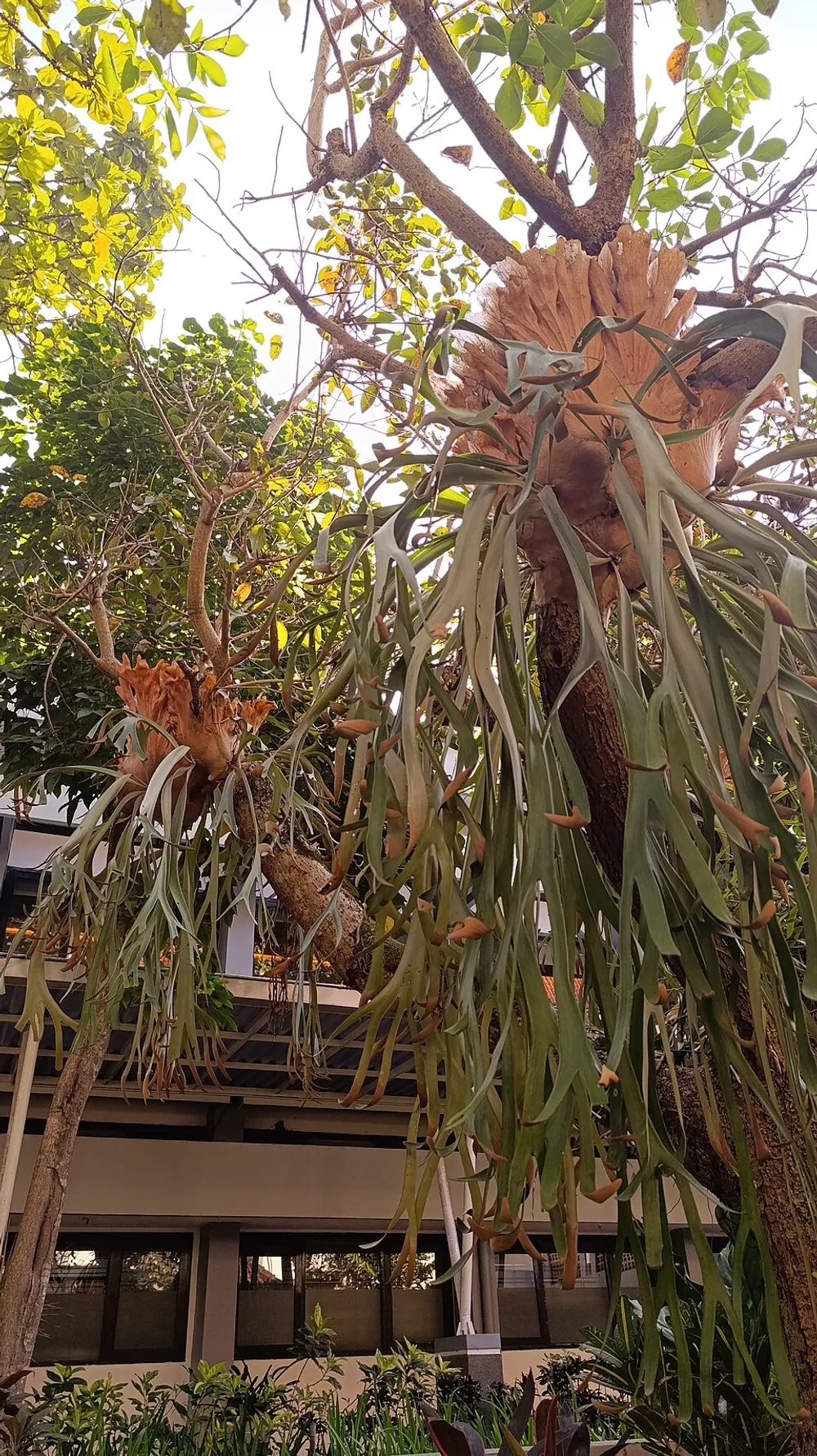
Staghorn ferns are epiphytes — in the wild they grow mounted on tree trunks and branches, soaking up bright light filtered through a leafy canopy. Recreating that “dappled but bright” condition indoors is the whole game.
How Much Light Does a Staghorn Fern Need?
In horticultural terms, staghorn ferns are a high-light plant that wants that light delivered indirectly. University extension guidance places “high light” plants at a minimum of about 200 foot-candles, with 500–1,000 foot-candles preferred. Staghorn ferns are happiest around 300+ foot-candles for 4–7 hours a day — bright enough to read comfortably by daylight without a lamp, but with no scorching beam of sun landing on the fronds.
If “foot-candles” feels abstract, use this practical translation:
| Light source | Approx. foot-candles | Good for staghorn ferns? |
|---|---|---|
| Deep room corner, north room | 25–100 | Too dark — growth stalls |
| A few feet from a bright window | 200–500 | ✅ Ideal bright indirect light |
| Right at an east window (morning sun) | 400–800 | ✅ Excellent |
| Directly in a south/west window, summer | 1,000+ direct | ⚠️ Scorch risk — diffuse it |
| Under a 20–40W LED grow light, 12 in. away | 300–600 | ✅ Great supplement |
The sweet spot is the middle of that table: bright enough to cast a soft, fuzzy shadow, but not a sharp one. A sharp, crisp shadow means the light is direct and potentially too intense.
Bright Indirect Light, Explained
“Bright indirect light” gets thrown around so often it’s lost its meaning. Practically, it means light that has bounced off something — a wall, a sheer curtain, the sky itself — before reaching the plant, or direct light that’s been softened by a filter. A staghorn sitting a few feet back from a sunny window is in bright indirect light; the same plant pressed against the glass at noon is in direct light.
The easy test: hold your hand between the window and the fern at midday. A soft-edged shadow = indirect, ideal. A hard, sharp-edged shadow = direct sun hitting the plant. For more on reading light in your home, the University of Illinois Extension’s houseplant lighting guide is an excellent, no-fluff reference.
Can Staghorn Ferns Take Direct Sun?
This is where most growers go wrong, especially heading into summer. The honest answer is: a little gentle direct sun helps; harsh midday and afternoon sun burns.
- Good direct sun: Early-morning light from an east window is cool and soft. An hour or two of it builds denser, more upright fronds and richer color. Many growers report their best plants get gentle morning sun.
- Bad direct sun: Unfiltered south or west sun, particularly the intense beam from late morning through evening in summer, will bleach fronds to a pale yellow-white and scorch crispy brown patches on the sun-facing side within a single afternoon.
[!IMPORTANT] Summer light is far stronger than the spring light your fern acclimated to. A south window that was perfect in March can scorch fronds in June. If you see bleached, papery patches on the side facing the glass, that’s sun scorch — move the plant back or add a sheer curtain. Our staghorn fern turning yellow guide walks through diagnosing scorch versus other causes.
Which Species Tolerate More Sun?
Not all Platycerium want the same light. As a rule, silvery, fuzzy-frond species handle brighter light — the dense hairs (trichomes) act like built-in sunscreen — while thin, glossy-frond species want more shade.
| Light preference | Species | Notes |
|---|---|---|
| Tolerates the most sun | P. veitchii, P. willinckii | Silver, hairy fronds; can take some direct morning/filtered sun |
| Standard bright indirect | P. bifurcatum | The classic beginner staghorn; very forgiving |
| Wants more shade | P. ridleyi | Thin, smooth fronds scorch easily; keep in filtered light |
If you grow the sun-loving silvers, our Platycerium veitchii care guide covers how to acclimate them to brighter conditions safely.
Best Window & Placement
Window direction (in the Northern Hemisphere) is the simplest lever you have:
| Window direction | Verdict for staghorn ferns |
|---|---|
| East | ✅ Best — gentle morning sun, bright the rest of the day |
| North | ✅ Good — consistent, soft indirect light all day |
| South | ⚠️ Bright but strong — set the fern a few feet back or behind a sheer curtain |
| West | ⚠️ Harsh afternoon sun — diffuse it or pull the plant back |
A spot under a skylight with no direct beam is ideal, and mounted ferns hung on a bright wall near a window do beautifully. For mounted plants specifically, light and watering work together — see our mounted staghorn fern care guide.
Too Much vs Too Little Light: Read the Fronds
Your fern tells you when the light is wrong. Match the symptom:
| What you see | Likely cause | Fix |
|---|---|---|
| Bleached, papery, or crispy patches on one side | Too much direct sun (scorch) | Move back / add sheer curtain |
| Fronds soft, floppy, pale green, few new ones | Too little light | Move closer to a window or add a grow light |
| Leggy, stretched growth reaching toward the window | Too little light (etiolation) | Brighter spot |
| Slow growth + mount staying wet for days | Too little light slowing evaporation | More light + better airflow |
| Sturdy, upright, richly green new fronds | Light is just right ✅ | Keep doing what you’re doing |
Note that low light and overwatering often appear together: a dim spot keeps the mount damp longer, which is a fast track to root rot. Brighter light isn’t just about growth — it keeps the whole plant drier and healthier.
Low Light and Grow Lights
If your home simply doesn’t have a bright window, a staghorn fern will survive in low light but limp along — small fronds, no vigor, higher rot risk. The fix is cheap and effective: a basic full-spectrum LED grow light.
- Aim for 300–600 foot-candles at the plant — a 20–40W LED panel positioned 8–14 inches away usually delivers this.
- Run it 10–12 hours a day on a timer to mimic a natural photoperiod.
- LEDs run cool, so they won’t scorch or dry the mount the way an old incandescent bulb would.
Grow lights are also the answer for winter, when even a south window loses much of its punch in northern latitudes. The UF/IFAS Gardening Solutions guide to light for houseplants is a solid primer on choosing and positioning supplemental lighting.
Summer Light: Acclimate Before You Move It Outdoors
If you’re moving a staghorn outside for the warm months — a great idea, covered in our outdoor care guide — acclimate it gradually. A fern that lived indoors in bright indirect light will scorch badly if dropped straight into direct sun. Start it in full shade outdoors for a week, then move to dappled or morning-only sun over two to three weeks. The same logic applies in reverse each autumn when you bring it back in.
The Bottom Line
Give your staghorn fern bright, indirect light — 4 to 7 hours, 300+ foot-candles — from an east or filtered south/north window, protect it from harsh summer afternoon sun, and supplement with a grow light if your home runs dark. Nail the light, and watering, feeding, and overall vigor all fall into place. Watch the fronds: sturdy and richly green means you’ve found the sweet spot.