If your staghorn fern has gone limp, smells sour at the base, or its shield frond is turning soft and black, root rot is the most likely culprit — and early summer is when it strikes hardest. Warm nights, high humidity, and the natural urge to water more often combine into the perfect rot-incubating conditions. The good news: because Platycerium are epiphytes with tiny root systems, they recover from root rot far better than most houseplants, if you act quickly.
This guide covers the whole root picture: what healthy staghorn fern roots actually look like (so you don’t panic over a normal, sparse root mass), how to recognise true rot, a step-by-step summer rescue, and how to keep it from coming back.
What Healthy Staghorn Fern Roots Look Like
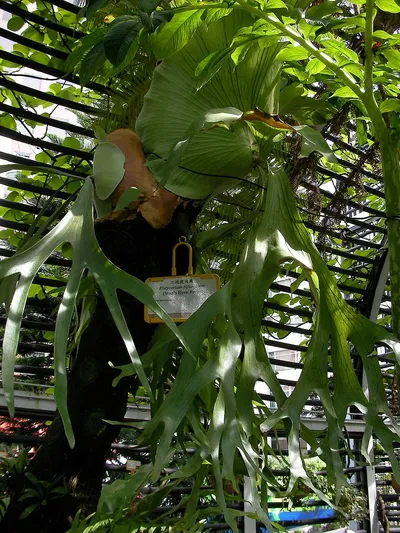
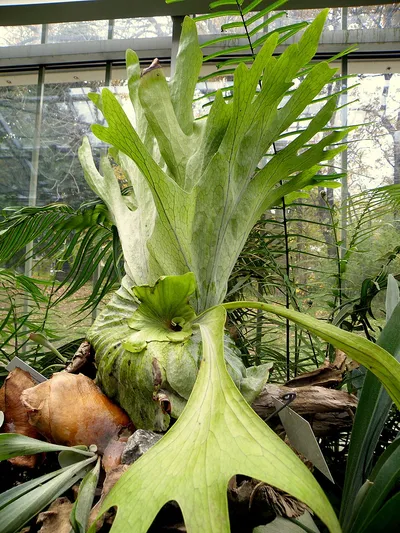
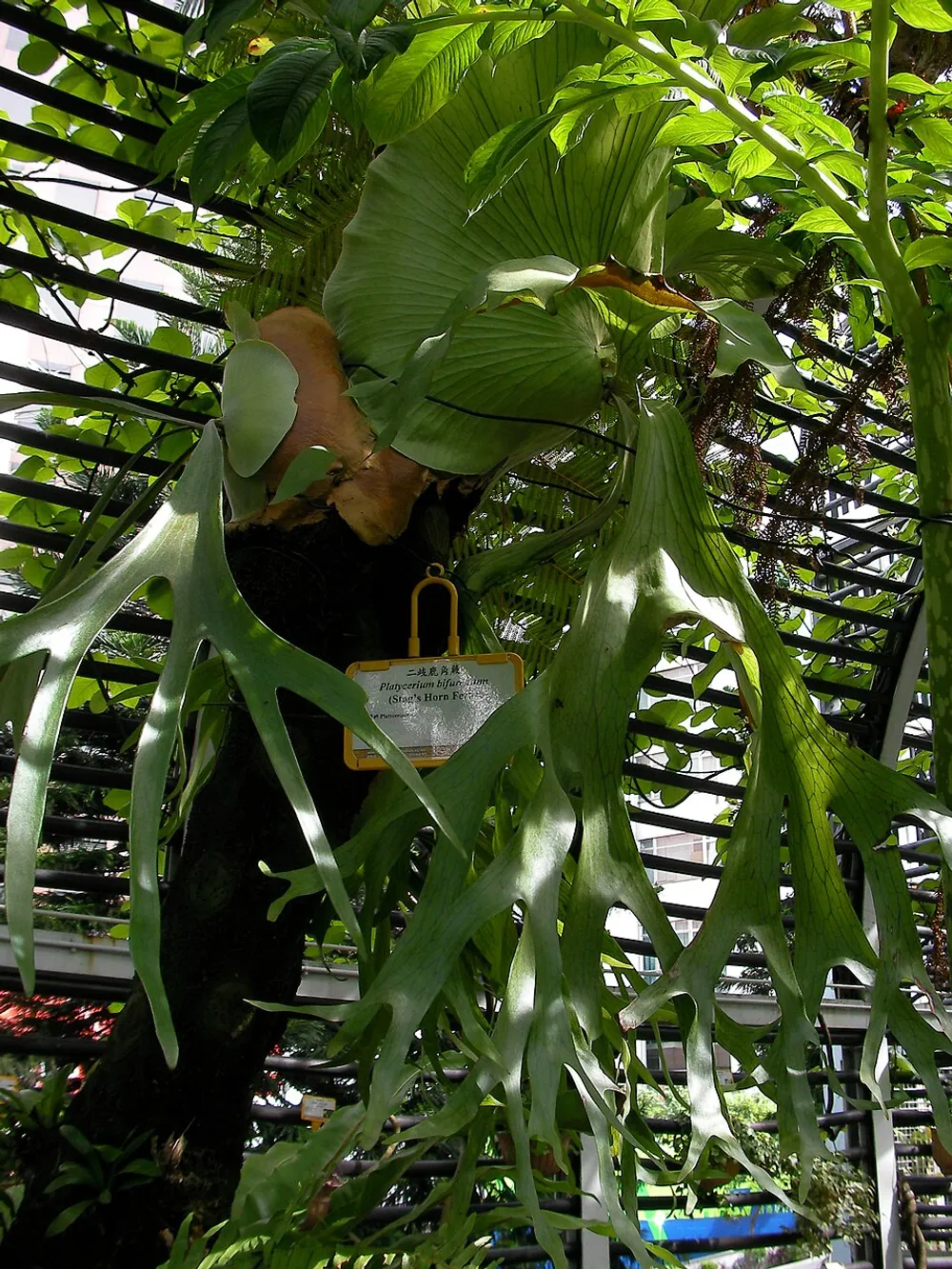
Most “my staghorn has no roots” panic comes from a misunderstanding of how these plants grow. In the wild, Platycerium cling to tree trunks and branches — they are not soil plants. They absorb the bulk of their water and nutrients through their shield fronds (the round, basal fronds that brown and harden over time), not through an extensive root ball.
| Trait | Healthy roots | Rotting roots |
|---|---|---|
| Colour | Pale tan to light brown | Dark brown to black |
| Texture | Fine, wiry, firm | Mushy, slimy, falls apart |
| Smell | Earthy or none | Sour, swampy, foul |
| Volume | Sparse — fist-sized is normal | Often slimy and matted |
| Shield base | Firm, dry-to-springy | Soft, spongy, blackening |
So a staghorn with only a small clump of fine roots tucked behind the shield is completely normal. Do not repot or remount it just because the root mass looks small — that is the plant working exactly as evolution intended. The trouble only begins when those few roots, plus the rhizome they grow from, start to suffocate in trapped moisture.
Why Staghorn Ferns Get Root Rot
Root rot is not really a “root” disease — it is an oxygen problem. When the mounting media or potting mix stays saturated, water fills the air pockets the roots need to breathe, and opportunistic fungi and bacteria move in on the drowning tissue. Summer makes this worse in three specific ways:
- Over-watering on instinct. Heat makes the antler fronds look thirsty, so growers soak more often. But warm, humid air also slows evaporation from a packed root ball — the mount stays wet for days.
- Trapped moisture against a wall or board. A mount hung flat against a non-breathing surface dries only from the front. The back stays damp around the clock.
- No airflow. Still, muggy indoor air in summer lets surface moisture linger on the shield, inviting bacterial soft rot where the shield meets the rhizome.
The cruel irony is that staghorns are drought-tolerant survivors — far more die from kindness (over-watering) than from neglect. For the underlying watering rhythm that prevents all of this, see our guide on how often to water a staghorn fern.
How to Tell Root Rot From Normal Shield Browning
Beginners often mistake healthy shield aging for rot and panic. Here is the difference:
| Sign | Normal aging | Root rot |
|---|---|---|
| Shield turning brown | Yes — old shields naturally brown and harden | — |
| Brown shield stays firm and papery | ✅ Normal | — |
| Brown/black shield turns soft and wet | — | ⚠️ Rot |
| Antler fronds firm and upright | ✅ Healthy | — |
| Antler fronds limp, yellow, wilting despite moisture | — | ⚠️ Rot |
| Smell at the base | None | Sour/swampy |
[!IMPORTANT] The single most reliable test: gently press the base of the shield where it meets the mount. A healthy rhizome is firm. If it feels soft, spongy, or squelches, you have active rot and must intervene now.
Step-by-Step: Rescuing a Staghorn Fern With Root Rot
Move fast — rot spreads from the roots up into the rhizome and growing point, which is the only part the plant cannot regrow from.
1. Unmount the fern
Cut the wire or fishing line and carefully lift the plant off its board or out of its basket. Work over newspaper; the rotted media may be slimy.
2. Strip away all wet, rotted media
Remove every bit of mushy sphagnum, soggy bark, and slimy root. Old media harbours the pathogens that caused the problem — none of it goes back on.
3. Trim to firm tissue
With a blade sterilised in 70% isopropyl alcohol, cut away every black, soft root and any blackened patch of rhizome until you reach pale, firm tissue. Sterilise the blade again after each cut so you don’t spread the infection. Don’t be timid — staghorns regrow roots from the rhizome, so removing most of the root mass is survivable.
4. Dry and dust
Let the trimmed base air-dry in a shaded, airy spot for a few hours until the cut surfaces callus over. Dusting the wounds with cinnamon (a mild natural antifungal) or a horticultural fungicide reduces re-infection risk. If you reach for a fungicide, get the strength right with our free Staghorn Fern Dilution Calculator — it gives the exact dose per litre for common fungicides and marks any that are unsafe for Platycerium.
5. Remount in fresh, airy media
Pack a thin, barely damp layer of fresh long-fibred sphagnum behind the shield — far less than you think you need. The goal is airflow, not a soggy cushion. Secure to a clean board or basket. Our mounting guide covers materials and tie-down technique.
6. Recover dry
Place the fern in bright indirect light with good air movement and withhold water for 7–10 days to let the rhizome seal. Then resume a careful soak-and-dry routine.
Preventing Root Rot: The Soak-and-Dry Rule
Prevention is almost entirely about how — not how much — you water. The professional method is soak-and-dry:
- When the mount feels light and the moss is dry to the touch, submerge the whole mount in tepid water for 10–20 minutes.
- Let it drip-dry completely before rehanging — no residual drips, no standing water in a basket.
- Wait until it dries out again before the next soak. In summer that may be roughly weekly; in winter, every two to three weeks.
A few extra summer safeguards:
- Give it air. Mount on a board with a spacer, or hang so both sides can breathe. Stagnant, wall-flush mounts rot first.
- Water in the morning so surfaces dry before the warm, humid night.
- Resist the heat-stress instinct. Limp antlers in a heatwave often mean the plant is conserving water, not asking for more — check the moss before you soak.
- Keep it off cold, wet windowsills in shoulder seasons, where condensation pools.
For the broader seasonal watering picture and how outdoor-grown plants differ, see our outdoor care guide, and to rule out look-alike problems like scale and mealybugs at the base, check the staghorn fern pests guide.
Are Some Species More Rot-Prone?
Yes. The thin-leaved tropical species that demand high humidity are also the quickest to rot if that humidity turns into trapped wetness. The hardy, fuzzy-frond species are far more forgiving.
| Rot tolerance | Species | Notes |
|---|---|---|
| Forgiving | P. bifurcatum, P. veitchii, P. hillii | Hardy, drought-tolerant, ideal beginners |
| Moderate | P. willinckii, P. superbum | Tolerant once established |
| Rot-sensitive | P. ridleyi, P. coronarium | Thin shields, need airflow + restraint |
If you are growing one of the sensitive collector species, lean drier and prioritise airflow above all else.
The Takeaway
Staghorn fern root rot looks frightening, but these plants are built to bounce back. Catch the soft, sour rhizome early, cut boldly back to firm tissue, dry it out, and remount lean. Then switch to soak-and-dry watering and good airflow — the two habits that prevent rot from ever returning. Most importantly, don’t mistake a naturally small, sparse root mass for a problem: a staghorn that absorbs through its shields and clings with a fistful of fine roots is a staghorn doing exactly what it evolved to do.
If you are not yet sure rot is what you are dealing with, or the plant already looks dead and you want to know whether it is worth saving, the staghorn fern problem chart has the alive-or-dead crown test and sorts the other symptoms by where they appear on the plant.
For confirmation of how epiphytic ferns manage water and oxygen at the root zone, the University of Florida IFAS Extension maintains excellent research-backed guidance on growing Platycerium in warm, humid climates.