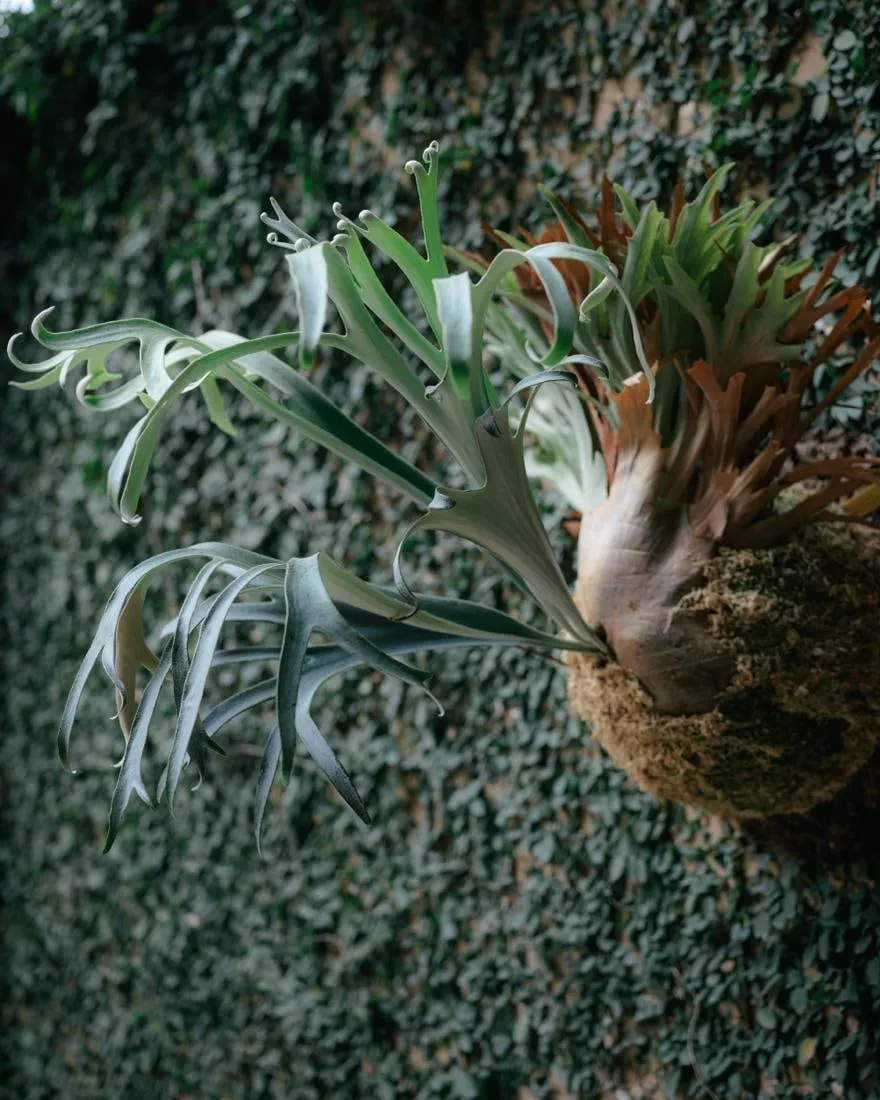
One of the most common questions new Platycerium growers ask is deceptively simple: how hot and how cold can a staghorn fern actually get before it’s in trouble? The answer matters most right now — in the middle of summer, when heat waves push ferns to their upper limit, and again when growers plan whether a fern can safely stay outdoors into fall and winter. As staghorn ferns ride a wave of popularity this year — Martha Stewart’s hanging specimen was recently called “the most controversial statement your terrace can make in 2026” — more people than ever are mounting them outside and hitting the edges of their temperature range.
This guide gives you the full picture: the ideal range, real hot and cold thresholds, a species-by-species tolerance chart, USDA zone guidance, and exactly how to protect your fern at both extremes.
The Ideal Temperature Range
Staghorn ferns are epiphytes from tropical and subtropical forests, where they grow mounted on tree trunks in warm, humid, stable conditions. Their comfort zone reflects that origin:
| Temperature | Effect on the fern |
|---|---|
| 60–80°F (16–27°C) | Ideal — vigorous growth, best frond and pup production |
| 50–60°F (10–16°C) | Safe but slow; growth nearly pauses |
| 80–90°F (27–32°C) | Fine with good humidity and regular watering |
| 90–95°F (32–35°C) | Heat stress likely; increase shade and water |
| Below 50°F (10°C) | Tropical species suffer; hardy species slow to a stop |
The takeaway: staghorn ferns are happiest in the same range most people keep their homes, which is exactly why they make such reliable houseplants. Problems start at the edges — and the edges are where species differences matter most.
How Hot Is Too Hot?
Staghorn ferns genuinely like warmth, so heat alone is rarely the killer. The real danger is heat combined with intense sun and a dried-out mount. A well-watered, shaded fern shrugs off temperatures that would scorch an exposed one.
Above about 95°F (35°C), even a correctly positioned fern transpires faster than its small root system can replenish, and the fronds gray and go limp. During a heat wave, a mounted fern’s moss can dry out in a matter of hours — and a dehydrated plant can’t cool itself, so overheating and drought damage arrive together.
If your fern is already showing pale, bleached, or crispy patches on its sun-facing side, that’s heat and sun damage, not a temperature-only problem — our sunburn and heat stress guide covers rescue and recovery in detail.
How Cold Is Too Cold?
This is where growers get into the most trouble, because cold damage is often invisible until days later — blackened, mushy fronds and a rotting crown that appear after a cold snap has passed. If that has already happened, our staghorn fern cold damage guide shows how to tell a frost-damaged fern from a dead one and what to cut.
Most staghorn ferns show stress below 50°F (10°C) and are at real risk near freezing. But cold hardiness varies enormously by species. The hardy Australian species can take a brief, light frost; the tropical rainforest species cannot handle anything close to it.
The Wisconsin Horticulture Extension notes that staghorn ferns are grown as tender houseplants that need protection from cold — sound advice for the great majority of growers outside frost-free climates.
Temperature Tolerance by Species
Not all Platycerium are equal. Silver, hairy species from cooler, drier habitats tolerate more temperature swing; smooth, glossy-green tropical species need warmth and stability. Here’s how the common species compare:
| Species | Survives briefly (dry) | Bring indoors below | Heat tolerance | Notes |
|---|---|---|---|---|
| P. veitchii | 28°F (-2°C) | 35°F (2°C) | Highest | The most cold- and sun-hardy; silver fronds resist both |
| P. bifurcatum | 30°F (-1°C) | 40°F (4°C) | High | The classic hardy beginner fern; survives light frost once established |
| P. hillii | 35°F (2°C) | 45°F (7°C) | Moderate | Slightly more tender than bifurcatum |
| P. superbum | 40°F (4°C) | 50°F (10°C) | Moderate | Large shields; the hardiest of the giants |
| P. grande | 45°F (7°C) | 55°F (13°C) | Low | Warm and humid only; frost is fatal |
| P. elephantotis | 50°F (10°C) | 60°F (16°C) | Moderate | Cool nights are fine only if kept dry |
| P. ridleyi, P. coronarium, P. wandae | 55°F (13°C) | 65°F (18°C) | Low | Lowland tropical; cold damage is irreversible |
“Survives briefly” means a single dry night with the plant otherwise healthy — not a temperature to plan around. The “bring indoors” column is the one to act on.
The pattern is consistent: the hairy, silvery species like P. veitchii and P. willinckii — whose fine white hairs (tomentum) act as both sunscreen and insulation — handle the widest range, while the smooth tropical giants need it warm and steady. For a deeper look at how frond texture predicts care, see our species comparison guide.
USDA Zones: Can It Stay Outside?
If you want a staghorn fern to live outdoors year-round, your climate zone is the deciding factor:
| USDA Zone | Outdoor guidance |
|---|---|
| 10–11 | Most species can live outside year-round in shade |
| 9 | Hardy species (P. bifurcatum, P. veitchii) with frost protection on cold nights |
| 8 | Outdoors in summer only; bring in before first frost |
| 7 and colder | Houseplant year-round; summer outside optional |
Growers in zones 9–10 push the limits successfully by mounting hardy species under an evergreen canopy or eave, which traps a few degrees of warmth and blocks frost from settling directly on the fronds. Our full outdoor care guide walks through mounting position, wind, and seasonal transitions.
Protecting Your Fern at Both Extremes
In a heat wave (above 95°F / 35°C):
- Move mounted ferns into deeper shade for the duration.
- Water more often — soak the mount in the morning so it dries by evening.
- Group plants or use a humid, sheltered spot to buffer the air.
- Never mist at midday; water droplets can magnify sun and worsen scorching.
As cold approaches (below 50°F / 10°C):
- Bring tropical species indoors well before nights hit 50°F.
- For hardy species left outside, move them under cover before any frost.
- On a surprise cold night, drape frost cloth or an old sheet over outdoor ferns and remove it in the morning.
- Water sparingly in cold weather — a cold, wet crown invites root rot.
Quick-Reference Summary
- 🌡️ Ideal range: 60–80°F (16–27°C) — normal room temperature.
- 🔥 Upper limit: comfortable to ~90°F; stressed and needing shade + water above 95°F.
- ❄️ Lower limit: protect near 40°F; hardy species survive brief light frost, tropicals do not.
- 🌿 Hardiest species: P. veitchii and P. bifurcatum; most tender: P. ridleyi and P. grande.
- 📍 Year-round outdoors: realistic only in USDA zones 9–11.
Match your fern to its temperature reality and it becomes one of the most forgiving plants you can own. The species that scorch and freeze most easily are also the rarest and most tropical — so if you’re growing a common P. bifurcatum on your wall, you have far more room for error than the numbers might suggest. Know where your species sits on the chart, watch the forecast at both ends of the year, and your staghorn fern will reward you with decades of growth.