Healthy staghorn fern roots are sparse, wiry and brown, and a fist-sized root ball is normal even on a big plant. Cut only roots that are black and soft. Root bound is rare on a mount, and roots poking out of the moss mean the plant has taken hold.
Most people see their staghorn fern’s roots for the first time when they repot or remount it, and the first reaction is usually alarm: there are hardly any, they’re dark, they’re circling the pot. Almost always, nothing is wrong. This guide shows what normal Platycerium roots look like, why the root system is so small, which roots to cut, how to get a rootless plant to root, and what root bound actually looks like. If the base is already soft and smells sour, skip to the staghorn fern root rot rescue instead. That page covers the rescue step by step.
What Do Staghorn Fern Roots Look Like?
Judge roots by feel first and colour second. A staghorn’s healthy roots darken as they age and look nearly black when wet, which is the single most common reason people cut good roots.
| What to check | Healthy roots | Worth a closer look |
|---|---|---|
| Amount | Sparse, from a few to a few dozen behind the shield | Amount alone tells you nothing |
| Thickness | Thin and wiry; no thick roots | Thick, swollen, waterlogged |
| Colour | Light tan to dark brown; near-black when wet is fine if firm | Black and translucent, like it’s been soaked through |
| Feel | Firm; a gentle tug doesn’t snap them | Squashes, slides off its core, or crumbles to dust |
| Smell | Earthy or nothing | Sour, swampy |
| Where they grow | From the rhizome behind the growing point, and into the old shield layers | — |
That last row catches people out. On an established plant the roots don’t just sit in the sphagnum. They thread through the stack of old brown shield fronds the plant has laid down over the years. On a fern that has lived on the same board for a while, the “root ball” is mostly that brown, papery shield stack with fine roots running through it. The plant built it, and you don’t need to strip it off and replace it with fresh moss.
The small green bud at the base is not a root either. It’s a pup, growing from the rhizome, and plants with very few roots produce them just as readily. How to separate staghorn fern pups shows how to tell them apart and when to cut.
The Staghorn Fern Root System: Why It’s So Small
Platycerium are epiphytes. In the wild they cling to tree trunks and branches, not soil, and their roots do more holding on than drinking. The work a root ball does for a potted plant is done here by the shield fronds, the round fronds clasping the mount. They catch rain and falling leaf litter, rot it down behind themselves and soak up what drains through. The roots grip the bark and take up some of that moisture.
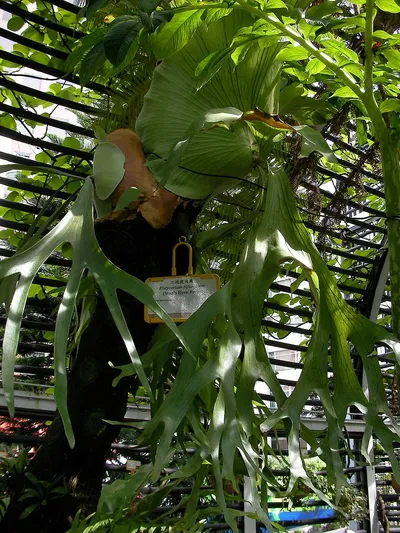
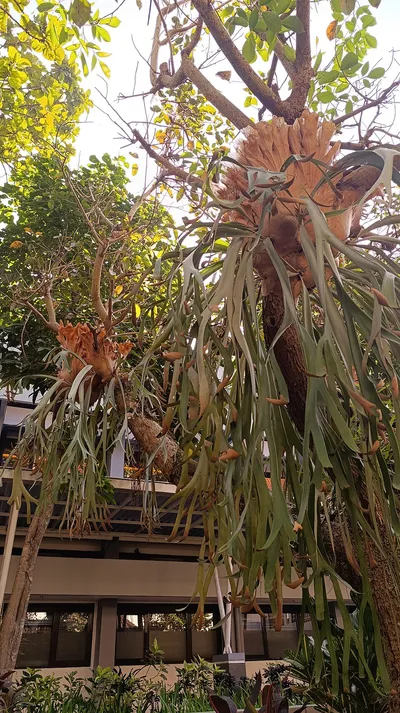
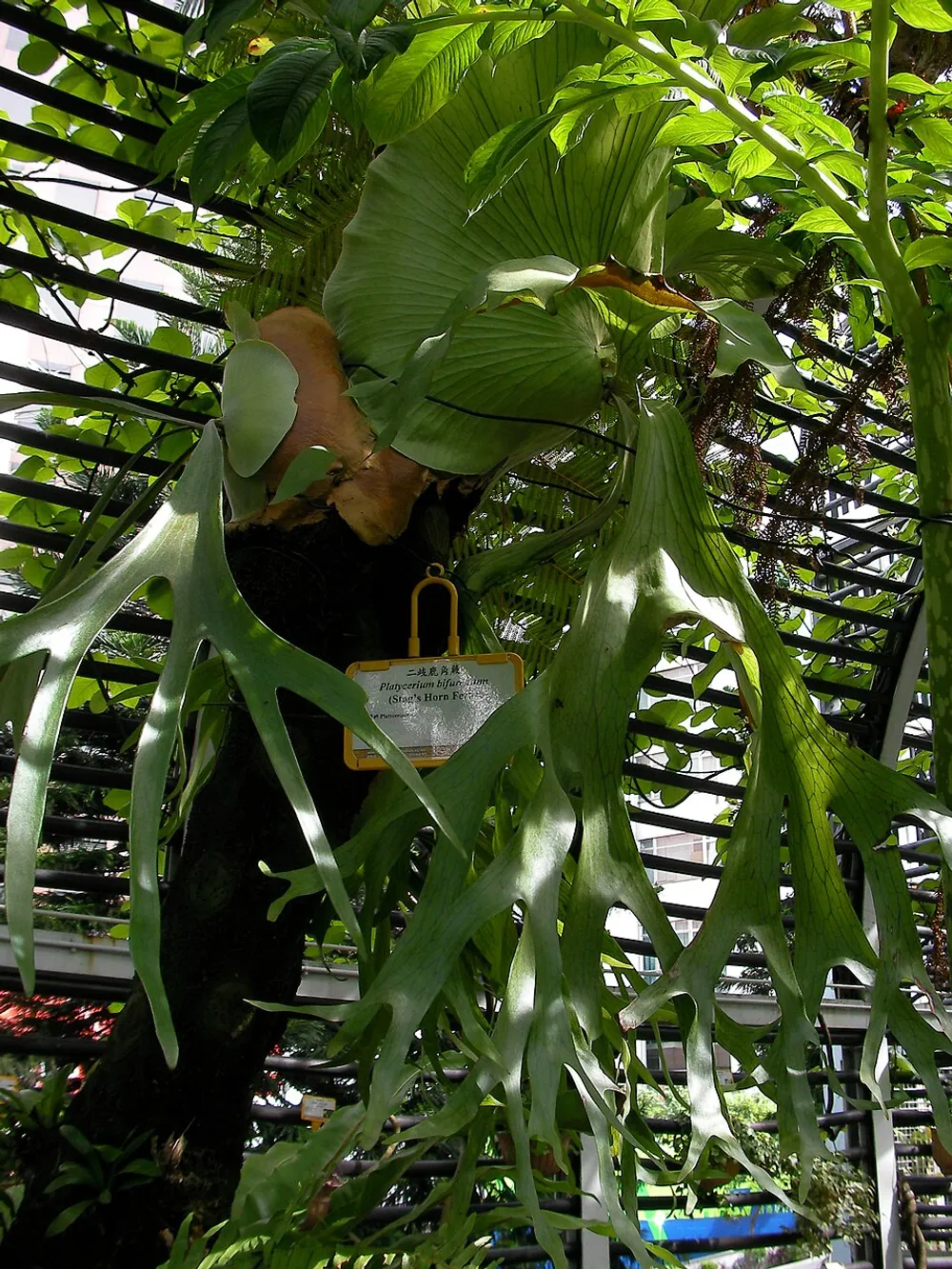
So the root system stays small for the plant’s whole life. A dinner-plate-sized P. bifurcatum might be held on by a mass no bigger than your fist, and that is the plant working as designed. The NC State Extension profile of Platycerium bifurcatum describes the same arrangement.
Three things follow:
- A staghorn fern doesn’t need soil. A mount with a cushion of sphagnum suits the root system better than a pot. When a pot does work, it’s because the mix is coarse and airy, not because the roots want soil. Mounted vs potted staghorn fern compares the two.
- Elkhorn fern roots are the same. “Elkhorn fern” is mostly another name for P. bifurcatum, and the root system is identical. Staghorn fern vs elkhorn fern sorts out the names.
- More water does not grow more roots. A small root system sitting in permanently wet moss suffocates. Watering by weight, not by calendar, is covered in how often to water a staghorn fern.
Staghorn Fern With No Roots: How to Get It to Root
A staghorn with “no roots” is usually one of three plants:
- An imported bare-root plant. Ferns shipped from Southeast Asian nurseries often arrive with most roots trimmed off, sometimes only three or four left.
- A freshly separated pup that was cut with most of its roots left on the mother plant.
- A plant just trimmed after root rot, down to the rhizome.
All three will root if the growing point is firm and alive. Check that before you worry about roots. A growing point that has turned black and mushy won’t recover however many roots are left. To get new roots going:
- Press the back of the rhizome onto damp sphagnum and tie it so there’s full contact. Gaps mean no roots. How to mount a staghorn fern shows the tie-down: snug, not crushing.
- Don’t bury the rhizome. The moss touches the back of it. The growing point and the top of the rhizome stay above the surface. Buried, it rots before it roots.
- Keep it warm. Roots form reliably above about 65°F (18°C). A plant mounted in a cool room can sit unchanged for weeks.
- Keep the moss damp, not wet. A plant without roots can’t drink, so extra watering only adds rot risk. Mist the moss when its surface dries.
- No fertilizer yet. Wait for new roots and the next frond, then start back at a quarter of the usual strength. See staghorn fern fertilizer.
Check for roots 4 to 8 weeks after mounting. Give the plant a gentle tug. If it resists, it has rooted. Pale root tips at the edge of the moss or on the back of the board settle it. Write the mounting date somewhere you’ll find it, because “about six weeks ago” is hard to recall by the time you’re checking. If you already log your plants, Fern can store the remount date with a per-plant reminder for the tug test.
Timing for this time of year: spring and early summer are the best windows for rooting. Early fall is the last good window before winter in most climates. From late October in the Northern Hemisphere, root a bare plant only if it will spend the winter indoors above 65°F. Otherwise keep it barely damp and remount it in spring.
Which Staghorn Fern Roots to Cut: Black, Brown or Dry?
| What you see | Verdict | What to do |
|---|---|---|
| Brown to dark brown, firm, won’t snap with a light tug | Healthy | Leave them. Don’t tease them apart |
| Dark or black but firm, no smell | Healthy, just wet | Leave them |
| Dry, hollow, crumbles between your fingers | Dead | Trim if you like, or leave them; they do no harm |
| Black, translucent, squashes or slides off its core | Rotting | Cut back to firm tissue. Full steps in root rot rescue |
| The same soft black spreading into the rhizome, sour smell | Root rot is spreading into the rhizome | Act now. Same rescue, and check the growing point |
Only the bottom two rows need a blade. When you do cut, go about half an inch (1 cm) into firm tissue past the soft section, and wipe the blade with alcohol between cuts. Never trim healthy roots to “tidy up” or to make the plant fit a mount. The plant has few to start with, and each one you remove adds time before it takes hold of the new board.
Staghorn Fern Root Ball and Root Bound: Pot vs Mount
On a mount, root bound basically doesn’t happen. Roots growing out past the moss, over the edge of the board or onto the back are a plant that has gripped its mount and is looking for more surface. You don’t need to remount it for that. If bare roots bother you, tuck a thin layer of moss over them to keep them from drying.
In a pot, you can get something that looks like root bound, but the cause is usually the stack of old shield fronds and compacted moss, not too many roots. The signs:
- Water drains slowly and the pot stays heavy for days
- Roots come out of the drainage holes
- The shield fronds start wrapping over the rim of the pot
Moving up a pot size usually puts you back in the same spot a year or two later. Shield fronds are built to flatten against bark, and a pot rim bends them out of shape. The lasting fix is a move onto a board, with the timing above.
How far to loosen the root ball when you move it: knock off loose outer potting mix, especially the peat-heavy mix nursery plants often come in, since it stays wet on a board. Leave the core of the root ball alone. Don’t wash the roots or pick them apart one by one. If the roots are circling the bottom of the pot, open a few of the outer ones gently with your fingers rather than breaking up the whole mass. When an old mount needs replacing, tying the plant, old board and all, onto a larger board protects the roots better than peeling it off.
Symptoms That Aren’t About the Roots
These are often blamed on the roots but usually have another cause:
- Drooping antler fronds usually mean underwatering or early rot. Lift the mount and judge by weight. See staghorn fern drooping.
- Brown shield fronds are normal ageing when they’re dry and papery. Shield frond turning brown has the test.
- Yellow leaves have several causes besides roots, including light, cold and feeding. Work through staghorn fern turning yellow.
- White fuzz on the moss is a moss or mould question, not a root one. Identify it in white stuff on a staghorn fern.
For anything else, the staghorn fern problem chart sorts symptoms by where they show up on the plant.