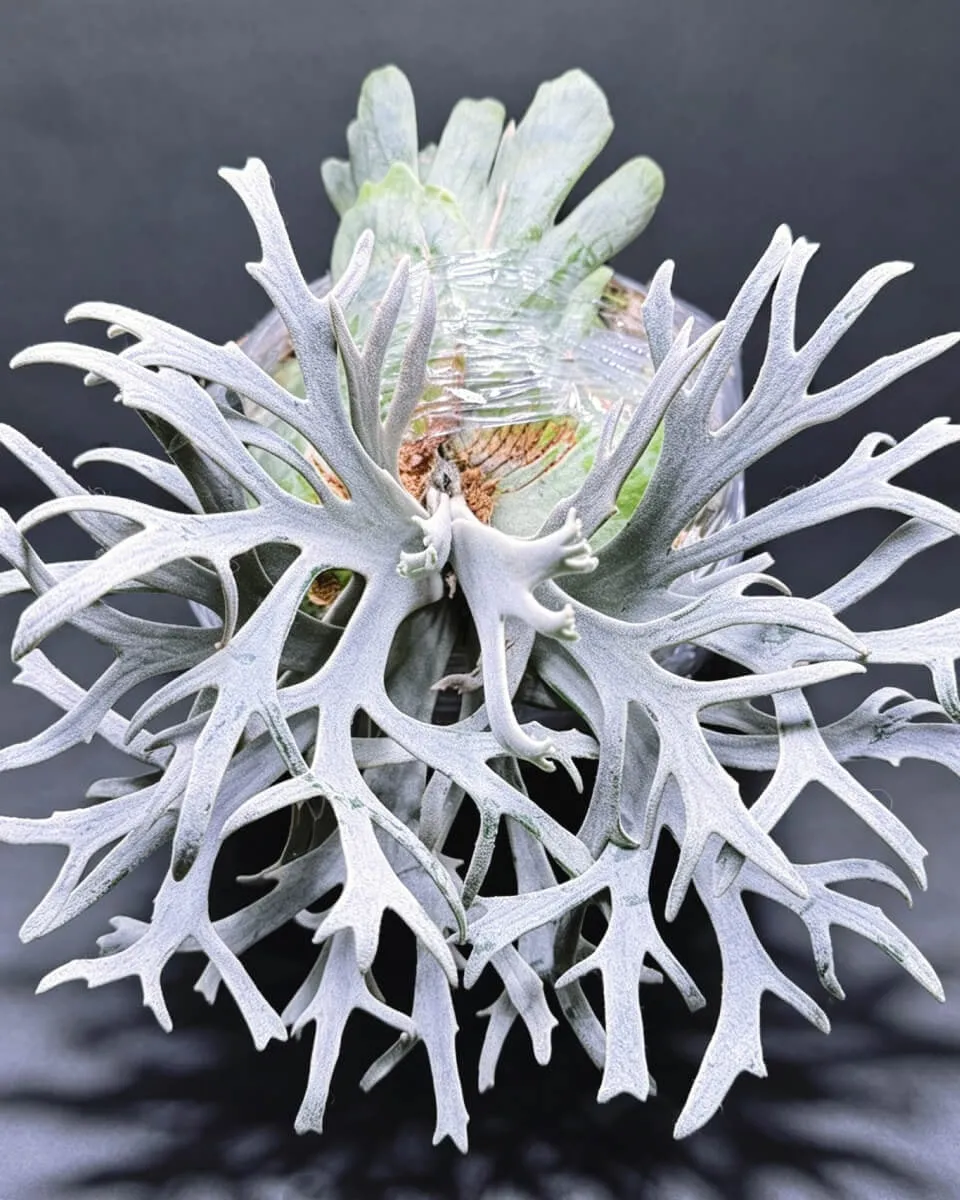
A staghorn fern rarely dies from a pest overnight. What actually happens is slower and more frustrating: a few brown bumps appear behind the shield frond, the fertile fronds lose their gloss, a faint webbing catches the morning light — and by the time it’s obvious, the colony has spread to every frond on the mount. Catching pests early is the entire game, and that starts with knowing exactly what you’re looking at.
This guide covers the four pests that actually attack Platycerium — scale, mealybugs, spider mites, and thrips — how to tell them apart, and how to treat them without damaging the silvery felt that many staghorns rely on to survive. That last point is where most generic houseplant advice gets staghorns wrong, so we’ll come back to it.
Why Summer Is Pest Season
If you’re reading this in late spring or summer, you’re not imagining it — this is when infestations explode. Warm, dry air is the perfect breeding environment for spider mites in particular, which can complete a full generation in under a week when temperatures climb. Plants moved outdoors for the season (see our outdoor care guide) also pick up hitchhikers from nearby foliage, and the open airflow that’s so good for the plant also delivers a steady supply of new pests.
The single most effective preventive habit is simple: keep the plant clean and properly watered. Spider mites thrive on dusty, drought-stressed plants, so a fern on a consistent soak schedule with the occasional rinse is far less likely to be colonized in the first place.
The Four Pests — Identification Table
| Pest | What you see | Where they hide | Telltale sign |
|---|---|---|---|
| Scale | Small brown/tan oval bumps, 2–4 mm, don’t move | Along frond ribs, behind shield frond | Waxy shell that scrapes off as one piece; sticky honeydew |
| Mealybugs | White cottony fluff, like specks of cotton wool | Frond crevices, base of fertile fronds | Soft white masses; sticky residue |
| Spider mites | Tiny moving dots (need a loupe); silvery stippling | Undersides of fertile fronds | Fine webbing at frond junctions |
| Thrips | Slender black/tan slivers, 1–2 mm, fast-moving | New growth, frond surfaces | Silvery scarring streaks and tiny black fecal dots |
Treatment, Step by Step
The right treatment depends on the pest, but the sequence is always the same: isolate, knock down the population, treat the survivors, then re-check on the breeding cycle.
Scale and Mealybugs
These are slow-moving and easy to treat manually if you catch them early.
- Isolate the plant away from other ferns so the infestation doesn’t spread.
- Dab each insect with a cotton swab dipped in 70% isopropyl alcohol. The alcohol dissolves the waxy coating and kills on contact.
- For larger infestations, follow up with insecticidal soap applied every 7 days for three cycles.
- Re-inspect weekly for a month — scale eggs hatch under the old shells, so a single treatment never finishes the job.
Spider Mites
- Spray the entire plant with plain water to physically knock the colony off — this alone breaks the back of a young infestation.
- Raise humidity and move the plant out of hot, dry air. Mites hate moisture.
- Treat with insecticidal soap every 5–7 days for three cycles to catch newly hatched mites before they breed.
Thrips
Thrips are the hardest of the four because they fly and breed fast. Use sticky traps to monitor, prune the worst-affected new growth, and treat with insecticidal soap on the same 5–7 day cycle. Persistence matters more than product choice.
The Trichome Trap: Why Oil Can Hurt Your Fern
Here’s the detail that separates collector-grade care from generic advice. Most pest guides reach straight for neem oil or horticultural oil — and university extension programs do confirm that horticultural oils control scale, mites, and mealybugs effectively on many plants.
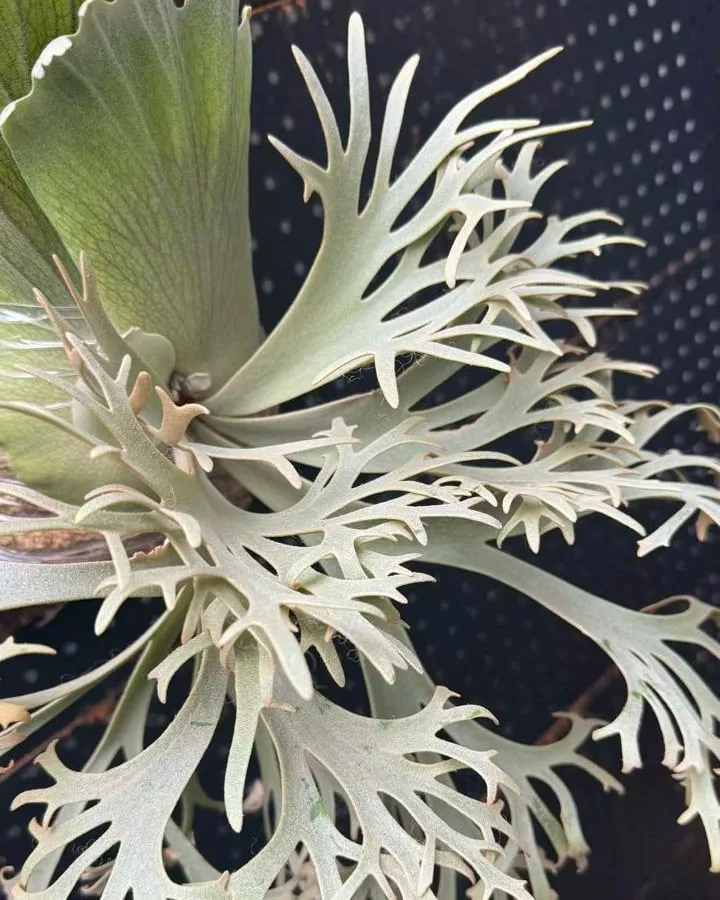
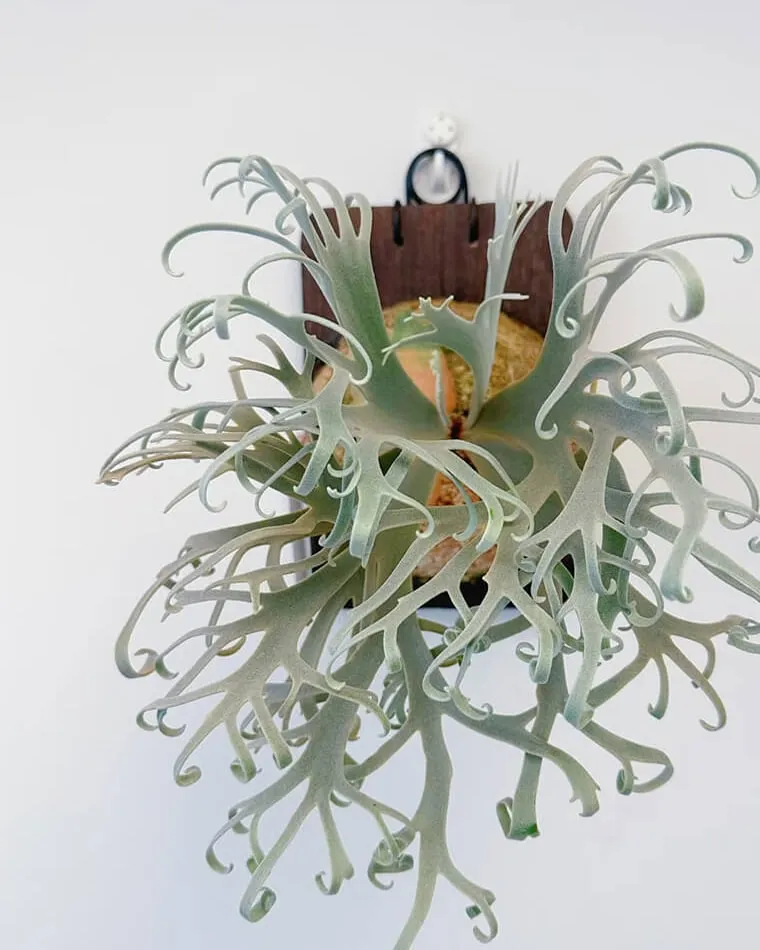
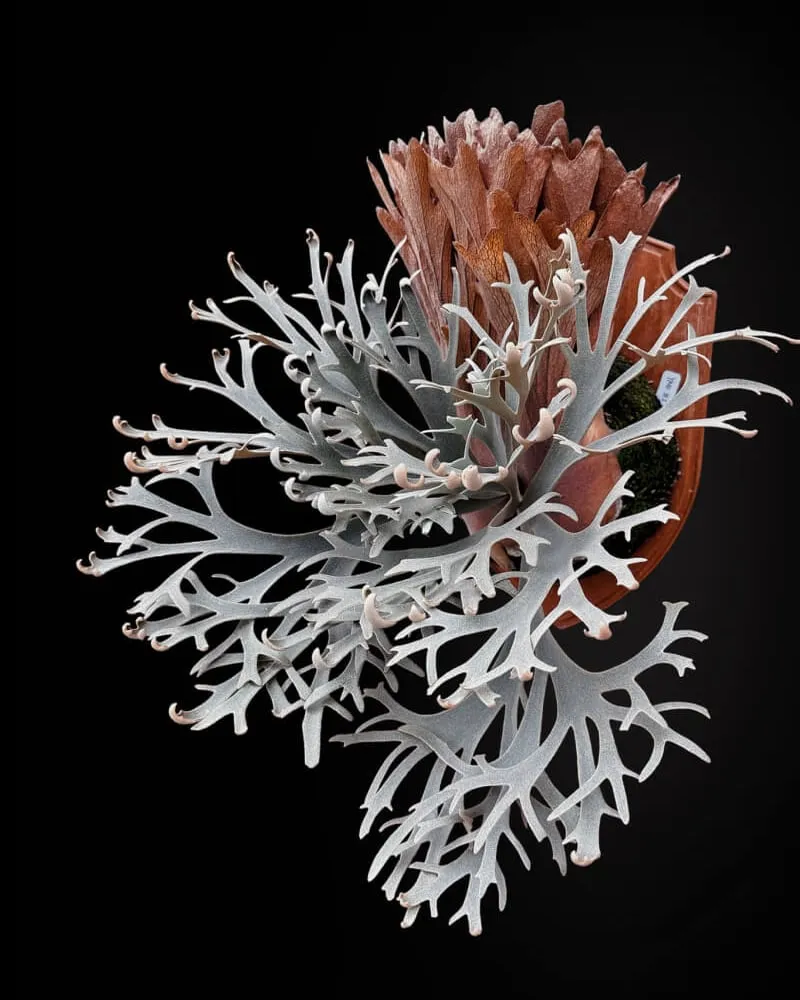
But staghorn ferns are not most plants. Felted species — P. veitchii, P. willinckii, and the silver hybrids — are covered in trichomes, the fine silvery hairs the plant uses to absorb water and reflect harsh light. Oil-based sprays coat and clog those trichomes, leaving permanent matted, water-stained patches and reducing the frond’s ability to take up moisture. Fragranced and degreaser-laden “insecticidal soaps” can do the same damage.
| Species type | Safe to spray? | Best approach |
|---|---|---|
| Smooth green (P. bifurcatum, P. ridleyi) | Oil OK with caution | Test one frond; spray out of sun |
| Silver-felted (P. veitchii, P. willinckii) | Avoid oils | Manual removal + plain insecticidal soap |
| Any species, light infestation | — | Alcohol swab + water rinse, no spray needed |
Two rules keep you safe: always test any spray on a single small frond first, and never apply oil to a heavily felted silver species. For most staghorn pest problems, manual removal plus a fragrance-free insecticidal soap does the job without any risk to the trichomes. The broader principles of indoor-pest management from Colorado State University Extension apply here too — isolation and persistence beat any single miracle spray.
If a stubborn infestation does force you to a labelled miticide or insecticide, measure the dose precisely rather than eyeballing it — our free Staghorn Fern Dilution Calculator works out the exact grams to weigh per litre of water for spider mites, scale, thrips, and more, and flags any product that’s unsafe for Platycerium.
Prevention Checklist
- Quarantine new arrivals for two to three weeks before mounting them near your collection — this is how most infestations enter a home in the first place.
- Rinse the fronds every few weeks to wash off dust and the first scout pests.
- Keep humidity up in summer to deny spider mites their preferred dry, warm conditions.
- Inspect behind the shield frond monthly — it’s the number-one hiding spot, and the place you’ll catch scale earliest.
- Don’t over-fertilize. Soft, lush, nitrogen-pushed growth attracts sap-feeders; staghorns do best on a light feeding hand anyway.
A healthy, clean, properly watered staghorn fern is a remarkably pest-resistant plant. When trouble does appear, identify it correctly, match the treatment to the species, and protect those trichomes — and your fern will shrug off the summer pest wave that takes down its dustier, drier neighbors.
Sources: Colorado State University Extension — Managing Houseplant Pests and Insect Control: Horticultural Oils.