If you’ve found small brown bumps studding the ribs of your staghorn fern’s fronds — bumps that don’t brush off and leave a sticky film on everything below — you’re almost certainly dealing with scale. It’s the single most common serious pest on Platycerium, the hardest to eradicate, and the one that most often goes unnoticed until the colony is well established. This guide covers exactly how to identify scale, why staghorn ferns are unusually vulnerable to it, and a treatment protocol that actually breaks the breeding cycle instead of just knocking down the adults you can see.
If you’re still working out which pest you have, start with our broader staghorn fern pest guide to rule out mealybugs, spider mites, and thrips first. Come back here once you’ve confirmed it’s scale.
What Scale Looks Like on a Staghorn Fern
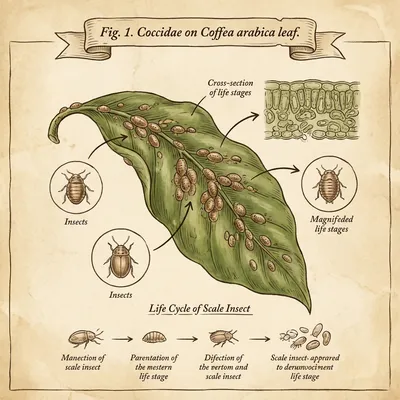
Scale insects are strange animals. The adult female is essentially a stationary blob under a protective shell, permanently fixed to a frond with her mouthparts plugged into the plant’s vascular tissue, drinking sap. She never moves again. That immobility is your best diagnostic clue.
| Feature | Scale | Not scale |
|---|---|---|
| Movement | Never moves once settled | Mealybugs and mites drift slowly |
| Texture | Hard/waxy shell, scrapes off in one piece | Mealybugs are soft, cottony |
| Colour | Brown, tan, grey, or amber | White = mealybug |
| Location | Frond ribs, behind shield frond | Mites prefer frond undersides |
| Aftermath | Sticky honeydew; black sooty mould | Mites leave fine webbing |
There are two broad types you may encounter, and the difference changes your treatment options:
- Armored scale — a hard, dry, dome-shaped shell (like a tiny limpet) that lifts away separately from the insect underneath. Armored scale does not produce honeydew.
- Soft scale — a smoother, waxier bump fused to the insect’s body. Soft scale does excrete honeydew, so a sticky, shiny film on lower fronds or the mount points to soft scale. This distinction matters because, as University of Maryland Extension notes, systemic insecticides only reliably control soft scale — armored scale must be handled by contact methods and timing.
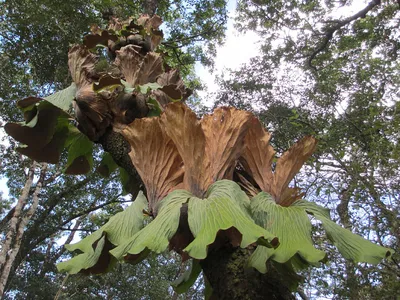
[!IMPORTANT] Don’t mistake a healthy brown shield frond for a pest. The flat, papery brown frond pressed against the mount is the plant’s own structure and is supposed to be dry and brown. Scale hides in the crevice behind and beneath that shield — which is exactly why it’s so easy to miss.
Why Mounted Staghorn Ferns Are Scale Magnets
Staghorns get scale worse than the average houseplant for three structural reasons:
- The shield frond is a fortress. The overlapping, papery basal fronds create a dark, sheltered pocket where scale can feed undisturbed and out of sight. By the time insects appear on the exposed fertile fronds, the crevice behind the shield is often already colonised.
- Mounted ferns can’t take a normal soil drench. The go-to systemic treatment for potted plants — pouring imidacloprid into the soil — assumes there’s soil to pour it into. A mounted staghorn’s roots live in a ball of sphagnum, so standard systemic instructions don’t translate directly (we’ll fix that below).
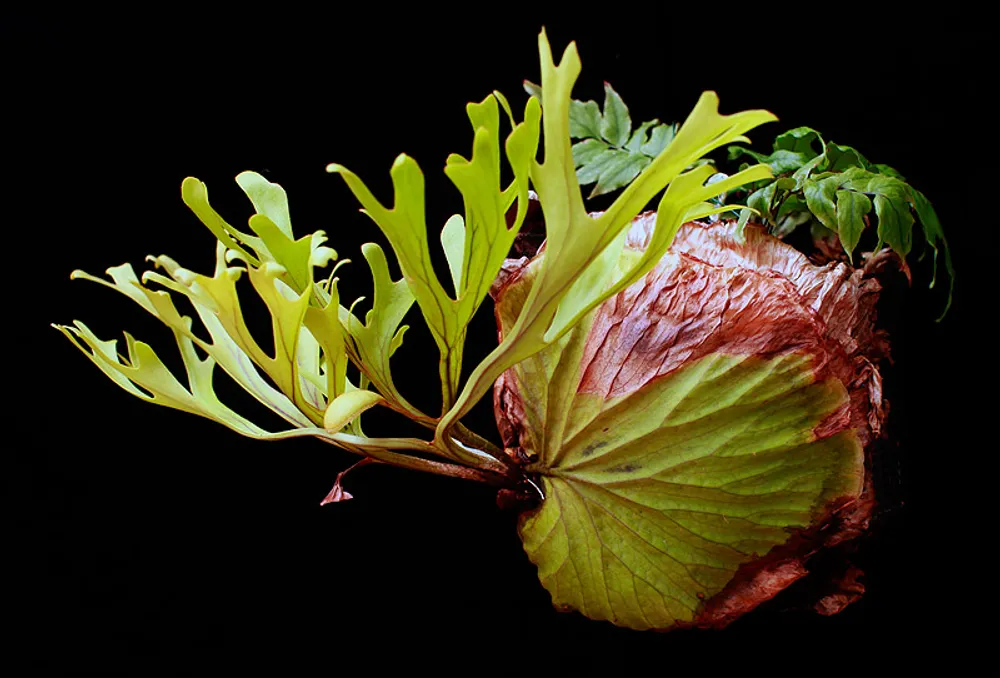
- Felted species can’t be sprayed freely. The silvery P. veitchii and P. willinckii are coated in trichomes — fine hairs that absorb water and reflect light. Oil sprays clog those hairs permanently, so on felted species you lose the easiest treatment option and must rely on manual removal.
The Crawler Stage: Why Timing Beats Product
Here’s the detail that separates a fern that recovers from one that reinfests every few weeks. The adult scale you can see is armored and largely immune to contact sprays. The vulnerable stage is the crawler — the newly hatched nymph that emerges from beneath the mother’s shell, wanders across the frond looking for its own feeding spot, and hasn’t grown its protective shell yet.
University extension research is unanimous on this point: sprays should be timed to when crawlers are active, because that is when scale is most susceptible to treatment. A single spray kills the exposed crawlers of that moment — but eggs keep hatching for days or weeks. That’s why every effective scale protocol is a repeated cycle, not a one-shot treatment. You are not trying to kill the adults in one pass; you’re trying to intercept each wave of crawlers as it hatches, until the mounts run dry.
Step-by-Step Scale Treatment Protocol
1. Isolate immediately
Move the infested fern away from every other plant in the room. Scale crawlers spread to neighbours on air currents and brushing fronds, and quarantine is the cheapest control you have.
2. Manual knockdown
Dip a cotton swab in 70% isopropyl alcohol and dab every visible bump. The alcohol dissolves the waxy coating and kills on contact. For heavier clusters, use an alcohol-dampened soft cloth and gently wipe along the frond ribs. Physically lifting off the old shells also exposes any crawlers sheltering underneath.
3. Choose your follow-up by species
| Species type | Recommended follow-up | Avoid |
|---|---|---|
| Smooth green (P. bifurcatum, P. ridleyi) | Horticultural oil or insecticidal soap | — |
| Silver-felted (P. veitchii, P. willinckii) | Insecticidal soap only; mostly manual | Any oil spray |
| Any species, soft scale confirmed | Systemic moss-soak (see step 4) | — |
Spray the whole plant — tops and undersides of fronds, and into the shield crevice as far as you can reach — every 7 days for at least three cycles. Three cycles is the minimum needed to catch successive crawler hatches; stubborn cases need five or six.
4. Systemic option for soft scale (mounted-fern method)
If soft scale keeps returning, a systemic insecticide gives you season-long, inside-the-plant control that contact sprays can’t. Because a mounted fern has no soil, adapt the imidacloprid drench that CSU Extension describes for potted plants: mix the labelled dose in water and thoroughly soak the sphagnum moss and root ball so the roots absorb it. Apply at the first sign of crawler activity. Note the limits — systemics work on soft scale, not armored scale, and are never for edible plants.
[!IMPORTANT] Measure any insecticide dose precisely rather than eyeballing it. Our free Staghorn Fern Dilution Calculator works out the exact amount to mix per litre of water for scale and other pests, and flags products that aren’t safe for Platycerium.
5. Re-inspect for a full month
Check behind the shield frond and along every rib once a week for at least four weeks. Scale eggs hatch on a stagger, so the plant can look clean for a week and then sprout a fresh crop. You’re finished only after two consecutive clean inspections.
Preventing the Next Infestation
Most scale arrives on a new plant, so prevention is mostly about the front door:
- Quarantine every new arrival for two to three weeks before mounting it near your collection — this is how the majority of infestations enter a home.
- Inspect behind the shield frond monthly. It’s the number-one hiding spot and where you’ll catch scale earliest.
- Wipe or rinse the fronds every few weeks to remove dust and any wandering crawlers before they settle.
- Keep the plant well-watered. A fern on a consistent soak schedule is more resilient, and the routine handling means you notice pests early. General mounted-fern care habits — good airflow, regular inspection — are your best long-term defence.
- Watch outdoor plants closely. Ferns summering outside (see our outdoor care guide) pick up scale from nearby shrubs; inspect them before bringing them back in.
Scale is beatable — it just refuses to be beaten in a single afternoon. Identify the type, match your treatment to your species, time your cycles to the crawlers, and check that shield-frond crevice religiously. Do that, and even a well-established infestation clears within a month or two, with the fern none the worse for it.
Sources: University of Maryland Extension — Scale Insects on Indoor Plants and Colorado State University Extension — Brown Soft Scale.