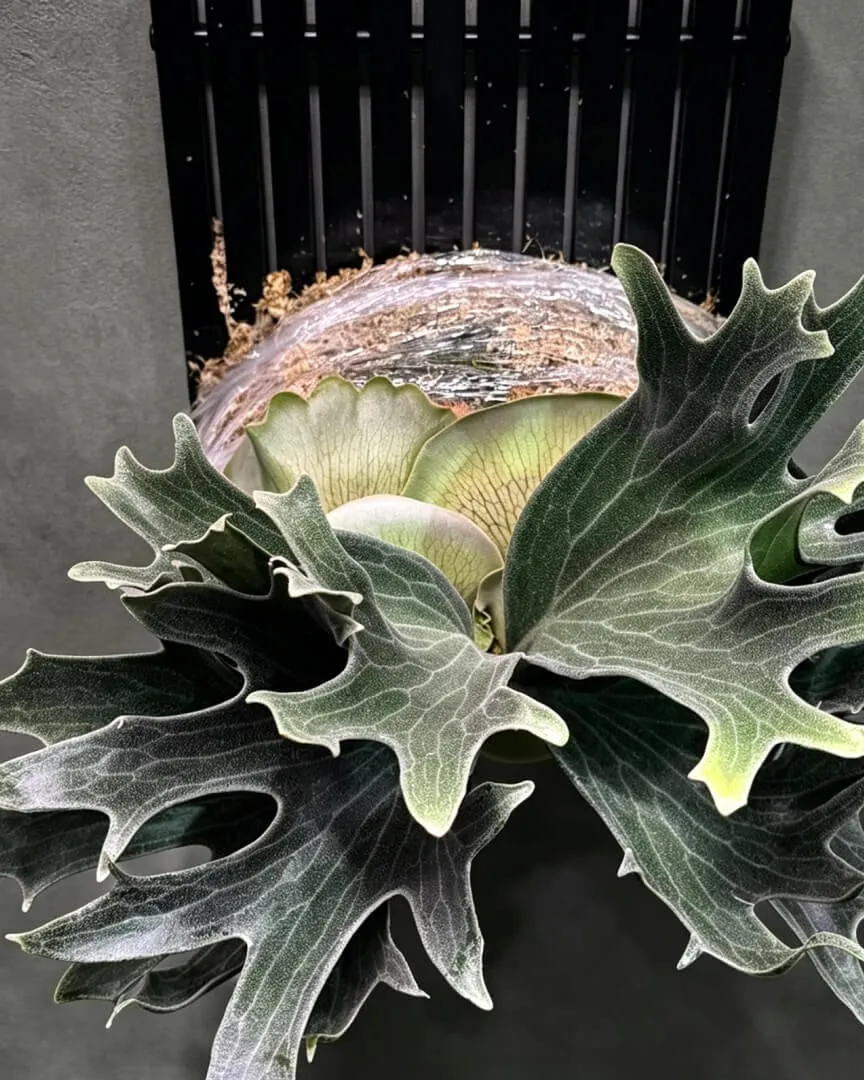
Few things spike a plant owner’s heart rate like spotting dark blemishes on a prized staghorn fern. If you’re seeing black spots on your staghorn fern’s leaves — especially spots that look wet, feel soft, or seem to be multiplying — you’re right to pay attention. In the middle of summer, the number-one cause is a fungal disease called Rhizoctonia blight, and it can move from a single mark to a dead plant in a matter of weeks. This guide walks you through diagnosing every kind of spot (black, brown, white, and yellow), identifying the dangerous one, and treating it before it spreads.
First: Not All Spots Are the Same
Platycerium ferns can show marks for half a dozen unrelated reasons, and the fix for one is the opposite of the fix for another. Before you reach for a fungicide or the scissors, match what you see to the table below.
| What you see | Likely cause | Danger level |
|---|---|---|
| Black spots, soft/wet, spreading — often on shield fronds first | Rhizoctonia blight (fungal) | 🔴 Urgent |
| Dark spots at frond bases, mushy, sour smell | Rot from overwatering | 🔴 Urgent |
| Black-brown, dry and papery, on old lower shield fronds | Natural shield aging | 🟢 Normal |
| Brown spots with yellow halos on antler fronds | Leaf-spot fungus or bacterial spot | 🟡 Watch |
| Raised brown/black bumps that scrape off | Scale insects | 🟡 Treat |
| Small white or pale spots, dusty | Powdery mildew or mineral/water spotting | 🟡 Watch |
| Yellowing with soft spots | Overwatering / early rot | 🟡 Watch |
The single most important distinction: dry vs. wet. Dry, crisp, papery dark tissue on the round shield fronds is almost always harmless aging — the same process covered in our guide on the shield frond turning brown. Soft, moist, expanding black spots are a live infection. When in doubt, press gently with a clean finger: if it’s leathery-crisp, relax; if it’s slimy or gives way, act.
The Dangerous One: Rhizoctonia Staghorn Fern Blight
Rhizoctonia is a soil-borne fungus that causes what growers call “staghorn fern blight” or simply “black spot.” It’s the most common serious disease of Platycerium, and summer is its favorite season for one simple reason: it needs warmth plus constant moisture to survive and spread. Hot days, high humidity, water sitting in the crown after misting, and stagnant indoor air create the exact conditions it loves.
How to recognize it
- Black or very dark brown spots that appear soft, water-soaked, or greasy — not dry and papery.
- Spots that usually begin on the shield (basal) fronds or the crown, then creep outward onto the green antler fronds.
- Rapid change: a spot that was dime-sized last week is now quarter-sized and has friends.
- In advanced cases, whole fronds blacken, collapse, and the base begins to rot.
Because it starts low and moves fast, Rhizoctonia is often mistaken at first for ordinary shield-frond aging or overwatering damage. The tell is spread: aging doesn’t jump onto healthy green fronds, and a fungus does.
How to Treat Black Spot / Rhizoctonia Blight
The good news: the fungus is completely dependent on moisture, which gives you a powerful lever. Follow these steps in order.
- Cut off the water. Stop watering and misting entirely. Rhizoctonia cannot survive on a plant that dries out, so your first job is to make the environment hostile to it.
- Improve airflow and warmth. Move the fern somewhere warm with strong air circulation — a fan on low nearby is ideal. Reducing the humidity around this one plant is a feature, not a bug, right now.
- Remove the worst tissue. With a blade sterilized in isopropyl alcohol, trim away heavily rotted antler fronds. Never cut off shield fronds, even blackened ones — they protect the rhizome, and cutting them opens a wound the fungus will exploit.
- Apply fungicide. Spray the entire plant with a copper-based or systemic fungicide (products labeled for Rhizoctonia or general ornamental fungal blight). Follow the label, and repeat every 7–10 days until no new spots appear.
- Isolate it. Keep the infected fern away from your other plants until it’s clearly recovering — fungal spores travel.
- Let it dry out for weeks, not days. Resume light watering only once symptoms have fully stopped and the mount or medium has dried. If the base has gone mushy, you may be dealing with full root rot, which needs a more aggressive rescue.
Recovery is slow but real: many blighted ferns pull through once the moisture cycle is broken. The University extension network’s diagnostic notes on Rhizoctonia in staghorns echo the same core principle — control moisture first, fungicide second (Ask Extension).
The Other Culprits, Briefly
Brown spots on antler fronds with yellow halos are usually a milder leaf-spot fungus or bacterial spot, often triggered by water splashing and sitting on the fronds. Improve airflow, water at the base rather than overhead, and remove badly affected antler tips.
Raised black or brown bumps that scrape off aren’t a disease at all — they’re scale insects. Wipe them off and follow the treatment in our scale insect guide.
White or dusty spots point to powdery mildew (another airflow-and-humidity problem) or simple mineral deposits from hard water. Neither is usually fatal, but both signal that your humidity and ventilation balance needs attention.
Preventing Spots — Especially in Summer
Every serious spot disease on a staghorn fern comes back to the same root cause: moisture that never gets a chance to dry. Summer amplifies this, so prevention is really about breaking the wet-and-warm cycle:
- Water so the plant dries within hours, not days. Soak thoroughly, then let it drain and breathe. Our guide on how often to water a staghorn fern covers the right rhythm.
- Never let water pool in the crown. After watering or a hot-day misting, tip the plant to drain the center.
- Give it moving air. A gentle fan or an open window does more to prevent fungal blight than any spray.
- Avoid overhead wetting in humid heat. In peak summer, water the roots and shield basket, not the antler fronds.
- Quarantine new plants for a couple of weeks before adding them to your collection.
Catch black spots while they’re small, cut the moisture, and most staghorn ferns recover completely. Ignore them through a humid week or two, and a treatable fungus becomes a lost plant — so when the spots are soft and spreading, move today.
Want to compare what a healthy specimen should look like across species? Browse our staghorn fern species comparison to see normal frond coloring and form.