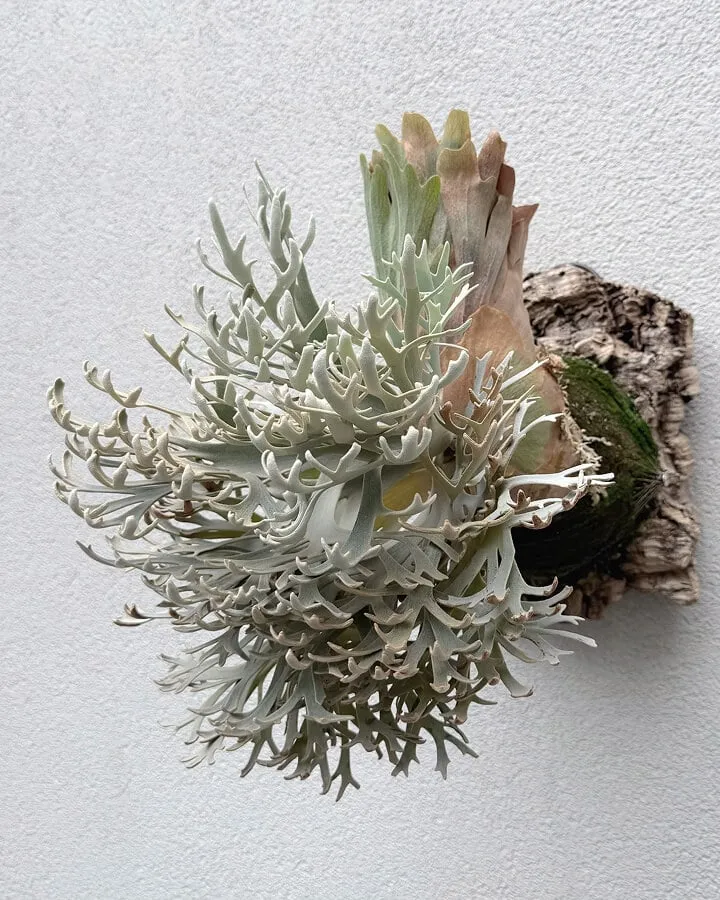
Staghorn ferns and bird’s nest ferns get compared constantly — they show up side by side in the same shops, both wear the word “fern,” and both promise that lush, tropical look. But under the surface they are very different plants with different needs, and picking the right one for your space saves a lot of frustration.
Here is how they actually differ, and how to choose.
They’re Not Even Close Relatives
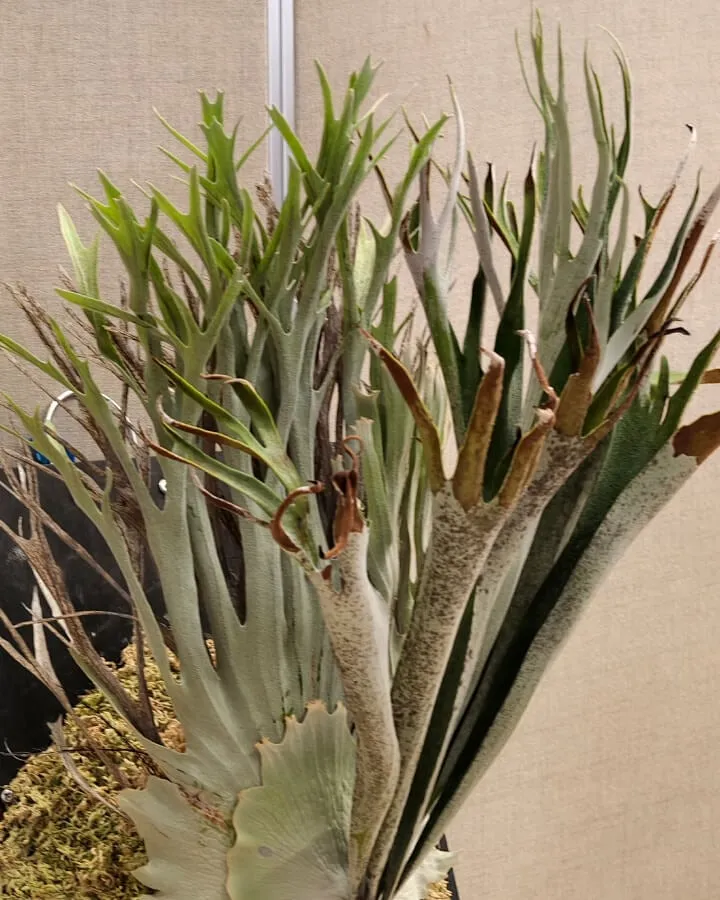
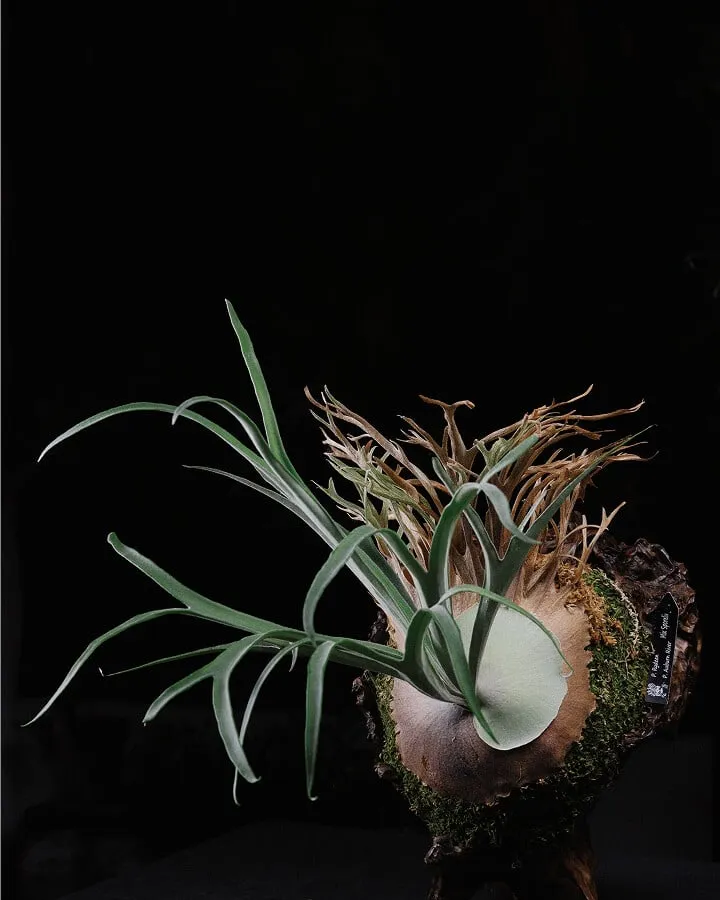
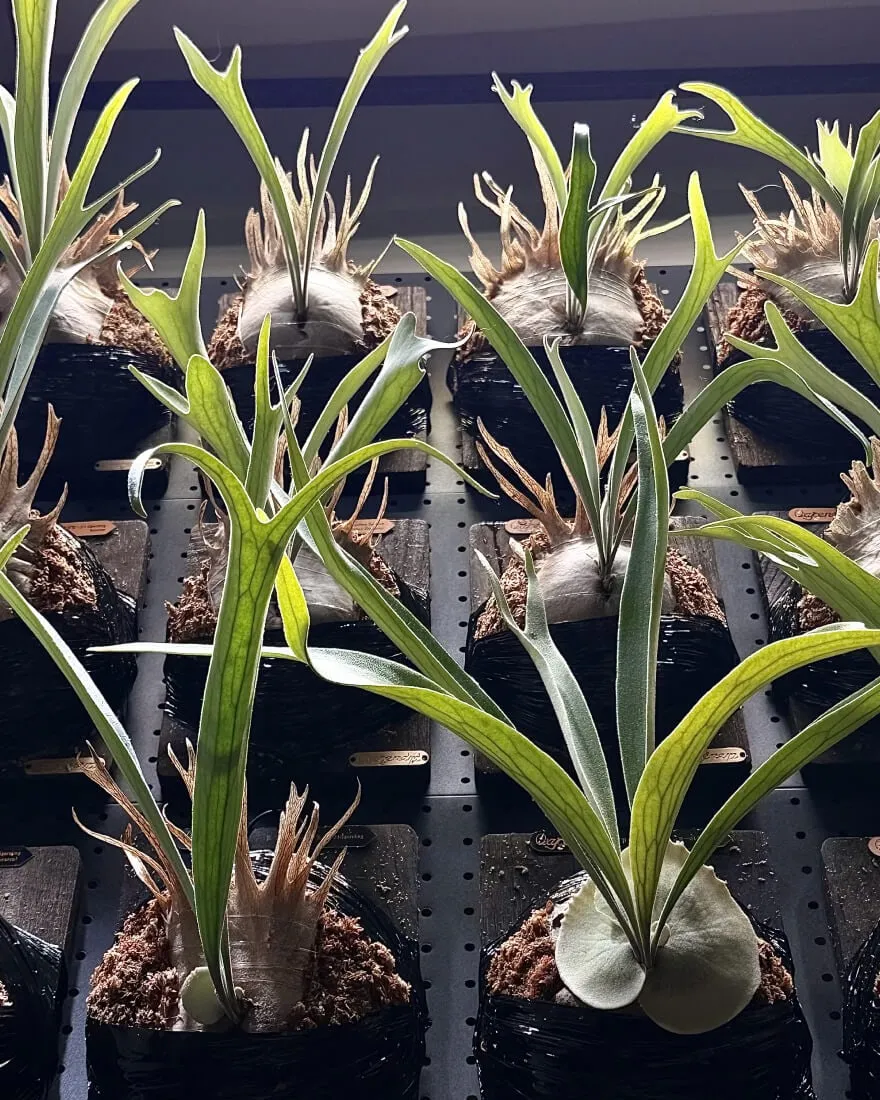
The first surprise: these two aren’t botanical cousins. A staghorn fern is a Platycerium — an epiphyte that grips bark in the wild, with sterile shield fronds and fertile antler fronds, almost always grown mounted. A bird’s nest fern is an Asplenium nidus — a rosette fern with broad, glossy, undivided strap-like fronds that unfurl from a central crown shaped like a nest, grown in a pot.
That difference in form drives every difference in care. One is architecture you hang on a wall; the other is a leafy rosette on a shelf.
Staghorn vs Bird’s Nest at a Glance
| Feature | Staghorn fern (Platycerium) | Bird’s nest fern (Asplenium nidus) |
|---|---|---|
| Frond shape | Antler-like, branching, divided | Broad, wavy, undivided straps |
| Growth style | Epiphyte, usually mounted | Rosette from a central nest, potted |
| Light | Bright indirect | Medium to low, tolerant |
| Watering | Soak the mount when dry | Keep soil evenly moist |
| Water the… | Whole root pad (submerge) | Soil at the edges — never the center |
| Difficulty | Easy–moderate (small learning curve) | Easy, beginner-proof |
| Signature look | Living wall art | Lush tabletop rosette |
| Humidity | Loves it | Loves it |
Care Difference 1: Light
This is the biggest practical split. Bird’s nest ferns tolerate lower light — they evolved in shaded forest understory, so a medium or even dim spot keeps them happy. Staghorn ferns need bright, indirect light to build strong fronds; put one in a dark corner and it weakens and grows poorly. If your chosen spot is shady, the bird’s nest wins by default. If you have a bright window with filtered light, either works — see staghorn fern light requirements for exactly what “bright indirect” means.
Care Difference 2: Watering
The watering methods are almost opposites:
- Staghorn: an epiphyte watered by soaking the mounted root pad until it’s saturated, then letting it dry before the next soak. Frequency is driven by how fast the moss dries — usually about weekly in warm months. Full schedule in our watering guide.
- Bird’s nest: a potted plant that likes evenly moist (not soggy) soil. Crucially, water the soil around the edge of the crown — never pour into the center nest, where trapped water rots the growing point.
Both share one hard rule: no standing water at the roots. For staghorns, soggy setups are the number-one cause of crown and root rot.
Care Difference 3: Setup and Effort
A bird’s nest fern is plug-and-play: pot it in a well-draining mix, set it in medium light, keep it humid, and water the soil. A staghorn fern asks a little more up front — most people mount them, which means a board, some sphagnum, and the soak ritual (our mounting guide covers the build). It is not hard, but it is a step the bird’s nest skips. If you would rather avoid mounting entirely, note that staghorns can be potted too — weigh it in our mounted vs potted comparison.
Which Fern Should You Get?
Choose a bird’s nest fern if your space is on the shadier side, you want the simplest possible care, or you’d rather a classic potted plant than a mounted one. It is the more forgiving, lower-light option.
Choose a staghorn fern if you have bright indirect light and you love the sculptural, wall-mounted, “living antler” look. It rewards a little more involvement with a far more dramatic plant — and once you learn its watering and light rhythm, it is genuinely easy to keep.
Want both? They actually pair beautifully — a mounted staghorn on the wall above a potted bird’s nest reads as a cohesive tropical corner, and they share the same love of warmth and humidity, so one humidifier serves both.
If the staghorn is calling to you, start with how to mount a staghorn fern and the watering schedule — those two get you 90% of the way to a thriving plant.
External reference: UF/IFAS Gardening Solutions — Staghorn Fern.