If your staghorn fern is drooping — antler fronds hanging limp, soft, and lifeless where they used to arch with spring in them — the plant is telling you it has lost water pressure inside its tissues. A drooping or wilting Platycerium is one of the most common problems growers hit in the summer heat, and it’s also one of the most fixable, if you correctly read why it went limp. This guide shows you how to diagnose a droopy staghorn fern by feel, then walks through the five causes and the exact fix for each — including a revival soak that can bring a thirsty fern back within hours.
First, the reassuring part: drooping is a turgor problem, not a rot problem — at least not yet. Healthy frond tissue is held rigid by water pressure in its cells, like an inflated air mattress. When that pressure drops, the fronds go soft and sag. Because it’s an early warning rather than dead tissue, a wilting fern usually recovers fully once you correct the cause. That’s very different from a frond that has already yellowed or blackened, which won’t come back.
Quick Diagnosis: Feel the Mount, Not Just the Fronds
Drooping looks the same no matter the cause, so you diagnose it by feel — the weight of the mount and the firmness of the base — not by the wilting alone. Match your fern to the row below, then jump to that section.
| What you feel / see | Most likely cause | First action |
|---|---|---|
| Mount feels light and dry, base firm, fronds papery-limp | Underwatering / dehydration | Rehydration soak (below) |
| Mount feels heavy, base spongy or soft, faint sour smell | Overwatering / root rot | Stop watering, dry out, inspect roots |
| Whole plant flops in a heatwave, recovers slightly at night | Heat stress | Shade, ventilate, water in the morning |
| Drooped right after mounting, repotting, or being moved | Transplant / relocation shock | Stabilize, wait, don’t overwater |
| Only the newest fronds droop; older ones firm | Normal soft new growth | Do nothing — they’ll firm up |
Cause 1: Underwatering — the #1 Summer Reason
In peak summer, most drooping is plain thirst. This catches people out because the same mount that stayed damp for a week in spring can now dry out in two or three days. Warmer air, longer daylight, and a running fan or air conditioner all pull moisture out of the sphagnum and root ball far faster than you’d expect. Because Platycerium are epiphytes with small root systems and no deep soil reservoir to draw on, they run out of water quickly — and the antler fronds respond by going soft and folding downward.
How to confirm it: Lift the mount. A dehydrated staghorn feels conspicuously light, and the shield base feels dry and firm rather than spongy. Press a finger into the sphagnum — if it’s crisp and pulls away from the mount, the fern is thirsty.
The fix — a rehydration soak: Submerge the whole root ball and the base of the shield fronds in a sink or bucket of room-temperature water for 10–20 minutes, until the bubbling stops. Let it drain fully so no water sits trapped against the rhizome, then rehang it out of direct sun. A thirsty fern often visibly perks up within a few hours to a day. Going forward, water more often but not more heavily — our watering-frequency guide covers the summer lift-test in detail, and raising ambient humidity slows how fast the mount dries between soaks.
Cause 2: Overwatering & Root Rot — the Cruel Look-Alike
Here’s the trap that makes drooping so tricky: an overwatered staghorn droops too. When roots sit in constant moisture they suffocate, rot, and lose the ability to move water up into the fronds — so the plant wilts even though it’s swimming. If you misread this as thirst and add more water, you accelerate the collapse.
How to tell it apart from thirst: The mount feels heavy, the shield base is spongy or soft rather than firm, and there’s often a faint sour or musty smell. You may also see darkening or translucency at the base of the antler fronds.
The fix: Stop watering immediately. Ease the root ball off the mount, cut away any black, mushy roots with a sterile blade, and let everything dry out before remounting in fresh sphagnum. This is the same rescue path as root rot — if you’re not sure whether you’ve merely overwatered or crossed into rot, our guide to the early signs of overwatering helps you catch it before it turns fatal.
[!IMPORTANT] When a staghorn fern droops, do not reflexively water it. A soggy, heavy mount that droops needs less water, not more. Always check the weight and firmness of the base first — watering a rotting fern is the fastest way to kill it.
Cause 3: Heat Stress
During a heatwave, even a well-watered fern can droop in the afternoon. When the fronds lose water to hot, dry air faster than the roots can replace it, the plant temporarily wilts to reduce its exposed surface area — then partially recovers as things cool overnight. If your fern flops each hot afternoon but firms up by morning, heat is the driver, not your watering.
The fix: Move the fern out of direct afternoon sun and improve airflow — stagnant hot air makes wilting worse. Water in the morning so the plant goes into the heat fully charged, and mist the fronds on the hottest days for evaporative relief. If your fern is outdoors, check that you’re within its comfort range using our temperature-tolerance guide, and watch for the bleached patches that mean simple wilting has tipped into sunburn and heat damage.
Cause 4: Transplant or Relocation Shock
If your staghorn drooped within a day or two of being mounted, repotted, divided, or simply moved to a new spot, the cause is likely shock rather than water. Disturbed roots take time to re-establish contact with the medium, and a sudden change in light or humidity can make the fronds sag while the plant adjusts.
The fix: Resist the urge to “help” by overwatering — that’s how shock turns into rot. Keep the fern in stable, bright indirect light, maintain moderate humidity, and give it one to two weeks. Newly mounted ferns especially need patience; see our mounted-fern care guide for how to stabilize a fresh mount so the fronds firm back up.
Cause 5: It Might Be Normal
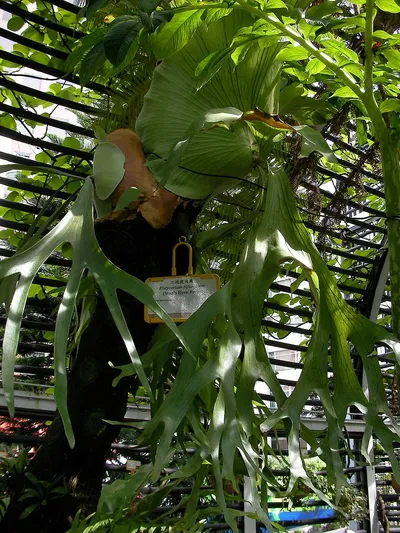
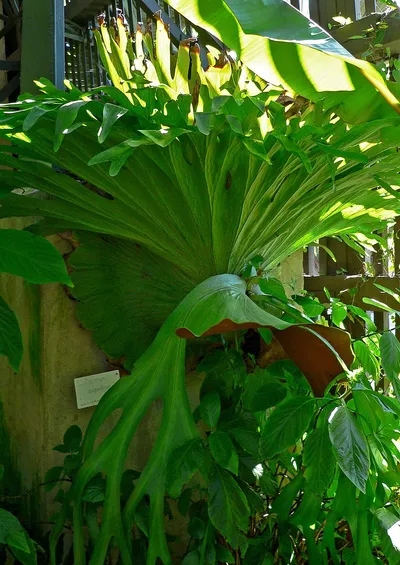
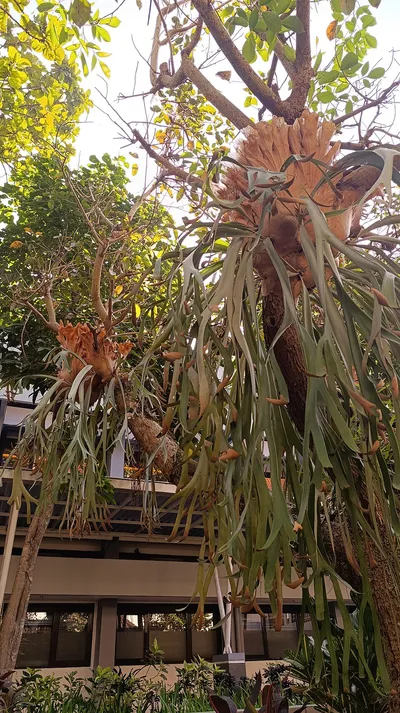
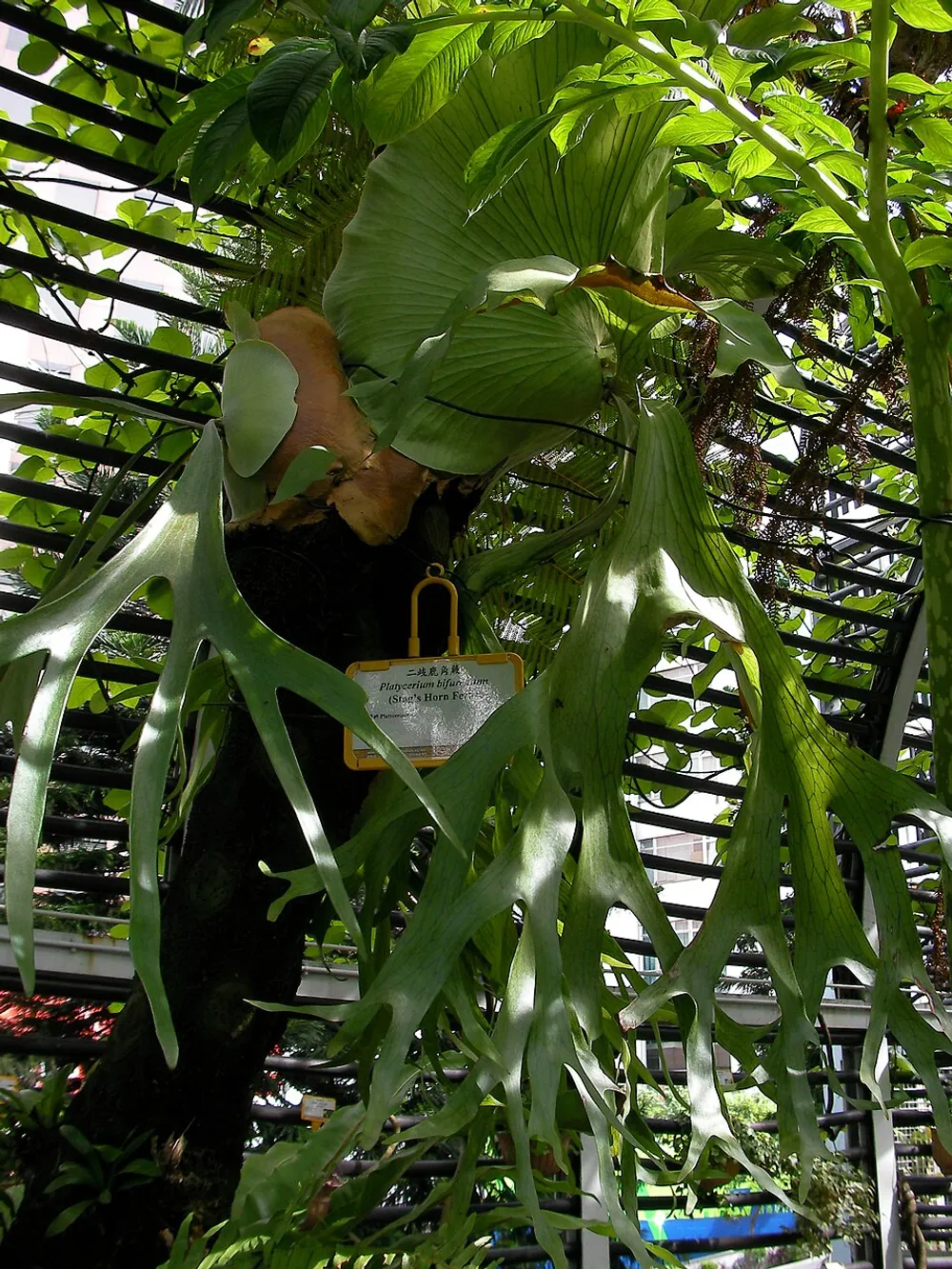
Not every droop is a problem. Brand-new antler fronds emerge soft and floppy and only firm up as they mature and harden off over a couple of weeks — so a single limp new frond among firm older ones is nothing to fix. Some species are also naturally pendulous: the long, silvery fronds of Platycerium willinckii and the dramatic arching antlers of Platycerium bifurcatum hang by design, and new growers sometimes mistake that graceful drape for wilting. If the fronds are firm to the touch and a healthy green, a downward arch is just the plant’s architecture.
How to Revive a Drooping Staghorn Fern (Step by Step)
Once you’ve identified the cause, here’s the recovery playbook for the two most common scenarios:
| Situation | Do this | Expected recovery |
|---|---|---|
| Light, dry mount (thirst) | 10–20 min rehydration soak, drain, rehang out of sun | Hours to 1 day |
| Heavy, soft mount (rot) | Stop watering, trim black roots, dry out, remount | 2–6 weeks; new growth is the real sign |
| Afternoon-only wilt (heat) | Shade, morning watering, airflow, mist | Same evening, then day by day |
| Recently moved/mounted (shock) | Stabilize, wait, don’t overwater | 1–2 weeks |
The single most useful habit is the lift-and-feel check before every watering: heft the mount and press the base. Light and dry means soak; heavy and soft means wait. That one instinct prevents both the thirst droop and the far more dangerous overwatering droop.
The 2026 Staghorn Moment — and Why Droop Anxiety Is Rising
Staghorn ferns are having a genuine cultural moment. In 2026 the mounted, wall-hung staghorn has been called one of the boldest statement plants of the year — Martha Stewart’s own dramatic hanging specimen was recently profiled by Homes & Gardens as an “unapologetically bold” terrace centerpiece (read the feature). As more first-time growers mount these architectural ferns on walls and in hanging baskets, “why is my staghorn fern drooping” has become one of the most-searched summer plant questions — usually from someone who watered on a spring schedule into an July heatwave. Reading the mount by feel, not by the calendar, is what separates a thriving statement piece from a limp one. For authoritative species and watering references, botanical resources such as the Missouri Botanical Garden’s Platycerium entries are a reliable, jargon-free starting point.
Bottom Line
A drooping staghorn fern has lost water pressure, and the fix depends entirely on why. In summer, thirst is the odds-on favorite — a quick soak revives it. But because overwatering and root rot mimic the exact same limp look, never water on reflex: lift the mount and feel the base first. Catch the wilt early, match the cause to the fix, and your fern almost always bounces back — often by the next morning.