If your staghorn fern moved outside for the summer and is suddenly developing pale, bleached, or crispy brown patches, you’re almost certainly looking at sunburn — the single most common warm-season injury for Platycerium. As staghorn ferns ride a wave of popularity this year — Martha Stewart’s hanging specimen was called “the most controversial statement your terrace can make in 2026” — more growers than ever are putting them outdoors, and more are getting burned.
This guide covers how to recognize staghorn fern sunburn and heat stress, how much sun Platycerium can actually take, its real temperature tolerance, and exactly how to rescue and protect a scorched fern through the hottest months.
What Staghorn Fern Sunburn Looks Like
Sunburn doesn’t look like a disease — it looks like a burn, and that’s the key to telling it apart from pests or rot. The damage appears on the side facing the sun and the most exposed frond tips, not randomly across the plant.
| Symptom | What it means |
|---|---|
| Pale, bleached, washed-out patches | Early sunburn — chlorophyll is breaking down |
| Crispy, papery brown spots (sun-facing side) | Advanced sunburn — tissue is dead |
| Whole frond graying and going limp | Heat stress + dehydration combined |
| Fronds hot and dry to the touch midday | Plant is actively overheating |
| Damage only on the exposed side | Confirms sun, not disease |
Compare this to a fern turning yellow all over, which usually points to watering or feeding problems, or to soft, dark, mushy fronds, which signal root rot. Sunburn is dry, localized, and sun-facing.
[!IMPORTANT] The most common mistake is moving a fern straight from a shady indoor spot into full outdoor sun. Indoor plants have no UV-hardened tissue and can scorch in a single afternoon. Always acclimate gradually.
How Much Sun Can a Staghorn Fern Actually Take?
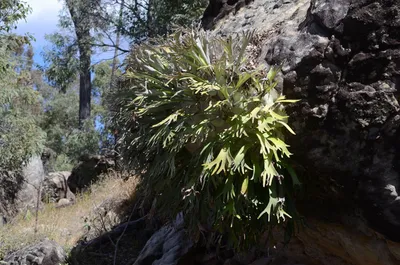
The honest answer: less than most people think. In the wild, Platycerium grows mounted on tree trunks and branches, receiving bright but filtered light through the canopy. They are epiphytes adapted to dappled shade, not open exposure.
The Wisconsin Horticulture Extension notes that staghorn ferns need bright, indirect light and will scorch in direct sun. That holds true outdoors too — the ideal outdoor position is under a pergola, a shade cloth, or the east side of a structure that gets gentle morning sun only.
Sun tolerance does vary by species:
| Species | Direct sun tolerance | Notes |
|---|---|---|
| P. veitchii | Highest | Silver fronds and dense hairs reflect light; handles morning sun well |
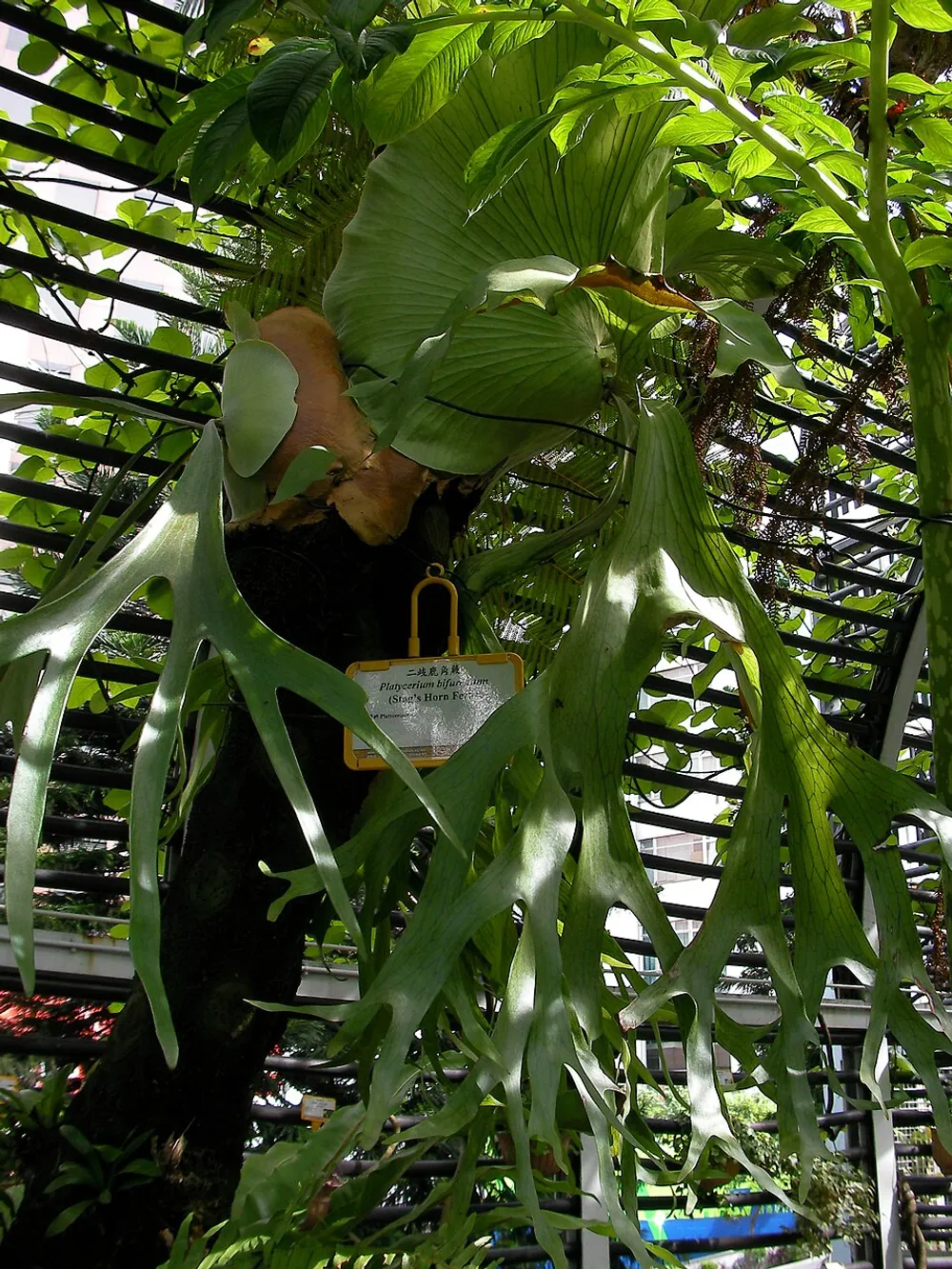
| P. bifurcatum | Moderate | Beginner favorite; a few hours of soft sun is fine once acclimated |
| P. hillii | Moderate | Prefers filtered light |
| P. superbum | Low–moderate | Large shields scorch easily |
| P. ridleyi | Low | Tropical; burns in direct sun |
| P. grande | Low | Needs shade |
That silvery fuzz on species like P. veitchii and P. willinckii isn’t just decorative — those fine hairs (called tomentum) are a natural sunscreen. Hairier, more silver species handle brighter light; smooth, glossy-green species need more shade. For a full breakdown, see our species comparison guide.
Acclimating a Fern to Outdoor Light
Never make the jump in one step. Over 10–14 days:
- Days 1–3: Full shade outdoors (a covered porch).
- Days 4–7: One hour of gentle morning sun, then back to shade.
- Days 8–14: Gradually extend to 2–3 hours of morning sun.
- After two weeks: Settle it in its permanent spot — filtered or dappled light, sheltered from harsh midday and afternoon sun.
This is the same principle behind our full outdoor care guide, and it prevents the overwhelming majority of summer burns.
Heat Tolerance: When Warm Becomes Dangerous
Staghorn ferns are tropical and genuinely like warmth. They thrive in the 60–90°F (16–32°C) range. The danger isn’t heat alone — it’s heat combined with intense sun and a dried-out root ball.
| Temperature | Effect |
|---|---|
| 60–85°F (16–29°C) | Ideal growing range |
| 85–95°F (29–35°C) | Fine if humidity is decent and watering keeps up |
| 95–100°F (35–38°C) | Heat stress likely; increase watering and shade |
| Over 100°F (38°C) | Damage risk high, especially in dry air or direct sun |
During a heat wave, a mounted fern’s moss can dry out in hours. A dehydrated plant can’t cool itself by transpiration, so the fronds overheat and the burn that follows is really a combination of sun and drought. The fix is as much about water and humidity as it is about shade.
Humidity: The Summer Buffer
Staghorn ferns prefer 60–80% humidity, and high humidity is your best defense against heat stress. Moist air slows the rate at which fronds and moss dry out, buying the plant time during hot spells.
In dry climates or during heat waves, raise local humidity by:
- Grouping plants so they share transpired moisture.
- Misting fronds in the early morning (never midday, which can magnify sun like a lens).
- Placing the fern near a water feature or on a humid, shaded patio.
- Soaking more often — see our guide on how often to water a staghorn fern, and water more frequently in summer heat.
Always water in the morning so fronds and the crown dry before evening — overnight moisture invites rot, the opposite problem from sunburn.
How to Rescue a Sunburned Staghorn Fern
If the damage is already done, don’t panic. Sunburn looks alarming but is rarely fatal if you act:
- Move it to shade now. Get it out of direct sun the moment you notice scorching.
- Rehydrate deeply. Soak the mount or root ball until the moss is saturated; a heat-stressed fern is usually dehydrated too.
- Leave the burned tissue alone. Bleached and brown patches won’t spread, and a damaged frond still photosynthesizes from its healthy parts. Removing it stresses the plant further.
- Wait and watch. Trim a frond only once it is fully dead and brown. Fresh growth from the center over the next few weeks is your sign of recovery.
- Re-acclimate before going back out. If you want it outdoors again, restart the gradual light schedule.
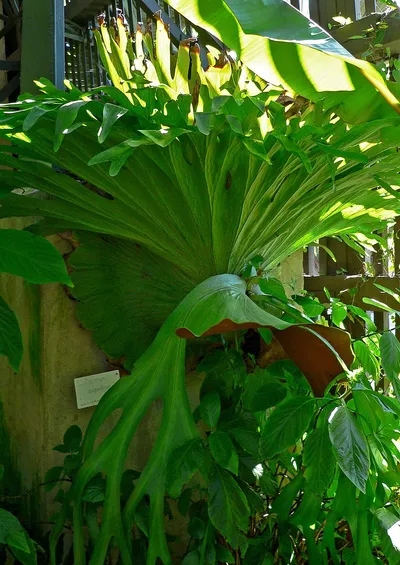
Remember that staghorn ferns regularly shed older fronds and develop brown, papery shield fronds at the base as a normal part of growth — don’t mistake that natural browning for sunburn. Genuine sun damage is always on the newest, most exposed fronds facing the light.
Summer Care Checklist
- ☀️ Light: Bright, filtered, or dappled — gentle morning sun only.
- 🌡️ Temperature: Comfortable to 90°F; add shade and water above 95°F.
- 💧 Water: More often in heat; soak in the morning so fronds dry by night.
- 💨 Humidity: Aim for 60–80%; group, mist early, or use a humid spot.
- 🔄 Acclimate: 10–14 days from shade to filtered sun — never all at once.
- 🍂 Don’t over-prune: Leave burned tissue until it’s fully dead.
Get the light right and summer becomes your staghorn fern’s best growing season — warm days and high humidity drive vigorous new fronds and even pup production. Burn it, and you’ll spend the season nursing it back. The difference is almost always a few hours of unfiltered afternoon sun, and now you know how to avoid it.