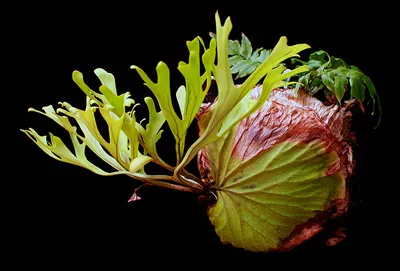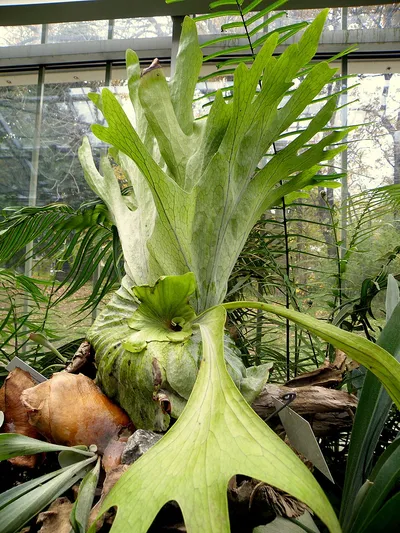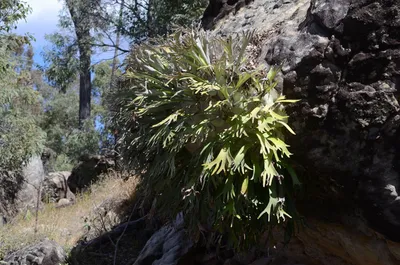
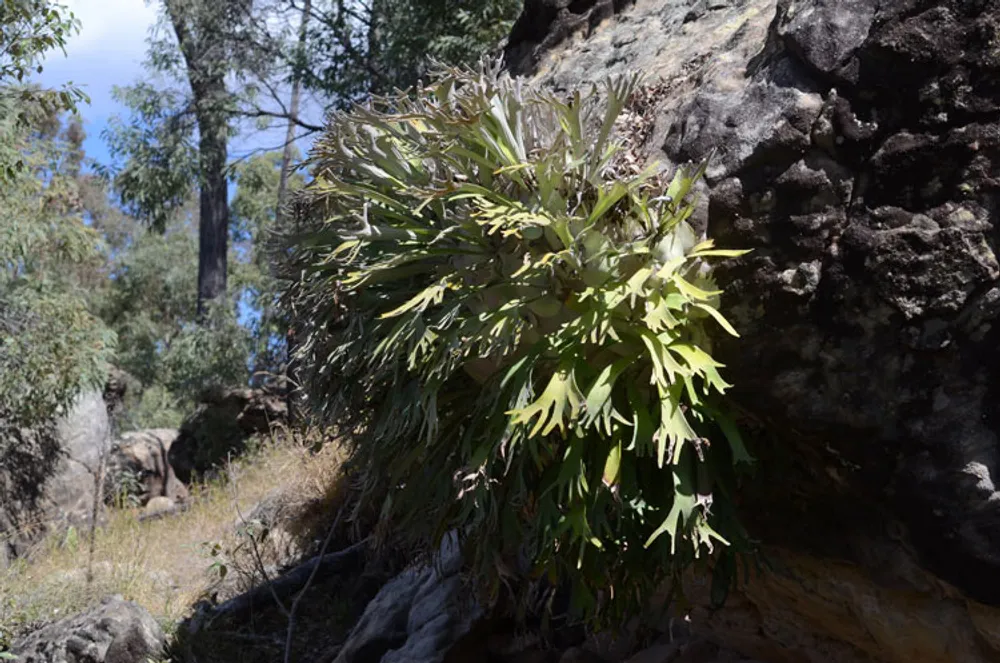
Once the staghorn fern bug bites, the genus opens up fast. Beyond the common bifurcatum on every shop shelf lies a whole genus of Platycerium with wildly different looks, sizes, and temperaments — some bone-easy, some genuinely demanding. This guide compares the species growers actually choose between, so you can match one to your light, climate, space, and patience.
For the broader collector’s view of rare and chased species, pair this with our collectible staghorn ferns guide.
The Species at a Glance
| Species | Difficulty | Cold tolerance | Water demand | Pups? | Signature trait |
|---|---|---|---|---|---|
| P. bifurcatum | Easy | High | Average | Yes | The forgiving default |
| P. veitchii | Easy | Highest | Low | Yes | Silvery, sun- & drought-tough |
| P. willinckii | Moderate | Medium | Average–high | Yes | Long, draping, waxy fronds |
| P. superbum | Moderate | Low | Average | No | Giant solitary crown |
| P. grande | Moderate | Low | High | No | Giant; twin spore patches |
| P. ridleyi | Hard | Low | High | Yes | Compact, sculptural, tropical |
Beginner Hardy: bifurcatum vs veitchii
These two are the on-ramp to the genus, and the usual first decision.
- P. bifurcatum is the classic “elkhorn,” clumping and pup-happy, with green antler fronds. It forgives almost everything and multiplies into colonies you can divide.
- P. veitchii trades a little lushness for toughness: its silvery, hairy fronds reflect light, so it tolerates more direct sun and longer dry spells than any other species. The hardiest pick for hot, bright, or cold-variable spots.
Choose bifurcatum for a lush, fast, foolproof first fern; choose veitchii for a sunnier windowsill, a drier hand, or a cooler climate.
The Giants: superbum vs grande
If you want one architectural show-stopper, you are choosing between the two big solitary staghorns — and they look nearly identical. Both grow a single enormous nest-like shield and broad, branching antler fronds; neither produces pups, so both are propagated by spore only.
The real difference is botanical trivia for most owners: P. grande carries two spore patches per fertile frond lobe, P. superbum just one. Care is the same for both — large, warmth-loving, humidity-hungry centerpieces that need room to spread and steady conditions. They are moderate, not hard, but they are commitments of space and time.
Either way: these can’t be divided, so buy the size you can house, and feed them well per our fertilizer guide.
The Tropical Collectors: willinckii vs ridleyi
This is where staghorn growing gets serious — and rewarding.
- P. willinckii sends long, narrow, deeply divided fronds draping downward, often coated in protective wax. Striking and moderately forgiving, though wet feet still risk rot.
- P. ridleyi is the sculptural prize: tight, upright antler fronds and a neat round shield, compact enough for small spaces — but demanding. It wants near-constant warmth and humidity and browns at the tips after a single missed soak.
Choose willinckii for dramatic drape with moderate care; choose ridleyi only once your conditions (and watering discipline) are dialed in.
Matching a Species to Your Situation
- Total beginner: P. bifurcatum — forgiving, vigorous, divisible.
- Hot, sunny, or cold-variable spot: P. veitchii — the toughest of all.
- One big statement plant: P. superbum or P. grande — giant and dramatic.
- Limited space, ready for a challenge: P. ridleyi — compact and stunning.
- Want drama without the difficulty spike: P. willinckii — draping and moderate.
Care Carries Across All of Them
Here is the freeing part: every species above shares the same core care. They are all epiphytic Platycerium that want a soak when the substrate dries, bright indirect light, good airflow, and a mounted or free-draining setup. The species-level differences are adjustments — a little more sun for veitchii, more humidity for ridleyi, more room for the giants — layered on top of the same fundamentals.
So before you obsess over which species to chase, lock in the basics that apply to all of them:
- How often to water a staghorn fern — with a per-species demand table
- Staghorn fern light requirements
- How to mount a staghorn fern
- How to separate staghorn fern pups — for the pupping species
Get those right, and any species in this comparison becomes a plant you can keep for decades.
External reference: UF/IFAS Gardening Solutions — Staghorn Fern.