You water, you step back, and you notice it: a scatter of white on the fronds that wasn’t there last month. Finding white stuff on a staghorn fern is one of the most common panic moments in Platycerium care, and it’s also one of the most misdiagnosed. The white might be the healthiest thing on your plant — or it might be a colony of insects that will drain it over the next six weeks. This guide separates the five kinds of white you can find on a staghorn fern, gives you a 30-second test to tell them apart, and covers what to do about each.
The Five Kinds of White: Quick Diagnosis Table
Almost every case falls into one of five categories. Match what you see before you spray anything.
| What you see | Where it appears | What it is | Danger level |
|---|---|---|---|
| Even silvery velvet, can’t be rubbed off | Whole frond surface, both sides | Trichomes (natural hairs) | 🟢 Healthy |
| Cottony clumps with a waxy feel | Crevices, crown, frond forks, behind shields | Mealybugs | 🔴 Treat now |
| Flat dusty coating, like spilled flour | Upper frond surfaces, spreads outward | Powdery mildew | 🟡 Treat |
| Chalky crust or hard spots | Where water dries, mount edges | Mineral / fertiliser salts | 🟡 Cosmetic |
| Fluffy white webbing on the mount | Sphagnum, wood, not the plant itself | Saprophytic mould | 🟢 Mostly harmless |
The single most useful distinction: does it come off? Trichomes are part of the frond and stay put. Everything else in the table can be lifted, wiped, or dissolved away — and that difference alone rules out the one thing you must never “treat.”
1. Silvery White Fuzz = Trichomes (Leave It Alone)
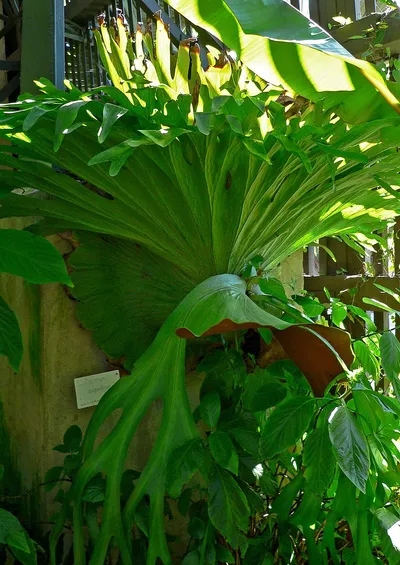
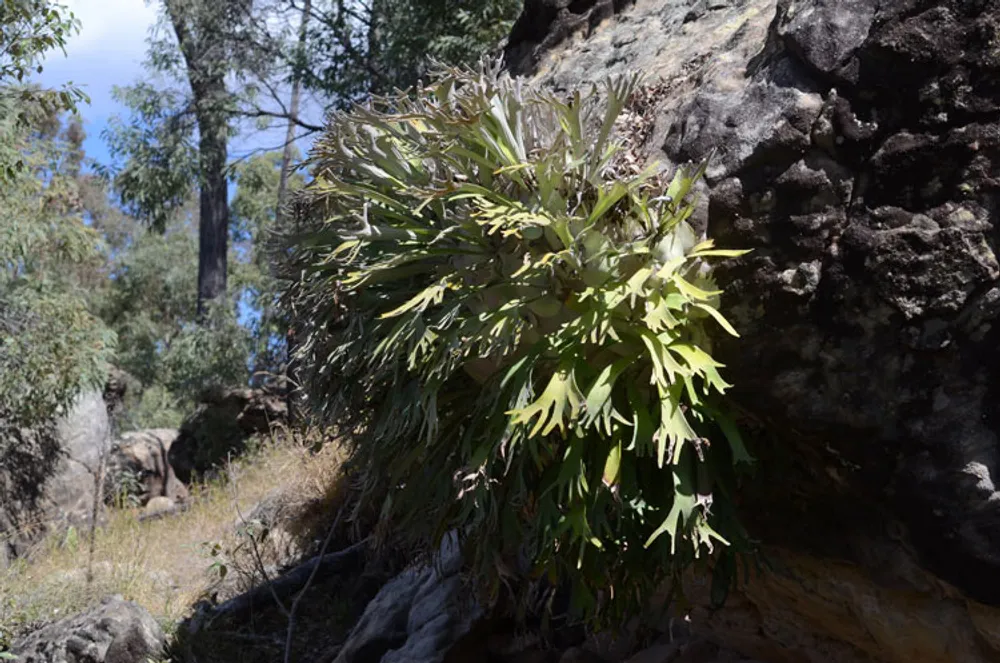
If the white forms a soft, even, silvery-grey haze across the entire frond, you are looking at trichomes — microscopic star-shaped hairs, and the reason silver staghorns look the way they do. Scrub them off and you permanently damage the plant.
These are not decoration. Stellate trichomes create a still-air boundary layer that cuts water loss dramatically, reflect harsh light away from the frond tissue, and actively pull moisture out of humid air and fog. Recent plant physiology work on the overlooked functions of trichomes confirms that these hairs are genuine water-absorbing organs, not just a sunshade. On a staghorn fern, the fuzz is part of the plumbing.
Species that are heavily felted and should look white:
- P. veitchii — the silveriest common species; near-white new fronds are normal
- P. willinckii — long pendant fronds with a dense silver coat
- P. bifurcatum — lightly fuzzy, especially on new growth
- Silver hybrids and P. hillii crosses — variable, often heaviest when young
Two things confuse people here. First, new fronds are always fuzziest — a freshly emerged antler frond can look almost white and then green up as it matures. Second, felting is strongest on plants in bright light, so a fern moved to a sunnier spot in summer may genuinely get whiter. Both are good signs. For the full picture of how light drives frond appearance, see our guide on staghorn fern light requirements.
[!IMPORTANT] Never wipe, scrub, or oil-spray a felted species to “clean off” the white. Trichomes do not grow back on a damaged frond, and matted felt leaves permanent water-stained patches. When in doubt, do nothing until you’ve run the swab test below.
2. Cottony White Clumps = Mealybugs (Act Fast)
This is the one that actually costs you a plant. Mealybugs are soft sap-sucking insects that coat themselves in white waxy fluff, so an infestation reads as scattered cotton balls rather than an even coating. They cluster where you can’t easily see: down in the crown, in the fork of a branching antler frond, and in the dark gap behind the shield frond.
Give it the touch test. Trichomes feel like suede. Mealybug wax feels slightly sticky and comes away on your finger, and there’s often a shiny honeydew film — sometimes with black sooty mould growing on it — on fronds below the colony.
Mealybugs are hard to control partly because their wax repels water-based sprays, which is why university IPM programmes emphasise physical removal and repeat treatment over a single knockdown spray. On a staghorn, the sequence that works:
- Isolate the plant from every other fern in the house, immediately.
- Spot-kill with alcohol — a cotton bud dipped in 70% isopropyl, dabbed directly on each colony. This dissolves the wax and kills on contact.
- Rinse the whole plant with a firm spray of room-temperature water, angled into the crevices, then let it dry fully in moving air.
- Repeat every 5–7 days for at least a month. Eggs hatch in waves; one pass never finishes the job.
- Only then consider a spray — and check species safety first, because oils ruin felted fronds.
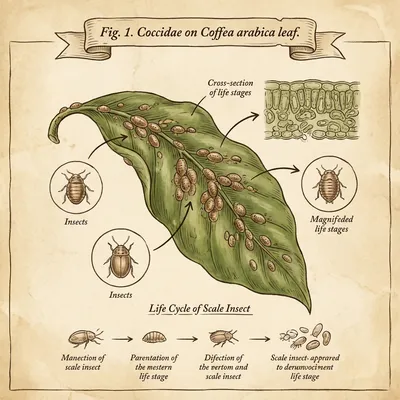
That last point is the trap most generic pest advice walks straight into. Our staghorn fern pest guide breaks down which species tolerate oil sprays and which need manual removal only, and if you do reach for a labelled product, the dilution calculator gets the dose right instead of you eyeballing it. Mealybugs are also frequently found alongside scale — if some of your “white” is actually hard and shell-like, read the scale treatment guide instead.
3. Flat Powdery Coating = Powdery Mildew
Powdery mildew looks like someone dusted the frond with flour. Unlike trichomes it sits only on the upper surface, starts as discrete round patches, and spreads outward in rings. Unlike mealybugs it’s flat, dry, and has no clumps.
Mildew is a summer problem for one reason: it needs warmth, high humidity, and still air. A staghorn in a sheltered corner with 70% humidity and no breeze is close to a perfect culture dish — the same conditions that drive the fungal blight covered in our guide to black spots on staghorn fern leaves.
The fix is environmental before it is chemical:
- Run a small fan near the plant for a few hours a day — this alone resolves most mild cases
- Stop overhead misting; raise ambient humidity with a tray or humidifier instead, as covered in the humidity guide
- Water in the morning so fronds are dry before the temperature drops at night
- Thin out crowded displays so air can move between mounts
For visible patches, wipe smooth-fronded species with a damp cloth, then treat with a potassium bicarbonate solution. Skip neem and horticultural oils on any silver-felted fern.
4. Chalky Crust and Hard White Spots = Minerals and Salts
If the white is confined to where water pools and dries — the lower edge of the mount, the rim of a shield frond, a dotted pattern that matches your spray nozzle — it’s almost certainly mineral deposit from hard tap water, or fertiliser salt left behind after evaporation.
It’s cosmetic on the frond, but on the mount it matters. Accumulated salt in sphagnum raises the medium’s salinity and burns root tips over time, showing up later as brown frond tips. If your fern has been fed all summer without a flush, this is the likely origin.
The remedy is a leach: soak the whole mount in plain water for 20 minutes and let it drain completely, repeating monthly through the feeding season. Switch to rainwater, distilled, or filtered water if your tap water is hard. Our fertiliser guide covers safe summer feeding rates, and the watering guide explains how to soak a mounted fern properly without waterlogging it.
5. White Fluff on the Mount, Not the Plant
Fine white threads spreading across damp sphagnum or on the surface of the wood is usually saprophytic mould — a decomposer feeding on the organic mount, not a pathogen attacking the fern. It’s a signal, not a disease: it means the medium is staying wet too long.
Improve airflow, let the mount dry further between waterings, and it typically disappears on its own. If it keeps returning, the mount is probably holding too much water for your conditions and is due for a refresh. Persistent sogginess is also the road to root rot, which is a genuine emergency.
The 30-Second Q-Tip Test
When you can’t tell which category you’re in, this settles it:
- Dip a cotton bud in 70% isopropyl alcohol.
- Press it gently against the white patch and hold for two seconds.
- Read the result:
| Result | Diagnosis |
|---|---|
| The white turns brown/orange and lifts off, leaving a bare spot | Mealybugs |
| The area darkens while wet, returns to silver when dry | Trichomes — healthy |
| The white smears into a haze but the frond underneath is green | Powdery mildew |
| The white doesn’t budge and feels gritty | Mineral crust |
Do this on one small patch, not the whole plant, and never on a large area of a felted species.
Why Late Summer Is Peak White-Stuff Season
There’s a reason this question spikes in July and August. Warm indoor temperatures let mealybug generations overlap so populations compound rather than cycle. Summer humidity plus closed-up, air-conditioned rooms creates the stagnant warm air powdery mildew needs. And a full season of feeding and frequent watering leaves the most mineral residue of the year.
The prevention list is short and it covers all three at once: keep air moving, water in the morning, inspect the crown and shield-frond gaps every time you water, quarantine anything new for a month, and flush the mount monthly during feeding season. Most white on a staghorn fern is the plant doing exactly what it evolved to do — your job is just to catch the cases where it isn’t.