If you have shopped for a Platycerium — or read two care articles back to back — you have probably hit the confusion head-on: one site calls a plant a staghorn fern, another calls what looks like the same thing an elkhorn fern. Are they different plants? The same plant with two names? Something in between?
Here is the honest, untangled answer. Both names refer to ferns in the genus Platycerium, and people use them loosely — but in practice they point to different growth styles, and knowing which is which changes how you shop, propagate, and place the plant.
The Short Answer
“Staghorn fern” is both a catch-all and a specific name. It is used as the everyday English name for the entire Platycerium genus, and also more specifically for the large, broad-fronded, solitary species — most famously P. superbum and P. grande, whose wide antler fronds spread like a stag’s rack.
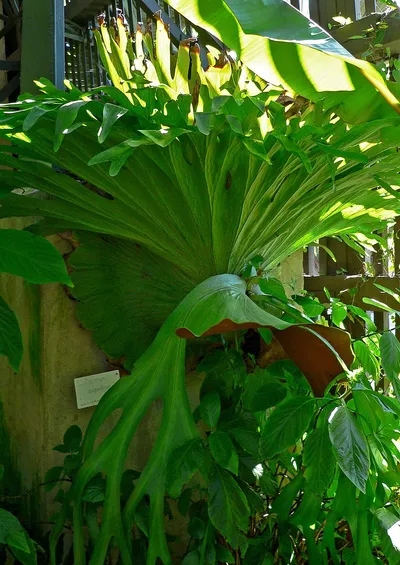
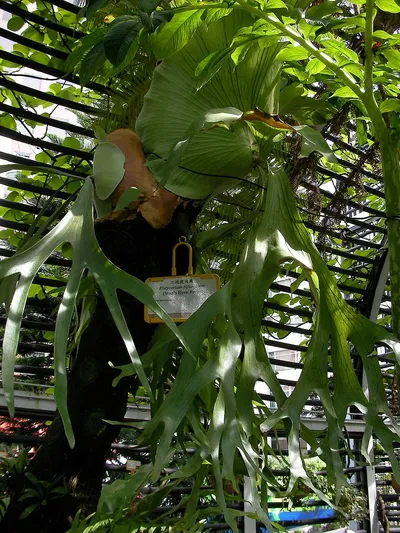
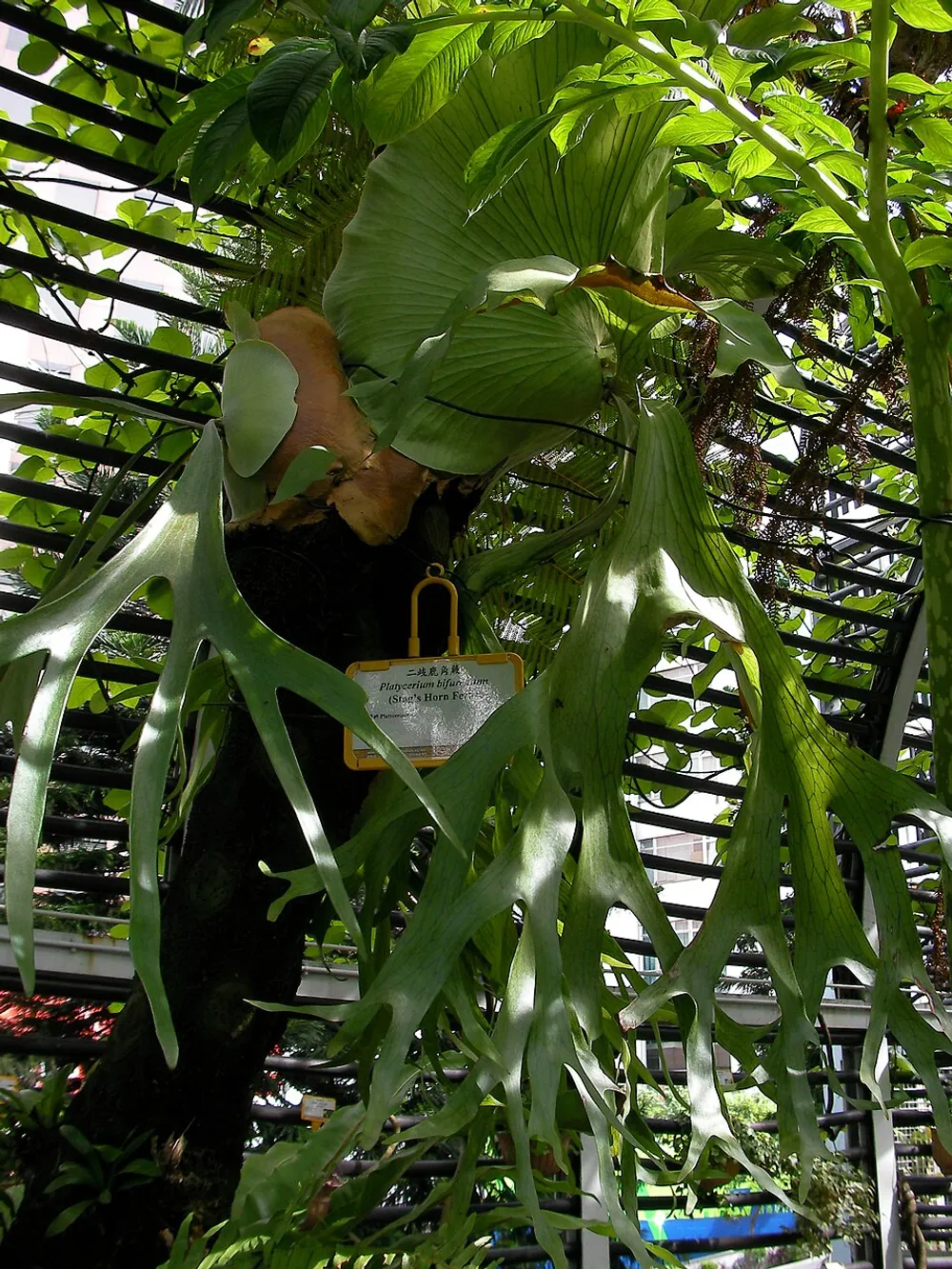
“Elkhorn fern” almost always means Platycerium bifurcatum — the clumping, pup-producing, narrow-fronded species that is by far the most common one sold as a houseplant. Its finely divided fronds resemble an elk’s more slender antlers.
So when someone says “I can’t tell them apart,” they are usually comparing a single big superbum-type staghorn against a multiplying bifurcatum elkhorn. Those two genuinely look and behave differently, even though both are staghorn ferns in the broad sense.
Staghorn vs Elkhorn at a Glance
| Feature | Elkhorn (P. bifurcatum) | Staghorn (P. superbum / P. grande) |
|---|---|---|
| Antler fronds | Narrow, finely divided, many branches | Broad, wide-lobed, fewer heavy splits |
| Growth habit | Clumping colony of many plants | Single solitary plant, one large nest |
| Pups (offsets) | Produces many — easy to divide | None — spore propagation only |
| Mature size | Moderate; spreads sideways | Large and dramatic; one big specimen |
| Shield frond | Multiple, overlapping | One huge nest-forming shield |
| Cold tolerance | Highest of the genus | Lower; wants steady warmth |
| Best for | Beginners, propagators | Collectors, statement plants |
Why the Names Are So Tangled
Common names are regional and inconsistent — that is the whole problem. In much of Australia, where these ferns grow native, “elkhorn” specifically means P. bifurcatum and “staghorn” specifically means the giant P. superbum. In North American and European plant shops, “staghorn fern” gets slapped on almost any Platycerium, including the elkhorn. Neither is wrong; they are just different conventions. The same regional drift affects moosehorn, elephant ear and butterfly — see the full common-name decoder.
The genus name avoids all of this. Platycerium means “broad horn,” and every species in it shares the same basic anatomy: sterile shield fronds that clasp the mount and collect debris, and fertile antler fronds that do the photosynthesizing and carry spores. Once you can read that anatomy, the common-name argument stops mattering — you just identify the species.
Telling Them Apart in 10 Seconds
Faced with an unlabeled plant, check these three things in order:
- Is it one plant or a clump? A colony of several crowns growing into each other points to elkhorn (bifurcatum). A single big crown with one nest points to a true staghorn (superbum/grande).
- How wide are the antler fronds? Narrow and feathery, splitting into many thin segments → elkhorn. Broad and flat, splitting into a few wide lobes → staghorn.
- Are there pups? Little plantlets emerging around the base or along the roots mean a pupping species — that is your elkhorn. The big solitary staghorns never do this.
If you want to go deeper on identification across the whole genus, our collectible staghorn ferns guide breaks down the species growers actually chase.
The Care Difference (Mostly There Isn’t One)
This is the reassuring part: both are epiphytic Platycerium and want the same fundamentals. Bright indirect light, a thorough soak when the substrate dries rather than frequent sips, strong airflow, and a mounted or very free-draining setup. If you have read our guides on how often to water a staghorn fern and staghorn fern light requirements, you already know how to grow either one.
The real differences are practical, not horticultural:
- Propagation. Elkhorns hand you free plants — once a clump is established you can divide the pups (see how to separate staghorn fern pups). The big staghorns produce no pups at all and can only be grown from spore, which is slow and advanced (how to grow staghorn fern from spores).
- Space and drama. A superbum is a single architectural specimen that can grow enormous. An elkhorn is a spreading colony you can mount on a board and let fill out.
- Hardiness. P. bifurcatum is the cold-tough, drought-forgiving member of the family — the one most likely to survive a beginner’s learning curve. For cold climates specifically, also look at P. veitchii.
Which One Should You Buy?
Choose an elkhorn (P. bifurcatum) if you are new to Platycerium, want a plant that forgives mistakes, or like the idea of dividing pups into more ferns (and gifts) over time. It is the best on-ramp to the genus.
Choose a large staghorn (P. superbum / P. grande) if you want one show-stopping specimen and don’t mind that it grows slowly, needs more room and steadier humidity, and can’t be divided. It is a collector’s centerpiece, not a starter plant.
Either way, the day-to-day care lives in the same place: get watering, mounting, and light right, and the common name on the tag becomes a trivia question rather than a care decision.
External reference: UF/IFAS Gardening Solutions — Staghorn Fern.