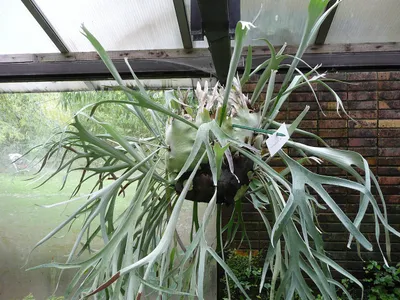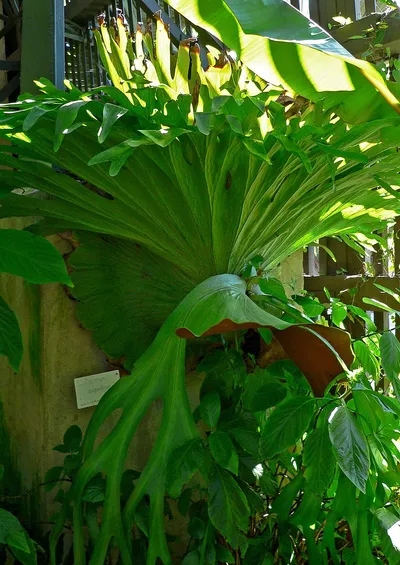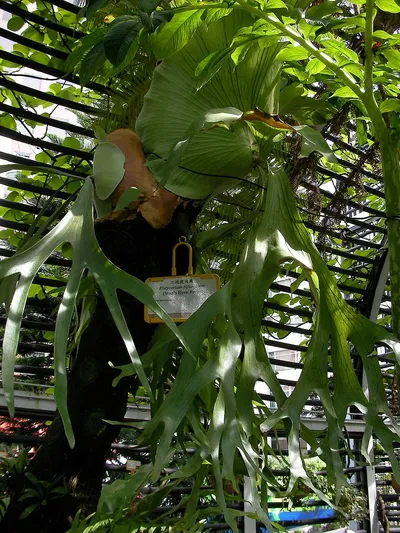
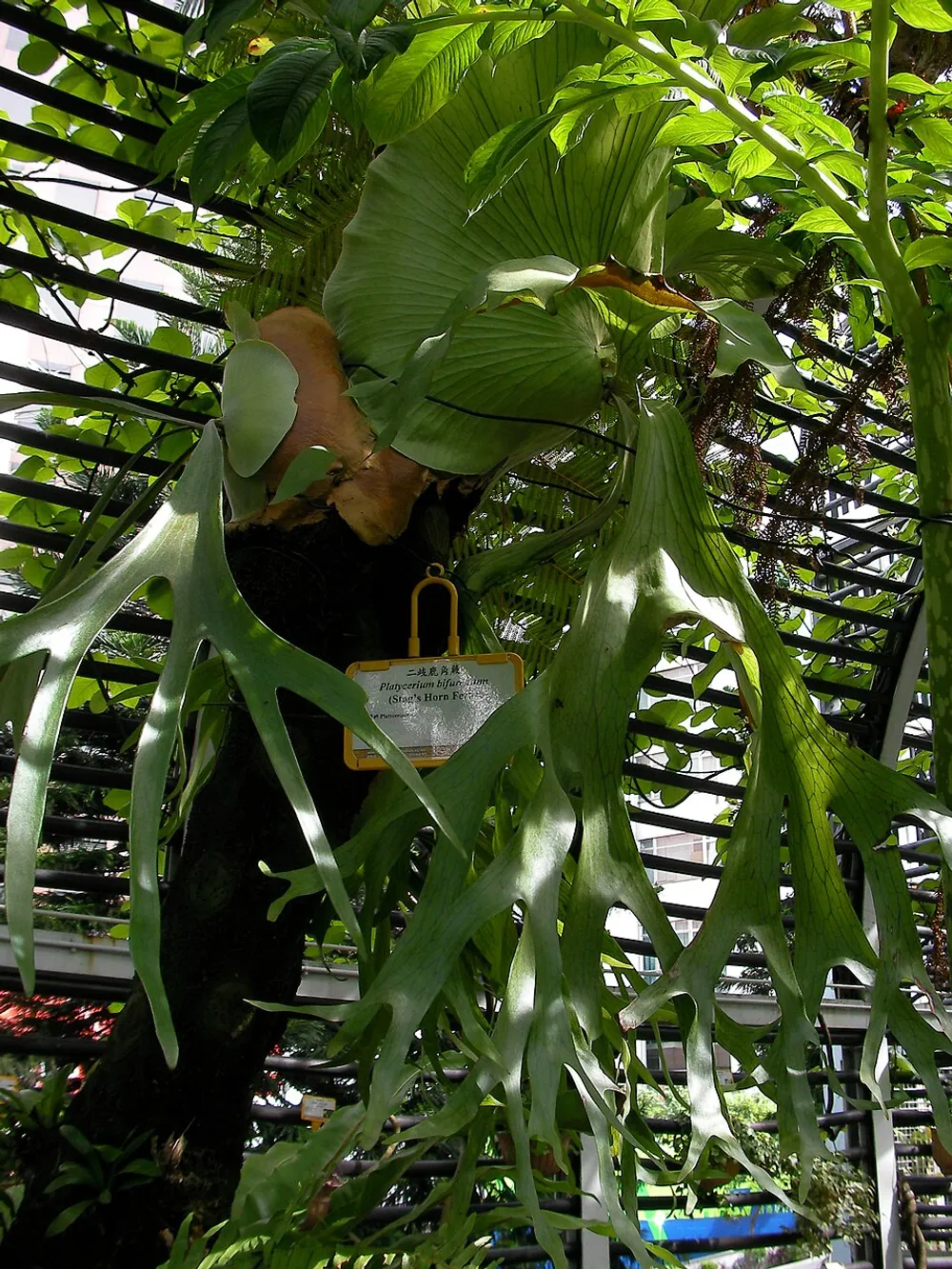
If you bought a staghorn fern from a garden center, IKEA, Costco, or an online shop and the tag said “Dutch Staghorn Fern” or “Platycerium bifurcatum ‘Netherlands’”, you probably went looking for care instructions and found nothing specific. That is because the Dutch staghorn fern is not a distinct species — it is a compact, nursery-selected form of the most common staghorn fern in the world, and the “Netherlands” on the label tells you where it was grown, not where it is from.
This guide clears up exactly what you bought, how it differs from a standard staghorn fern, how large it will get, and the care routine that keeps these small nursery-grown plants alive through their first year — the point at which most of them die.
What Is a Dutch Staghorn Fern?
Platycerium bifurcatum is native to the coastal hills of eastern Australia. Nothing about the plant is Dutch. What is Dutch is the supply chain: the Netherlands is the center of European ornamental horticulture, and Dutch nurseries produce staghorn ferns by tissue culture at enormous scale, then distribute them across Europe and North America.
Over decades of that production, growers selected for the traits that sell well in a 4-inch pot — tight forking, dense form, slow growth, and a plant that looks finished on a shelf rather than sprawling. That selection is now traded under the cultivar name ‘Netherlands’, and retailers shorten it to “Dutch staghorn fern.”
So the practical translation of your plant tag is:
| What the tag says | What it actually means |
|---|---|
| Dutch Staghorn Fern | Retail name for the ‘Netherlands’ selection |
| Platycerium bifurcatum ‘Netherlands’ | Compact cultivar of the common staghorn fern |
| Staghorn Fern, Netherlands | Same plant, country-of-production naming |
| Origin: Holland / NL | Where it was grown, not the species’ native range |
None of these indicate a rare or premium plant. That is good news for a new grower: you own the single most forgiving member of the genus. For the full species profile, see our P. bifurcatum page.
Dutch Staghorn Fern vs. Regular Staghorn Fern
This is the most common follow-up question, and the honest answer is that the differences are cosmetic and dimensional — not horticultural.
| Dutch (‘Netherlands’) | Standard P. bifurcatum | |
|---|---|---|
| Species | P. bifurcatum | P. bifurcatum |
| Mature indoor spread | 12–18 in (30–45 cm) | 24–36+ in (60–90+ cm) |
| Growth rate | Slow | Moderate to fast |
| Frond form | Shorter, tighter forking | Longer, looser, more pendulous |
| Usual retail size | 4–6 in pot | 6–10 in pot or mounted |
| Pup production | Slower, but steady | Prolific |
| Care requirements | Identical | Identical |
| Best for | Shelves, small mounts, first fern | Large wall displays, outdoor mounts |
If you want a fern that fills a wall within a few years, buy a standard bifurcatum. If you want something that stays proportionate on a bookshelf or in a small bathroom, the Dutch selection is genuinely the better plant — that compactness is the whole point of the selection.
Everything in our indoor staghorn fern care guide applies to it without modification.
How Big Does a Dutch Staghorn Fern Get?
Plan for roughly 12–18 inches across at maturity indoors, reached over three to five years. Individual fertile (antler) fronds typically run 8–14 inches. The shield fronds — the flat, round ones that press against the mount and turn papery brown as they age — will eventually form a disc 6–10 inches wide.
Two things change that ceiling:
- Light. In dim conditions the plant stalls indefinitely at near its purchase size. In bright indirect light it grows steadily, if unhurriedly.
- Colony formation. P. bifurcatum is a multi-bud species, meaning it produces pups. Left attached on a generous mount, a Dutch staghorn slowly becomes a cluster that reads much larger than any single plant. This colonial habit is the same one documented in a 2026 Royal Society study on staghorn fern colony development, where individual plants specialize and cooperate rather than compete.
If you would rather multiply plants than build a colony, our pup separation guide covers when and how to divide.
Care at a Glance
| Parameter | Requirement |
|---|---|
| Light | Bright indirect — east window ideal |
| Watering | Soak every 7–14 days; go by weight, not calendar |
| Humidity | 40%+ (tolerant; happier at 50–60%) |
| Temperature | 60–80°F (16–27°C); protect below 40°F (4°C) |
| Medium | Sphagnum moss or bark-based epiphyte mix — never dense potting soil |
| Fertilizer | Half-strength balanced liquid monthly, spring through early autumn |
| Difficulty | Easy — the most beginner-friendly staghorn |
Light
An east-facing window is the best indoor position: several hours of gentle morning sun, nothing harsh. A few feet back from a south or west window works, as does a bright bathroom.
What will not work is a dark corner or a shelf across the room from the only window. A Dutch staghorn in too little light does not die dramatically — it just stops, holds its purchase-day fronds for a year, and slowly pales. Because the cultivar is already slow, low light is easy to mistake for normal behavior. If your fern has produced no new frond in six months, light is the first thing to change. Our light requirements guide has the full breakdown by window direction.
Watering — and the Nursery Pot Problem
Here is the single biggest killer of Dutch staghorn ferns, and it has nothing to do with the plant.
These ferns ship in small plastic pots filled with a peat-heavy nursery mix designed for greenhouse conditions with constant airflow and controlled irrigation. In a living room, that mix holds water far longer than an epiphyte’s roots can tolerate. Owners water on a weekly schedule, the peat never dries, and the crown rots from the inside while the fronds still look fine.
The fix, in order of preference:
- Mount it. Move the fern onto a board or cork slab with long-fiber sphagnum — this is what the plant is built for. See how to mount a staghorn fern.
- Repot into an epiphyte mix. Orchid bark, perlite, and sphagnum in roughly equal parts, in a pot with real drainage.
- Keep the nursery pot but change the method. Stretch the interval, water by soaking rather than pouring, and never let the pot sit in a saucer of water.
Whichever you choose, use the weight test: lift the plant. Water when it feels surprisingly light and the moss is dry an inch in — typically every 7–14 days, longer in winter. Soak for 10–20 minutes, then drain fully.
[!IMPORTANT] Never water into the crown at the top of the shield frond. Water the medium at the base. Trapped water in the growing point is the fastest route to a dead staghorn fern.
If the shield frond has gone soft and dark rather than papery brown, read signs of overwatering and staghorn fern root rot immediately — that damage moves quickly. For the full watering rhythm, see how often to water a staghorn fern.
Should You Mount It?
Yes, eventually — but there is no rush, and a healthy potted plant is not in danger. The tradeoffs are laid out in mounted vs. potted staghorn ferns, but for the Dutch cultivar specifically:
- Mount if you want the classic wall-plant look, better airflow at the crown, and a display the plant can grow into for a decade.
- Wait if the plant arrived recently, is small, or has just been shipped. Give it 4–8 weeks to settle before disturbing the roots.
- Size up the board. Mount onto something at least 8–10 inches wider than the current plant. Remounting a colony later is far more work than mounting once, generously.
Because ‘Netherlands’ stays small, a modest cork slab or a 10×12-inch cedar plank is usually enough for many years.
Humidity, Temperature, and Feeding
Humidity: Tolerant above 40%, which most homes clear except in deep winter with heating running. Brown, crispy frond tips are the first sign it wants more — group it with other plants or add a humidifier rather than misting, which mostly evaporates before it helps.
Temperature: Comfortable at ordinary room temperatures, 60–80°F (16–27°C). This is one of the hardier staghorns — established plants shrug off brief dips near freezing outdoors — but a small, recently shipped nursery plant has no such reserves. Keep it above 50°F (10°C) and away from both heating vents and cold window glass. Full thresholds are in our temperature tolerance guide.
Feeding: Half-strength balanced liquid fertilizer once a month from spring through early autumn, applied to the medium. Stop in winter. A slow-growing cultivar does not need more food to grow faster — overfeeding burns roots and leaves salt crust on the moss. See the fertilizer guide for specifics.
Are Dutch Staghorn Ferns Safe for Cats and Dogs?
Yes. The ASPCA lists the common staghorn fern (Platycerium bifurcatum) as non-toxic to cats, dogs, and horses, and the Dutch ‘Netherlands’ plant is that species.
Non-toxic is not the same as harmless to eat. A cat that chews through fronds can still get mild vomiting from the fibrous tissue, and any fertilizer residue on the moss is worth keeping off a pet’s tongue. Hanging the fern on a wall solves both problems and happens to be the best position for the plant anyway.
Common First-Month Problems
| Symptom | Likely cause | Fix |
|---|---|---|
| Round bottom frond turns brown and papery | Normal — shield fronds are meant to do this | Leave it. Never peel it off |
| Fronds soft, dark, mushy at base | Overwatering in dense nursery mix | Stop watering; repot or mount; check for rot |
| Crispy brown tips | Low humidity or missed soakings | Raise humidity; soak thoroughly rather than sipping |
| Whole plant limp after purchase | Transit shock or a dry-out in shipping | One good soak, bright indirect light, then leave it alone |
| No growth for months | Too little light | Move to an east window |
| Pale, washed-out fronds | Direct midday sun | Filter the light or move back from the glass |
Most of these are covered in depth across our drooping, brown tips, and shield frond browning guides.
From Big-Box Buy to Collector Plant
The Dutch staghorn fern is, unglamorously, the entry point into a genus that has become one of the hottest corners of the houseplant world. The Garden Media Group’s 2026 trends report named rare houseplants the fastest-growing collectible category, and Platycerium — 18 species, hundreds of named cultivars, plants that live for decades — is exactly the kind of genus that collecting rewards.
Almost every serious staghorn grower started with a cheap bifurcatum. Keep the Dutch plant alive for a year, learn the weight test, mount it once, and you will have the only skills that transfer to everything else in the genus — including the silver-trichome cultivars in our P. willinckii guide and the collector tiers laid out in collectible staghorn ferns.
It is a $15 plant that teaches you a $500 one. That is a good trade.